Wherever you go in Orkney, the sea is never far away.
One of the best ways to experience Orkney, and to get a real sense of what makes this such a special place, is to take a leisurely walk along a stretch of coast. Among the most stunning is this west coast walk which leads you from Yesnaby’s tall, westward-facing cliffs, to the sheltered, welcoming haven of Stromness.
Before you set off, remember that Orkney’s weather can be changeable so we recommend you wear comfortable footwear and warm clothes with suitable rainwear. Let someone know where you are going and when you expect to get back, carry water and snacks with you, and remember never to get too close to the edge as the underlying rock can be subject to erosion. Keep a close eye on children and pets too, especially near the cliff edges.
This linear walk is approximately 11 miles and you should allow four or five hours to have plenty of time to enjoy the views and the wildlife. The route works best if you can leave a car in Stromness and drive to Yesnaby, picking up that car after you complete the route, or have a pre-arranged taxi waiting for you to deliver you back to your vehicle.
Your trail
- 1. Yesnaby
At the car park at Yesnaby spend some time getting your bearings and some background information from the interpretation boards placed at this popular scenic location.
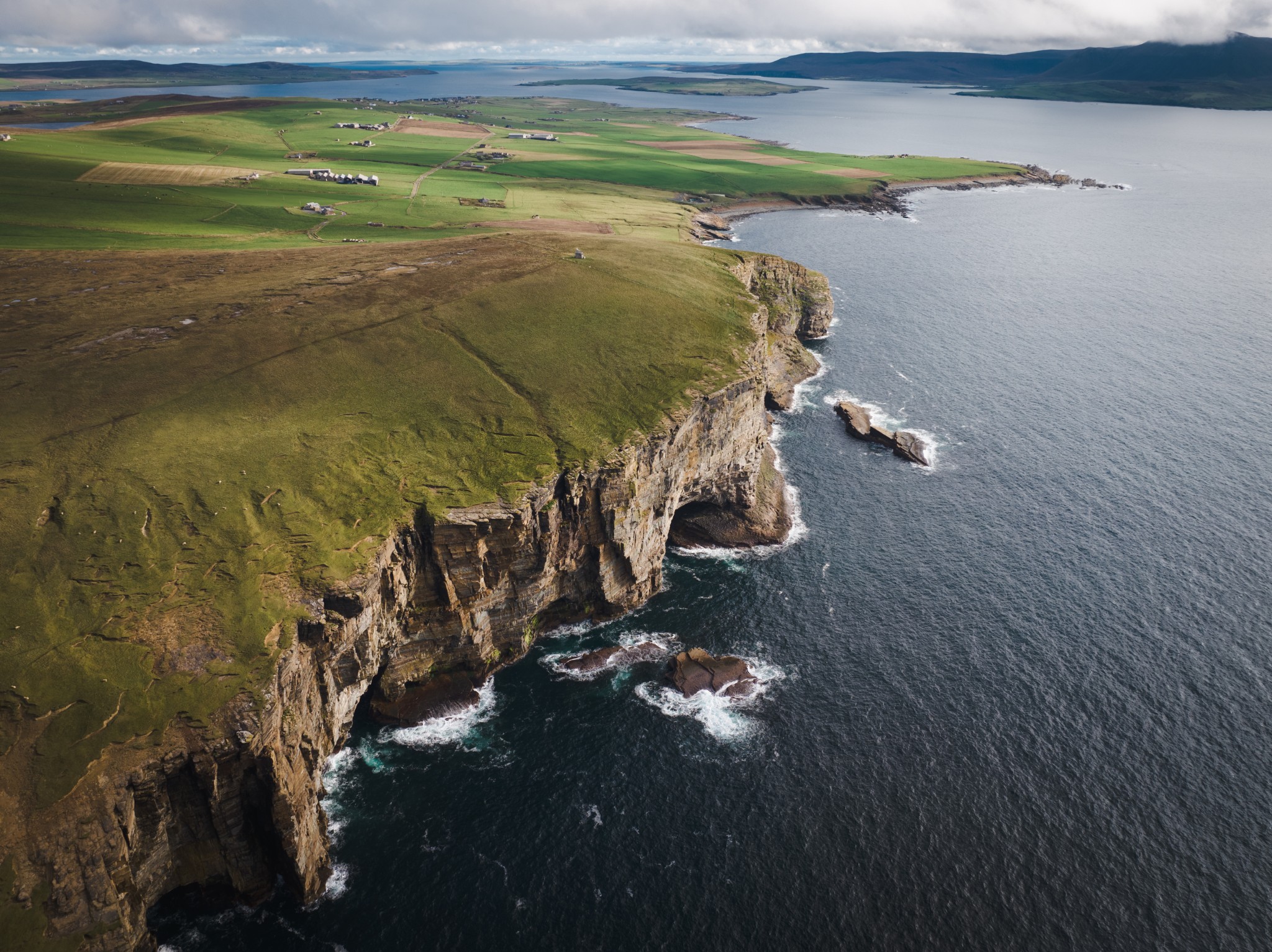
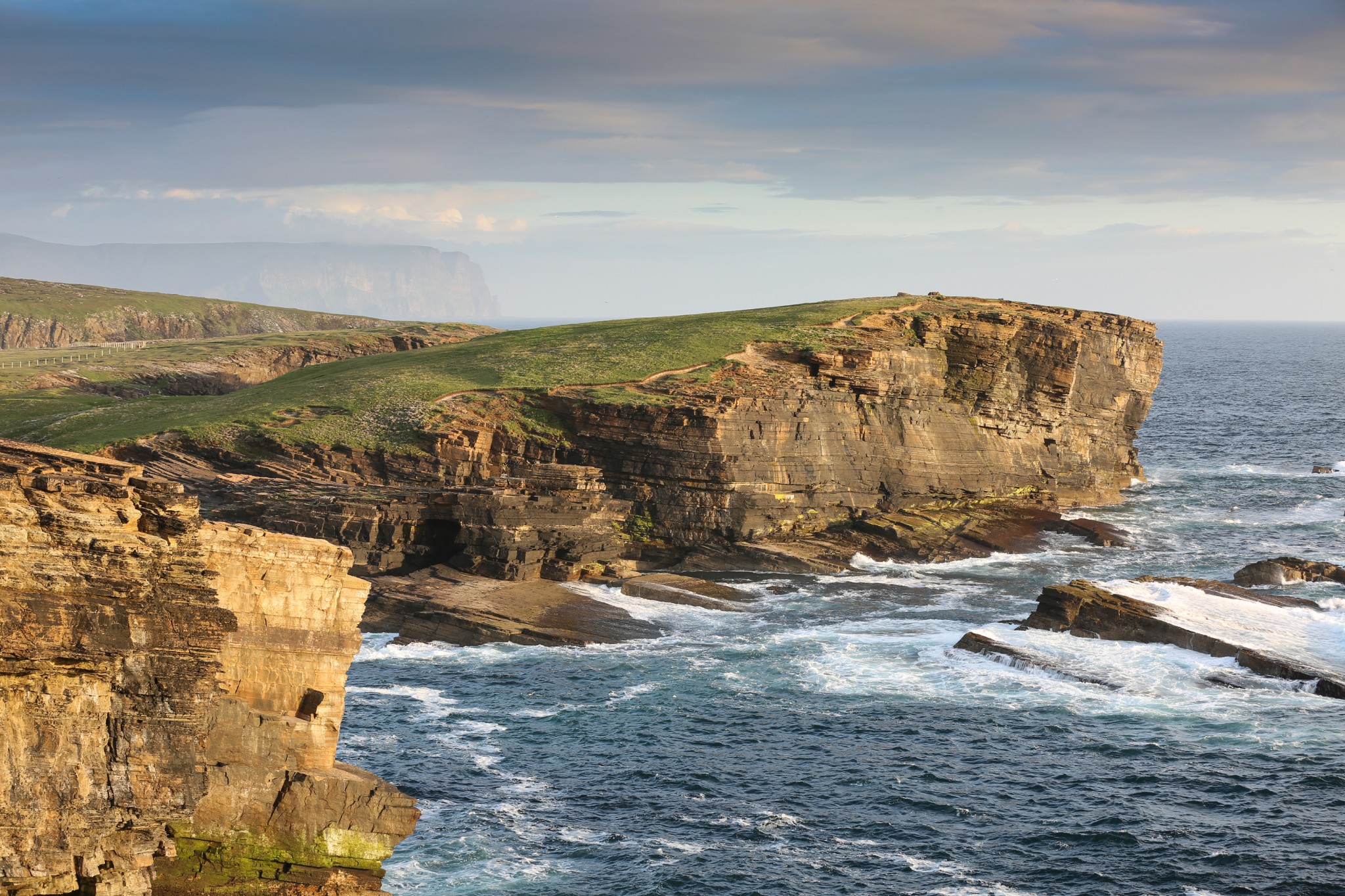
On fine, still days the light on the sea combines hypnotically with the sound of the waves and the calls of birds; on stormier days the winds roar in dramatically from the Atlantic, and sea-spray can be blown over the high cliffs. Whatever the weather, Yesnaby is a place which will touch every sense. The dramatic Old Red Sandstone rocks were part of the seabed 400 million years ago and geologists love to visit the cliffs.
Keep your eyes peeled for birds on the wing or roosting on the cliffs, and for seals in the sea far below you. Orkney’s grey seal population breeds between October and November and common seals breed in the summer, but these inquisitive sea mammals can be spotted year-round. Watch out, too, for the rare and beautiful primula scotica flowers in the grass at your feet. Globally scarce, the Scottish primrose thrives here during the spring and summer months.
- 2. Yesnaby Castle
From the car park, take the path southwards (to the left as you face the sea!) towards the Brough of Bigging, a dramatic promontory where you might be able to discern the faint remains of the defences of an ancient fort.
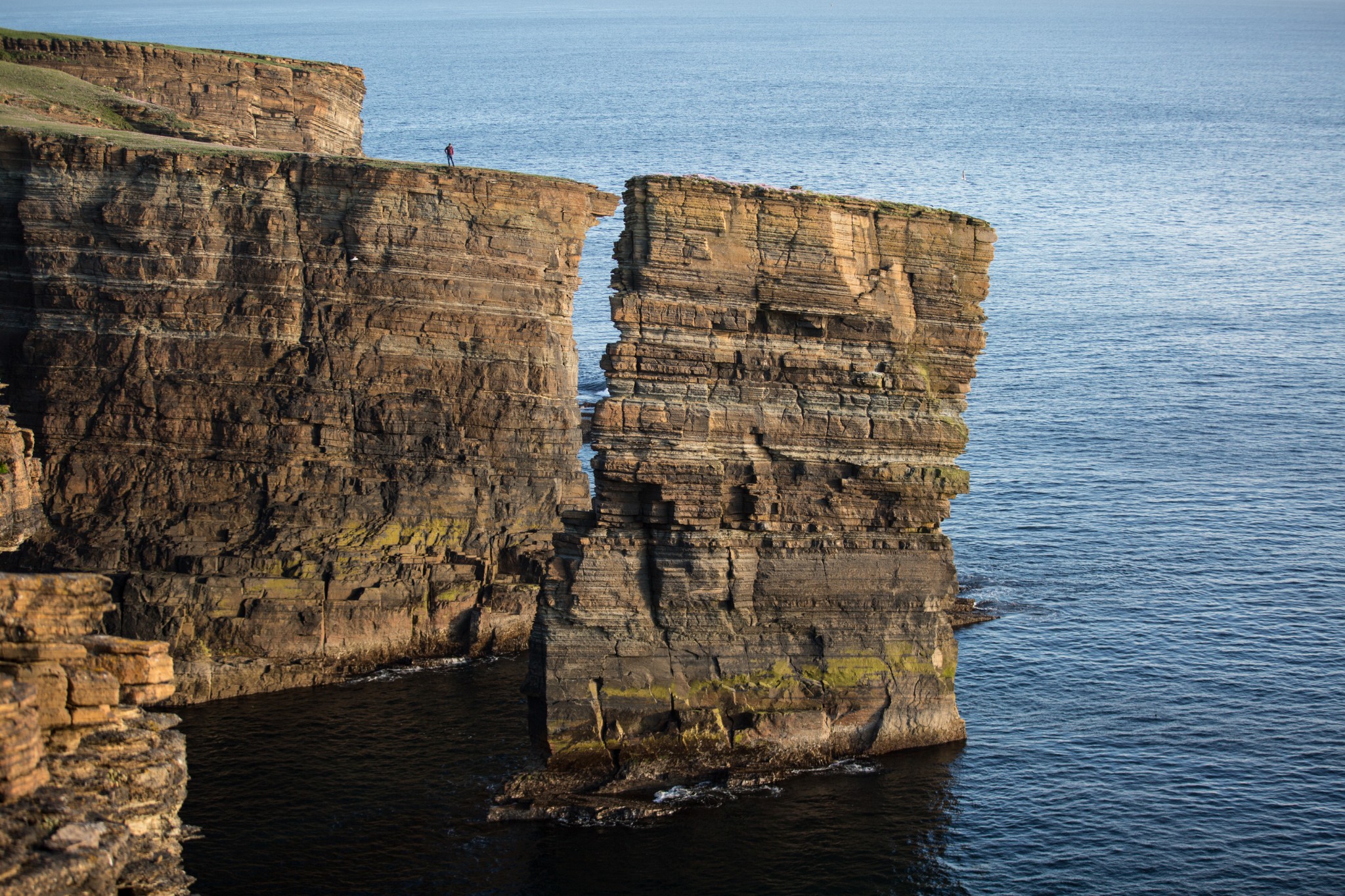
Just south of the Brough lies Yesnaby Castle. Its name is misleading because you won’t find a castle here. Instead you’ll encounter a photogenic 35-metre-tall, eroded, sea stack. It was first climbed in 1967 and remains popular with experienced climbers, some of whom use it as a practice ascent before tackling the Old Man of Hoy.
From here, continue southwards following the line of the cliffs with their geos and outcrops. Along the way, don’t forget to look back inland where you might see numerous seabirds, including fulmars, great skuas, Arctic skuas, black guillemots, and razorbills.
- 3. North Gaulton Castle
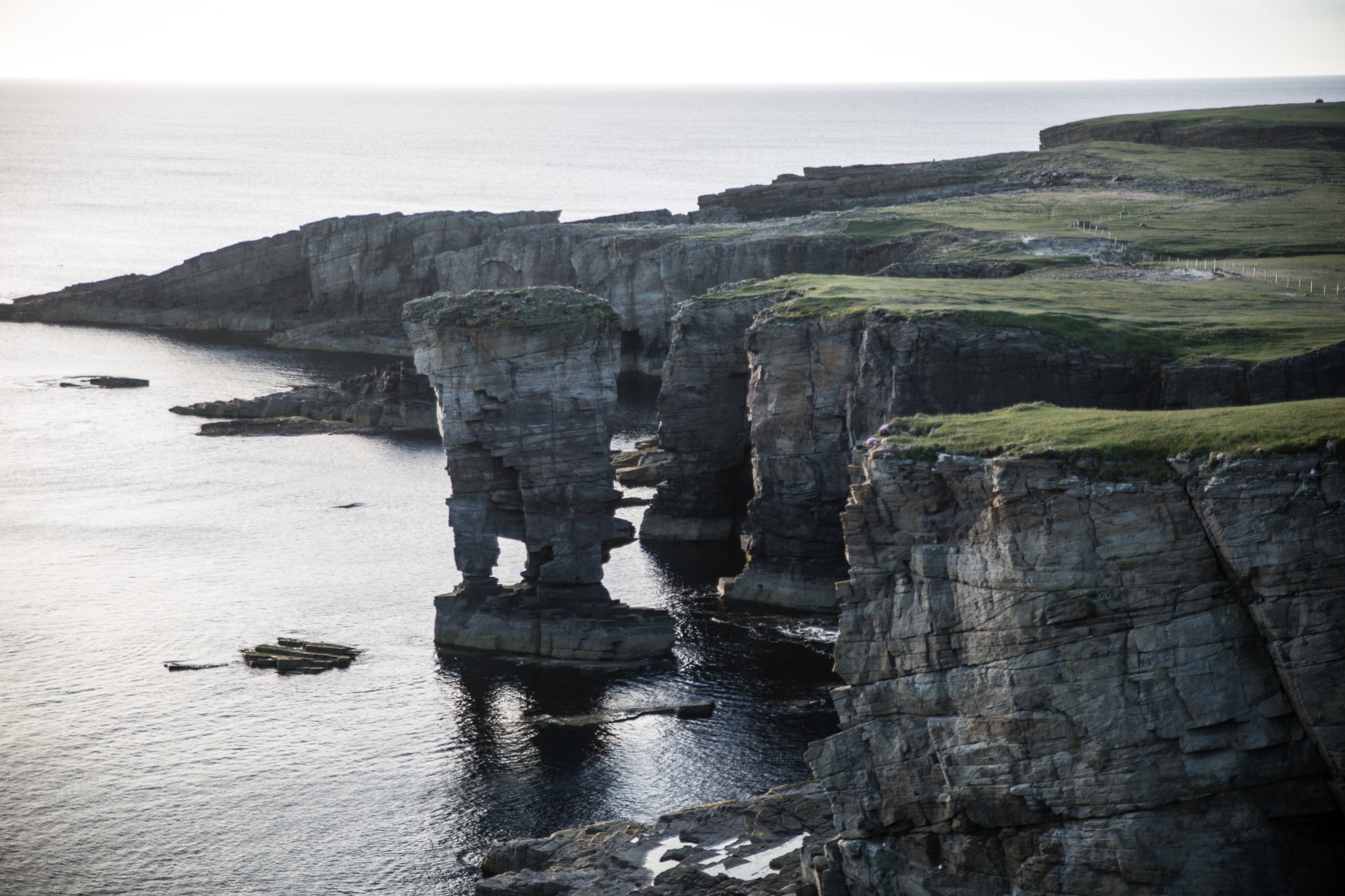
After around an hour or so after Yesnaby Castle you’ll see a second, larger sea stack. This is North Gaulton Castle. It's about twice the size of its near-neighbour, and a very dangerous climb.
Wind and water erode the Old Red Sandstone cliffs and underlying rocks to create these sea stacks. Erosion is continuous and one day these impressive stacks will collapse into the sea, but for now they are a delight for geologists and photographers.
- 4. Black Craig
Continue your walk southwards along the fantastically rugged coast until the path leads to the ominously-named Black Craig. Be of stout heart, because the Craig is the harmless site of an old Coastguard lookout post with wonderful sea views - a perfect place to pause on your journey.
You might occasionally bump into one of the researchers from Orkney’s European Marine Energy Centre (EMEC) here while they carry out wildlife monitoring connected to marine energy testing. One of EMEC’s wave energy test sites lies off the coast to the west. Energy from the tests comes ashore at Billia Croo on the shore below you.
Once at the bottom of the Black Craig, follow the path onto the public road. Follow the road straight ahead and then down the hill to the right. Towards the bottom of this road you will see a footpath sign. Take this footpath down towards Warebeth beach. Remember to take care when passing the stream.
- 5. Warebeth
Follow the path towards Warebeth beach, an attractive and popular beach close to Stromness.
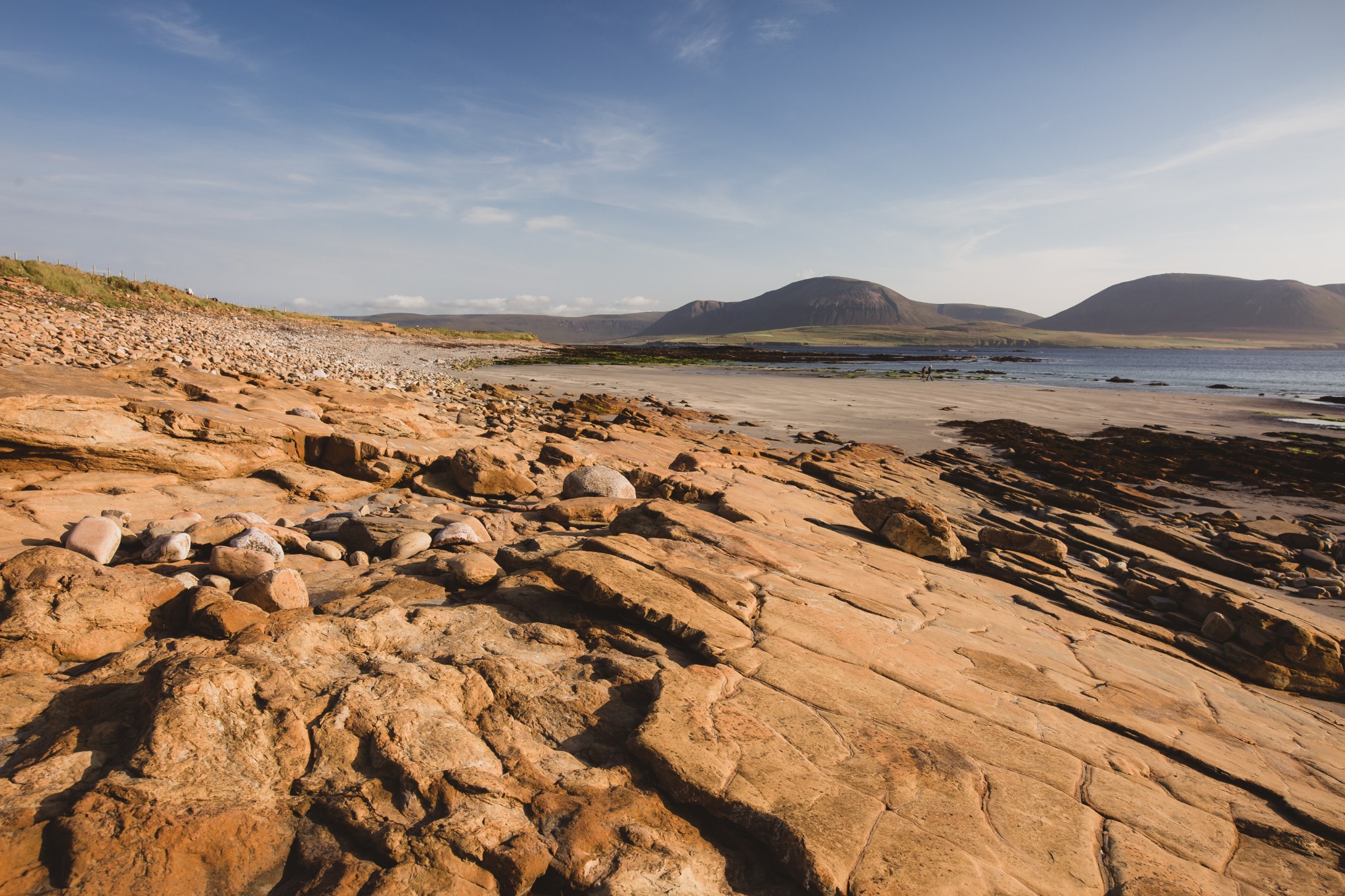
Warebeth is named after the abundant seaweed (ware) that gets washed ashore from Hoy Sound. The views looking across to the Hoy Hills or to Breckness are delightful, especially in the softer afternoon light. You’ll see lots of wildlife here too, keep an eye out for oystercatchers, ringed plovers, eiders and inquisitive seals.
There is an easy walk onwards to Stromness, along the coastal footpath, which takes you past the Point of Ness campsite, with a choice of route by shore or road depending on your mood.
- 6. Stromness
Follow your chosen route to the end point of the walk in the town of Stromness.
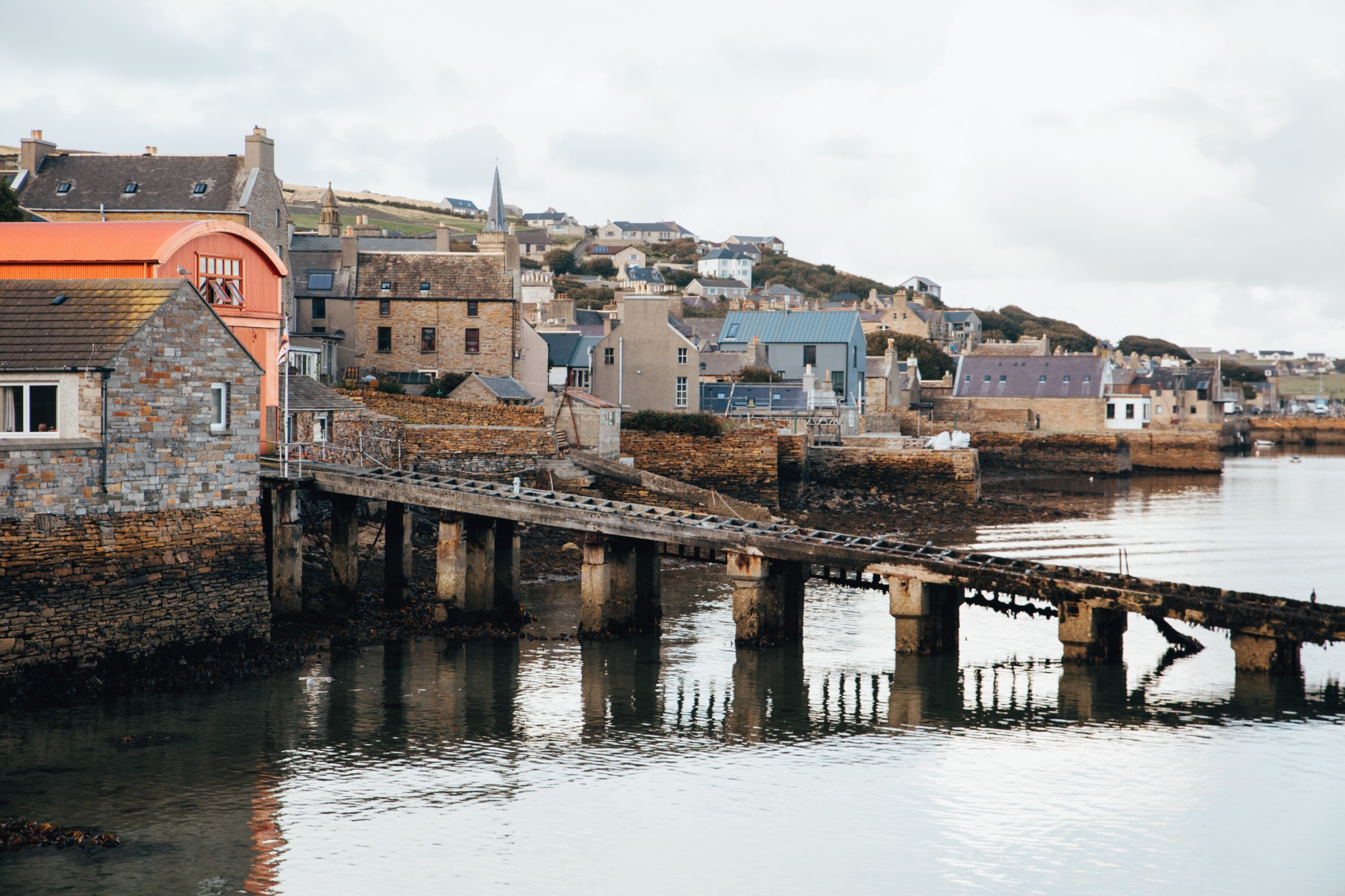
Historically, Stromness was a place of many departures and arrivals along the sea road, and its character reflects that rich heritage and tradition of welcoming travellers. You may want to come back and spend time browsing the craft shops and the world famous Pier Arts Centre, but you will surely want to mark the end of your coastal walk with a suitable refreshment in one of the town's cafés, restaurants, or bars.