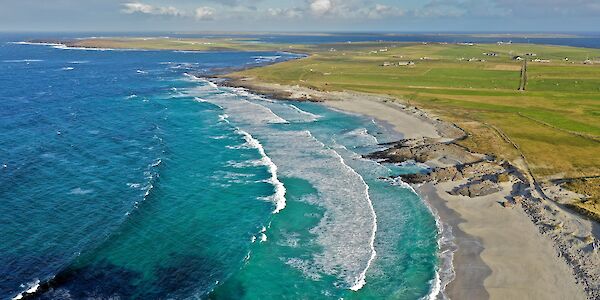
Orkney was Britain's heavily-defended northern fortress during both World Wars, in sharp contrast to the peaceful islands we all know and love today.
Orkney’s strategic location and the great natural harbour of Scapa Flow led to this tranquil archipelago becoming a major military base, with thousands of servicemen and women stationed here on ship and shore. The impact of these people and their stories is all around you, etched into our landscape in the shape of gun batteries, searchlight stations and concrete bunkers that can still be seen today.
Follow our Fortress Orkney trail to explore the shores of Scapa Flow and other fascinating wartime sites.
Your trail
- 1. Churchill Barriers
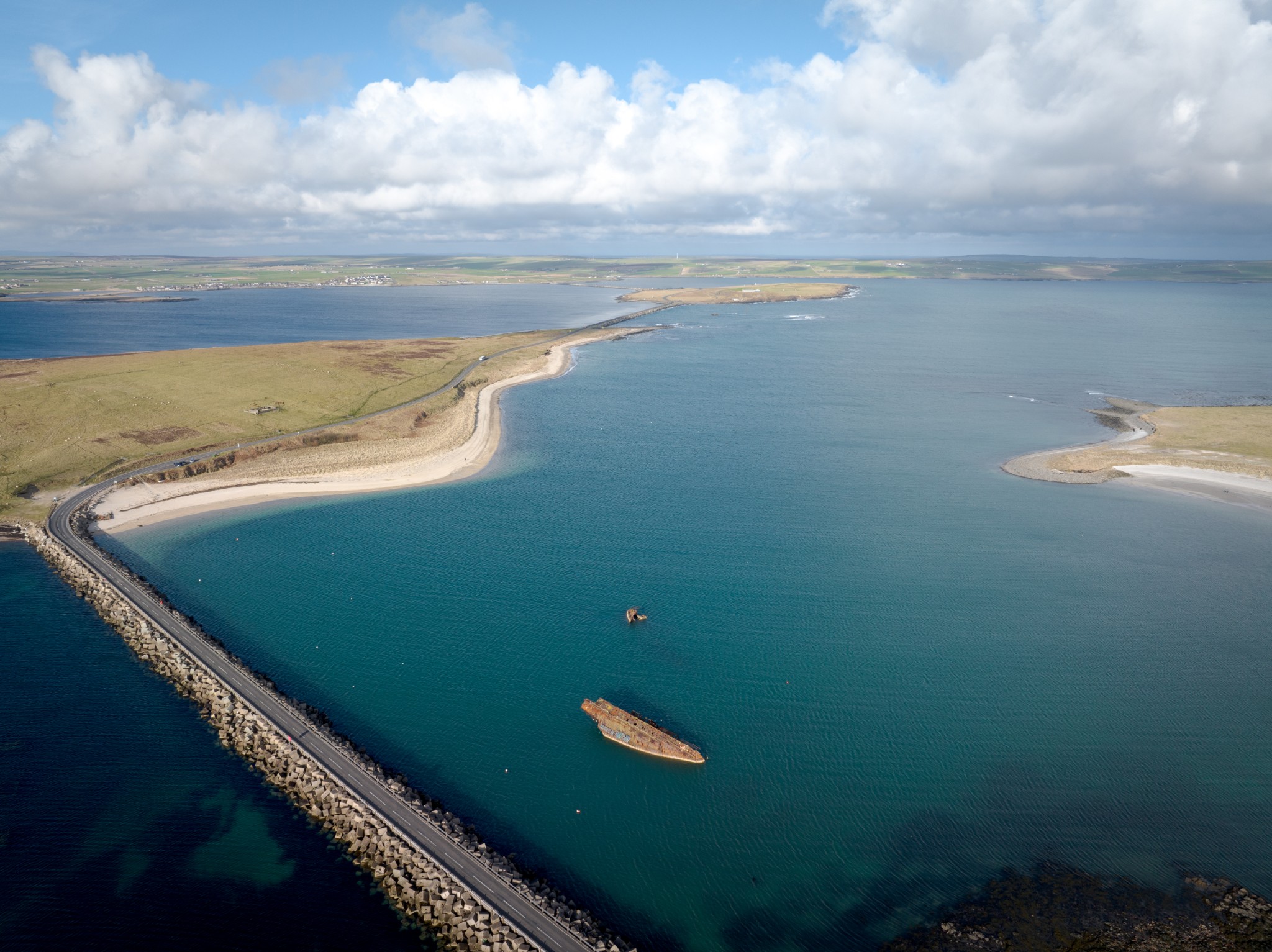
The four barriers blocking the eastern approaches to Scapa Flow were built on the orders of Sir Winston Churchill, following the audacious and deadly mission of submarine U-47. On the 14th of October 1939, the submarine manoeuvred round the blockships sunk to secure the channel between the Mainland and Lamb Holm, and torpedoed the battleship Royal Oak, with the loss of more than 830 men and boys.
Led by contractor Balfour Beattie and with a workforce including 1300 Italian prisoners of war, the Churchill Barriers were a massive civil engineering achievement. The work was dangerous and difficult but provided permanent connections between the Mainland, Lamb Holm, Burray and South Ronaldsay. There are small car parks at the ends of each barrier, and interpretation panels tell the story of the construction.
Keep your eyes open for the remains of the blockships at barriers number 2 and 3. The beach at the third barrier is a perfect place for a walk, too.
- 2. Orkney Fossil & Heritage Centre
This excellent heritage centre tells the story of millions of years of Orcadian history, right up to the present day. Its wartime displays include a fascinating floor map of Scapa Flow to help visitors understand the scale and significance of the great natural harbour.
There is also information and artefacts focused on life in Orkney during the war, from the perspective of both local residents and servicemen and women stationed here.
The Orkney Fossil & Heritage Centre is open between April and September.
- 3. Italian Chapel
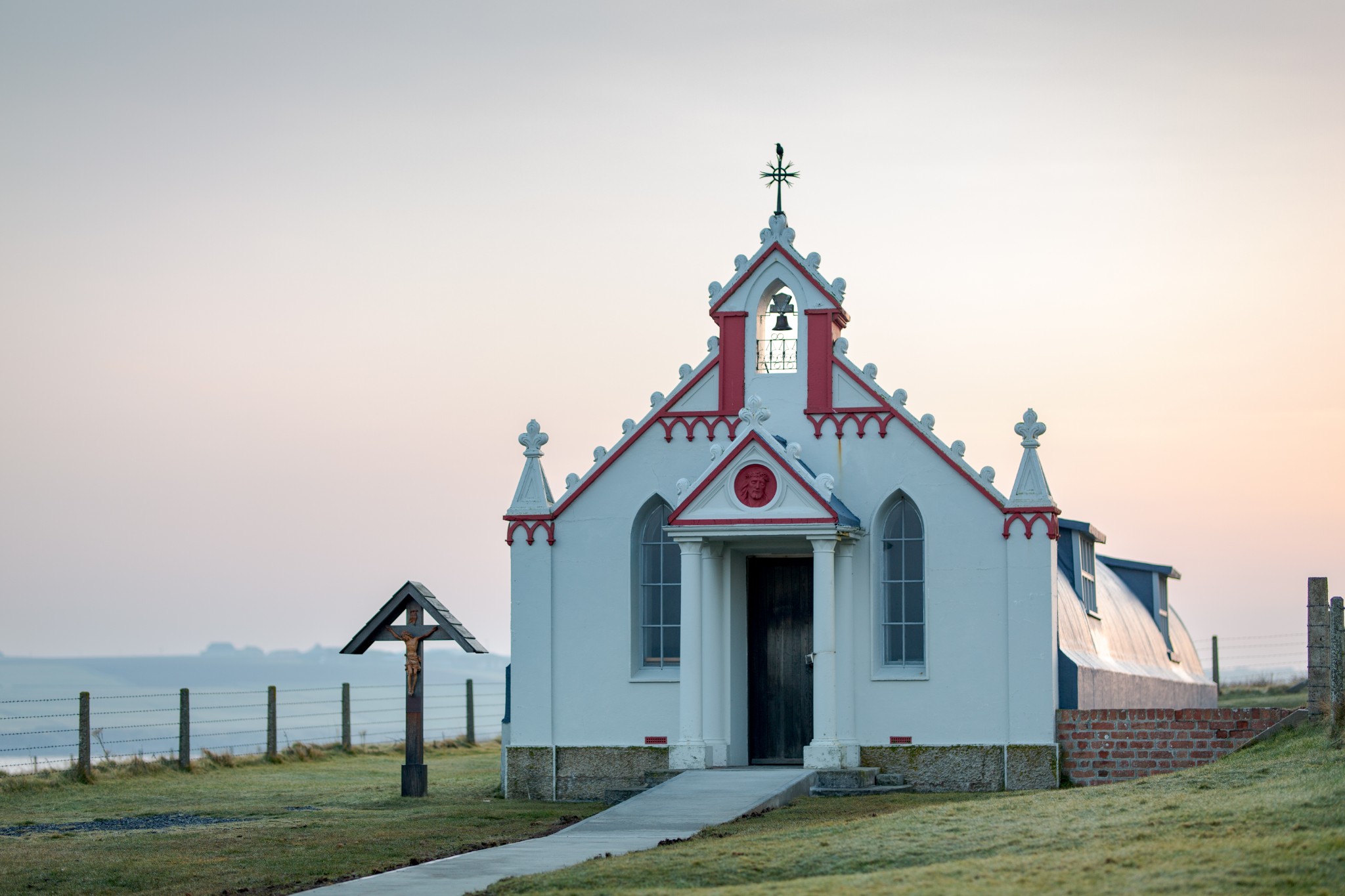
Of the 1300 Italian prisoners of war brought from North Africa to Orkney in early 1942, 600 were housed in Camp 60 on the small island of Lamb Holm. They were given permission to convert two Nissen huts into a chapel. Guided by Domenico Chiocchetti, they transformed the bare huts into a beautifully decorated interior.
Chiocchetti returned to Orkney from his home in Moena in 1960, to assist with the renovation of the chapel. On his departure, he wrote a letter to the people of Orkney in which he said: “The chapel is yours - for you to love and preserve. I take with me to Italy the remembrance of your kindness and wonderful hospitality..."
The Italian Chapel is open daily.
- 4. Rerwick Head
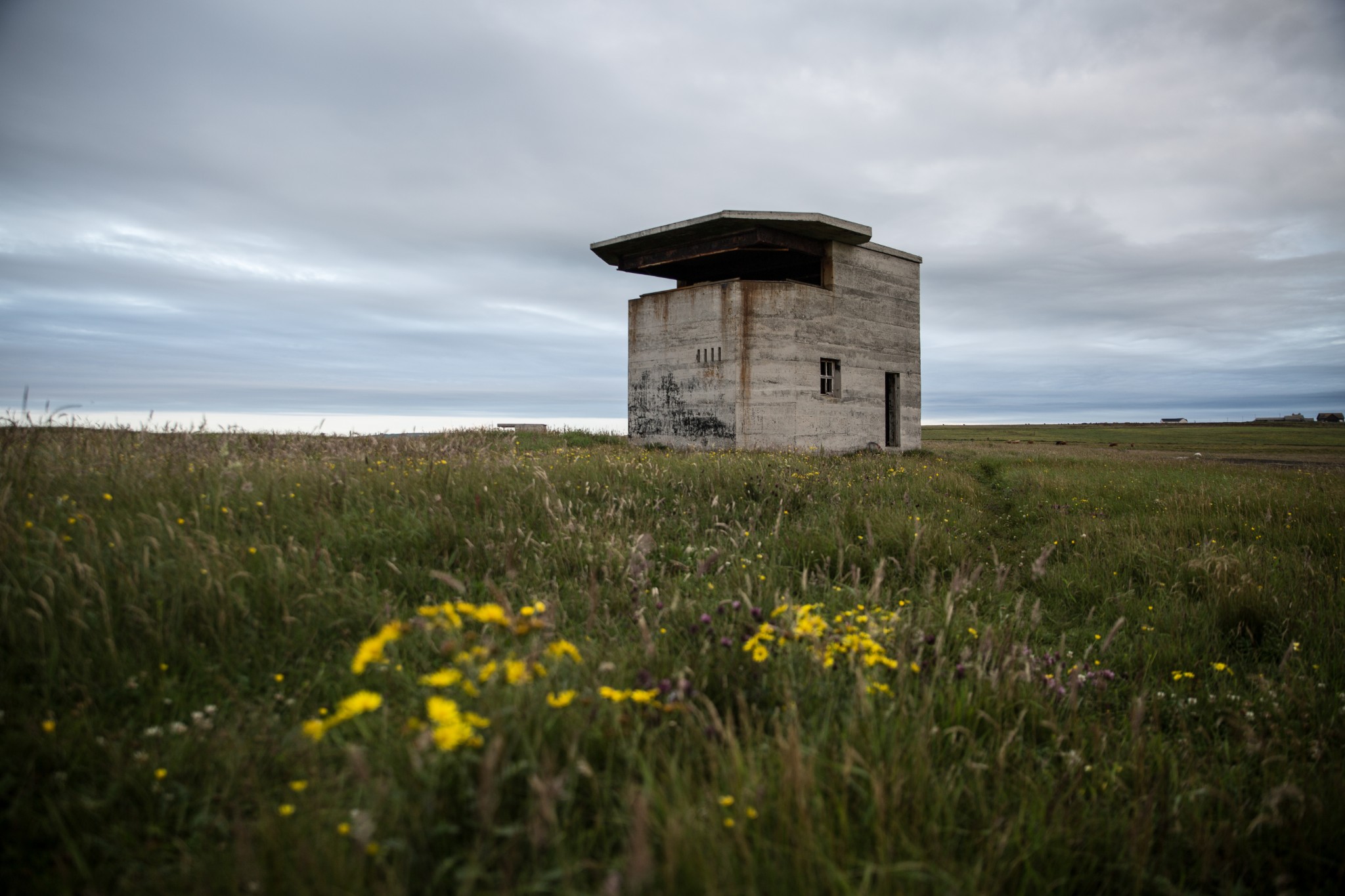
Rerwick Head is one of the best sites in the islands to explore Orkney's wartime heritage. This gun battery camp housed two large guns, in place as part of the protection of the eastern approaches to Kirkwall Bay.
Many of the original buildings are still in place today, although some are in varying states of repair. Leave your car at the small car park and walk along the grassy path and you'll soon come upon searchlight positions and the remains of camps and barracks. Further on you'll find a network of imposing grey buildings. There are lookout posts, ammunition bunkers and the huge gun batteries themselves.
Don't be tempted to enter any of the buildings as they're very fragile and could collapse at any point.
- 5. Royal Oak Memorial at St Magnus Cathedral
St Magnus Cathedral is home to a small memorial dedicated to the hundreds of men lost when the Royal Oak was sunk at anchor in Scapa Flow in 1939 after being attacked by a German U-boat.
The display includes a bell salvaged from the vessel, and memorial book featuring the names of all those lost on that fateful night.
- 6. Orkney Wireless Museum
The Orkney Wireless Museum is a treasure trove of artefacts, with examples of radios from over the years, from the grand designs of the 1930s to the compact transistor radios of today.
The wartime section has displays showing how Scapa Flow and the Home Fleet were protected during WW2. Items include a replica radar station, bomber radio equipment, Spitfire radios, and an actual 'spy suitcase' radio. There are also items on display taken from interned German ships, including a U-boat radio.
The museum is open during the summer months.
- 7. Stromness Museum
As you drive from the Kirkwall to Stromness via the A964 towards Orphir, you'll skirt the shore of Scapa Flow. Look out for the turquoise buoy marking the final resting place of the Royal Oak. When you pass Houton, picture it in 1918, with Britain’s Grand Fleet swaying at anchor when the ships of Germany’s High Seas Fleet sailed in under the terms of the armistice which brought the war to an end. Imagine, then, the scene in 1919 when the German fleet was scuttled by its crews. A handful of the proud warships remain on the seabed today, attracting experienced divers from around the world.
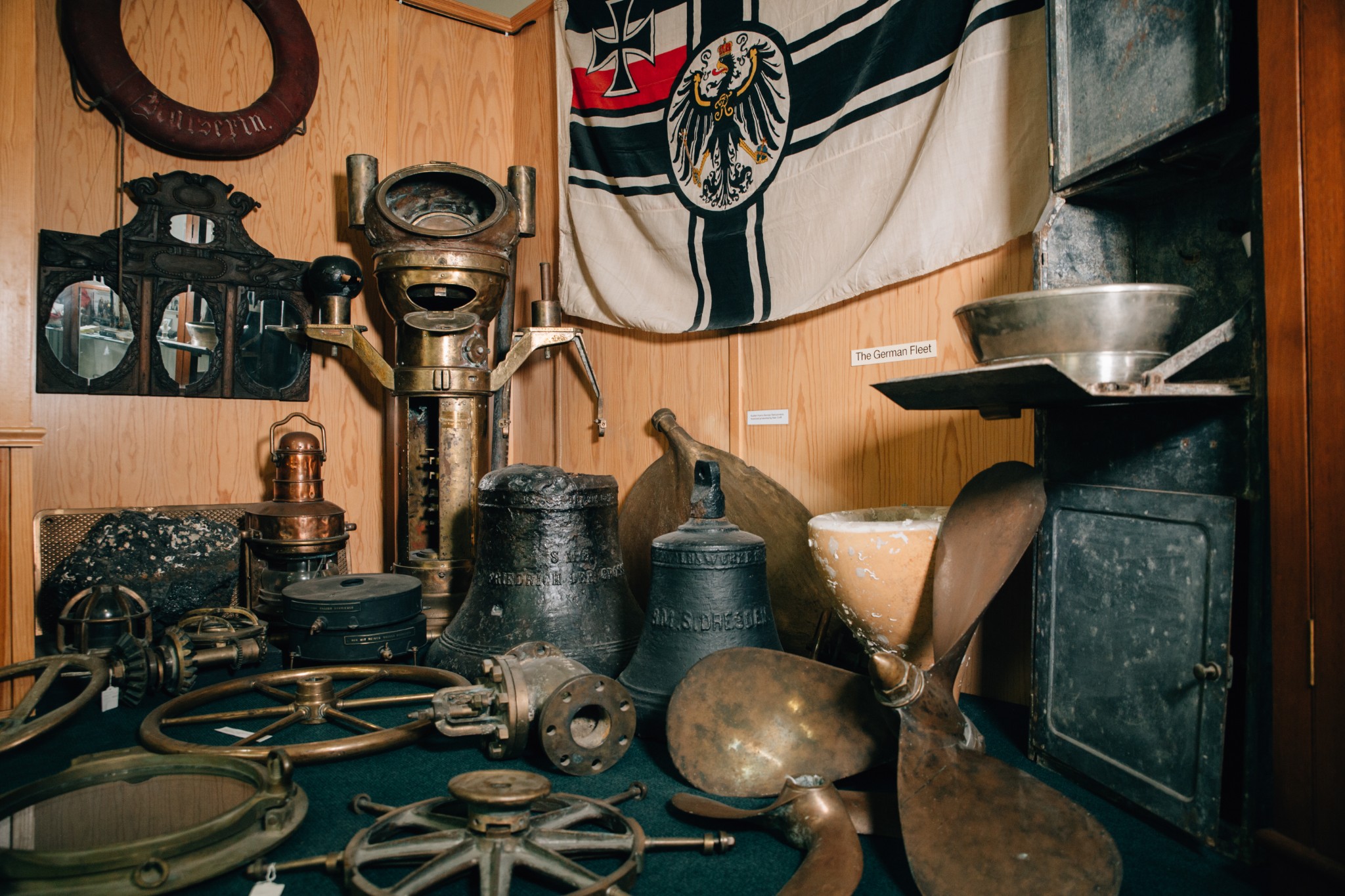
In Stromness, the Stromness Museum’s galleries include the story of Orkney’s wartime naval history, with artefacts on display including poignant memorabilia bringing the human stories of two world wars to life.
- 8. Ness Battery
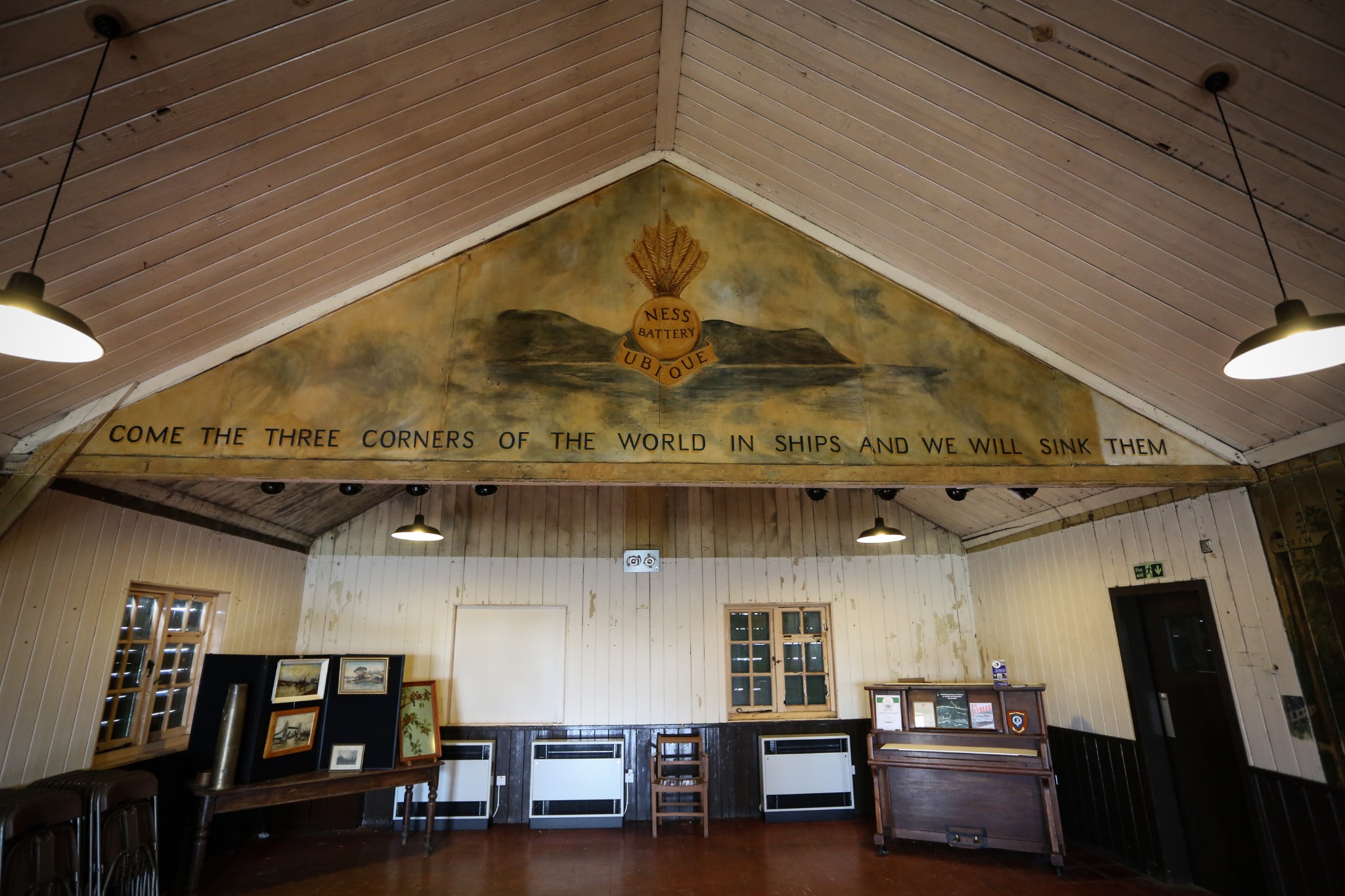
Near Stromness, you’ll find the Ness Battery, which guarded the Hoy Sound entrance to Scapa Flow in both world wars. As well as the remains of the batteries, several of the wooden accommodation huts are intact. In one of them, painted murals of rural England on the walls no doubt helped homesick servicemen through their tours of duty at the Ness.
Although the artillery guns were removed in 1955, the site was used by the Territorial Army right up until 2001.
Scheduled guided tours of Ness Battery are available.
- 9. Kitchener and HMS Hampshire Memorials, Marwick Head
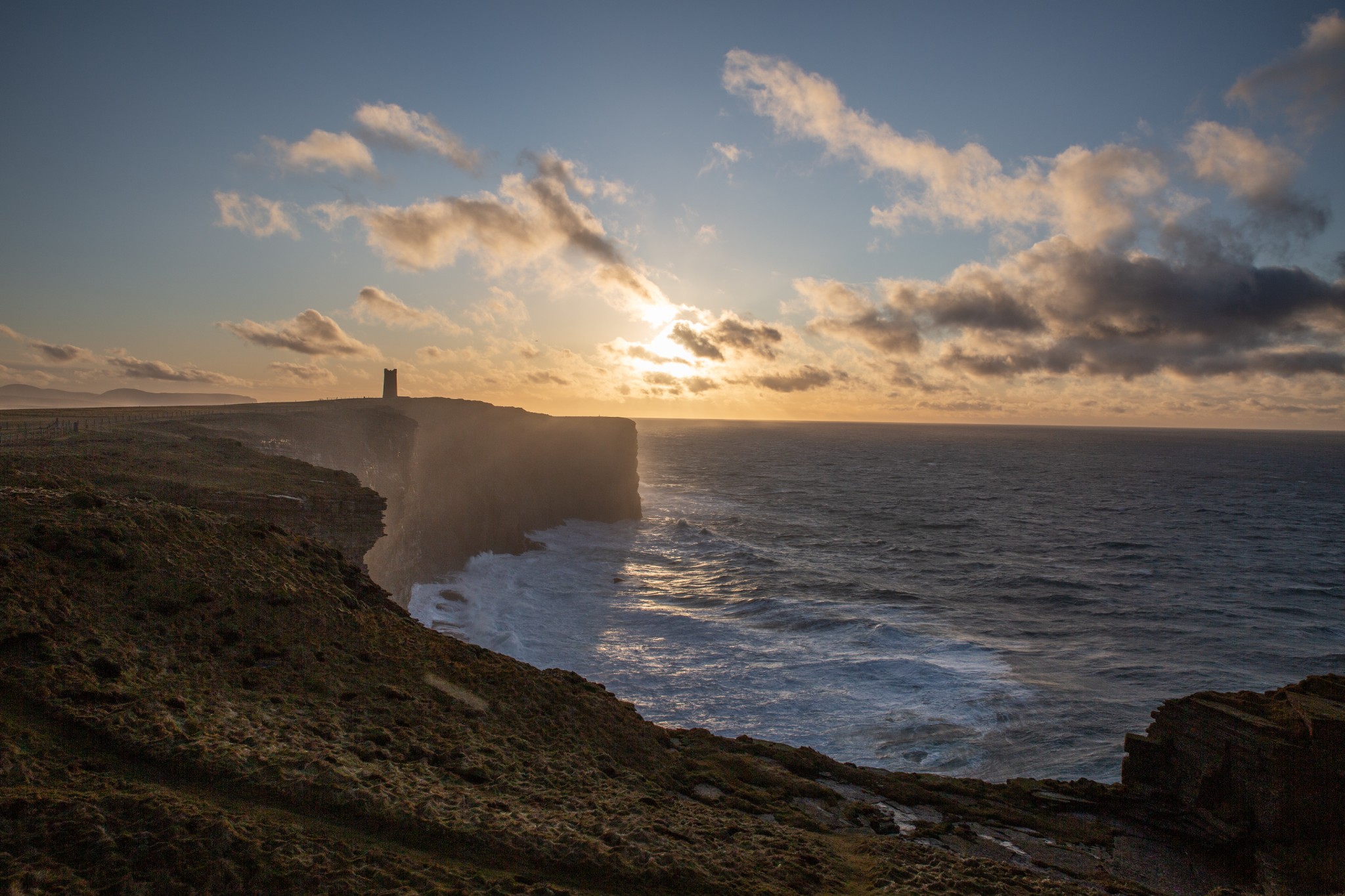
On the 5th of June 1916, the armoured cruiser, HMS Hampshire, left Scapa Flow en route for Russia carrying Secretary of State for War, Lord Kitchener, with his staff and the ship’s crew of more than 700 men. That evening, in stormy conditions off Orkney’s west coast, the ship struck a mine and sank. There were only 12 survivors.
The Kitchener Memorial at Marwick Head commemorates this tragic loss of life and a more recent addition is the HMS Hampshire memorial wall, which lists the names of the men lost on board the ship. It's a sombre but fitting final stop on your itinerary.
The remains of Fortress Orkney are evocative of a time and a place and of the scale of effort by so many people in wartime, but these lonely memorials on a windswept headland, with its spectacular sea views, are a reminder of the true cost of conflict.
Other places to visit if you have more time
- In Birsay, guided tours of HMS Tern, a Royal Naval Air Station operational in World War Two are available by arrangement.
- The Orkney Library & Archive in Kirkwall has a lot of material about wartime Orkney, including the diary of Gunner Astle who was stationed at Hoxa Head during the First World War.
- Head to Scapa beach on the outskirts of Kirkwall for fine views out towards Scapa Flow. Pay a visit to the Royal Oak memorial building and garden too, just next to the car park for the beach.
- For a special wartime experience, hop on the ferry to Flotta and explore the island's Wartime Trail. Flotta was of huge strategic importance during both world wars as a major shore base for the naval anchorage of Scapa Flow and the remains of military buildings are found dotted across the landscape. The Golta Peninsula also has some fascinating sites.
- The recently-refurbished Scapa Flow Museum at Lyness in Hoy is home to hundreds of artefacts and displays telling the story of Orkney's wartime heritage. It's open between March and December.
- Although not a site connected to either world war, if you're visiting Hoy make sure to head to nearby South Walls to visit the Hackness Martello Tower & Battery. They were built in 1813-14 to protect British convoys during the Napoleonic Wars, with French and American warships attacking merchant shipping using the Pentland Firth. Tours are available during the summer months.