Late August into September always feels like a bit of a transitional time. ‘Is that our summer over?’ is something I’ve heard a lot of lately but given the conditions other parts of the UK have experienced, I’m rather glad of our cooler conditions.
A recent visit to Stoneyhill on the shores of Harray Loch did have a very distinct ‘end of summer’ feel about it. Much of the vegetation, like great willowherb with its pretty pink flowers, was tall and rangy whilst the foamy-looking flowers of meadowsweet had all but gone, their leaves crisp and curled. Very few birds were in evidence either save for the haunting distant call of a pair of red throated divers.
I used to love coming here on summer evenings to fly fish for brown trout, those bars of sought-after Orcadian gold, flecked with red spots. Those were in my teenage years however and eventually the pangs of guilt made me realise I preferred the act of fly fishing rather than the catching itself.
What I actually came to see might count as one of the oddest things I’ve covered as a subject for these articles. At first sight it might seem underwhelming, certainly when compared to a thing of beauty like the brown trout. In one of the inlets it looks like there is a thick covering of dull, green sludge with some aquatic plants growing out of it. But on closer inspection you’ll see it isn’t sludge at all and is in fact a carpet of soft looking spheres.
Towards the water’s edge the shapes are more defined, the latest to have been pushed into this corner of the loch by the wind.
These are Cladophora marimo balls, also known as a moss balls, or simply marimo. Despite this name they contain no moss at all and are entirely composed of algae. These velvety green spheres are made from filamentous green algae where gentle wave action on the loch floor rolls the algae into its distinctive soft round shape.
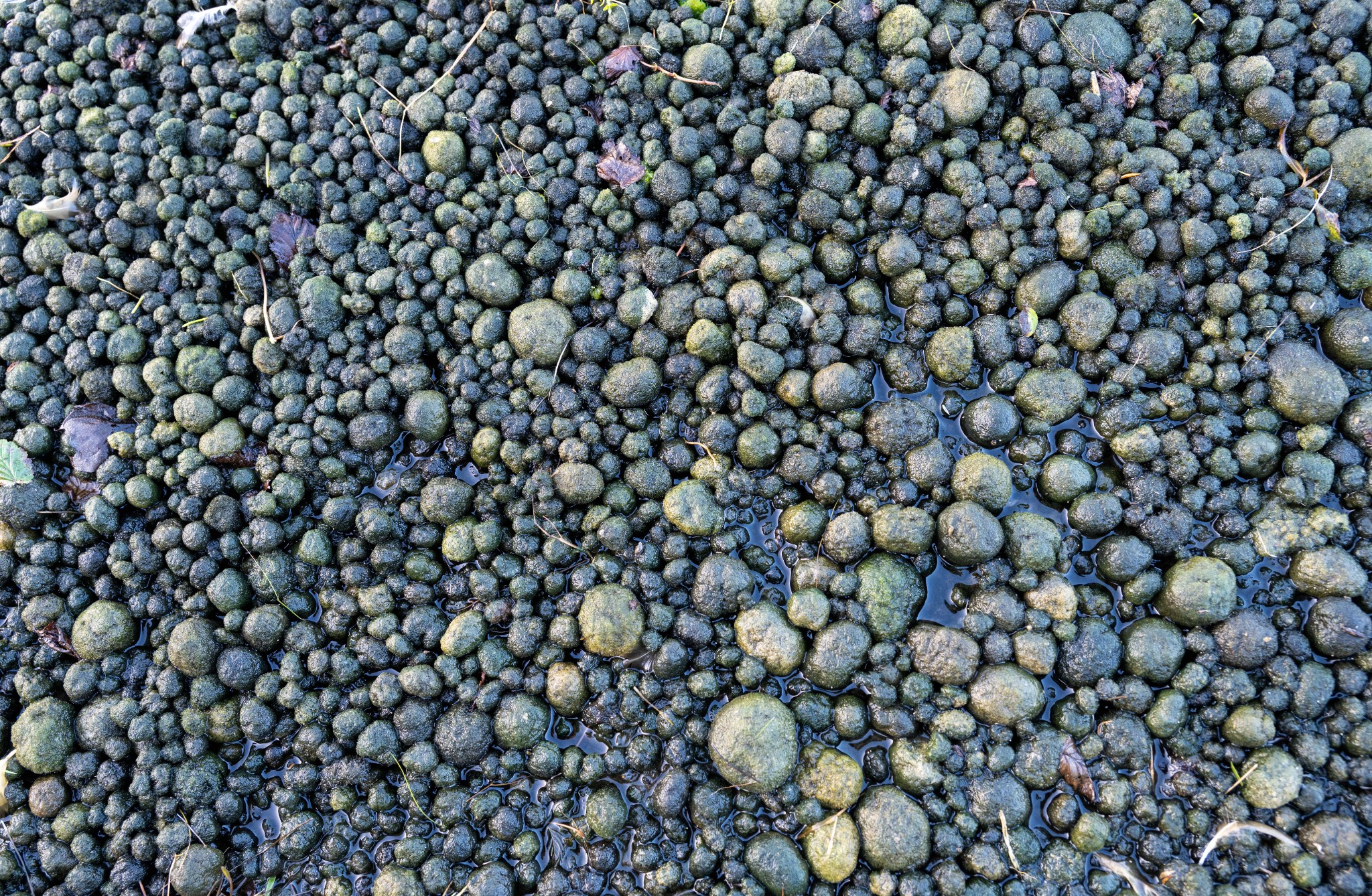
Nearby there are some examples free floating in the clear water where you can see the filaments a little more clearly. The algae can grow on rocks or form carpets on the bottom of water bodies or, like here, grow into spheres where the filaments are densely packed together.
It’s thought wave action keeps the spheres clean of organic material and because of their shape they can photosynthesise whichever way it turns. The free-floating marimo are vibrant green and beautiful but I’ll concede the dense mat pushed ashore is something to be avoided; my welly boots very nearly went under the surface whist negotiating my way around the loch edge!
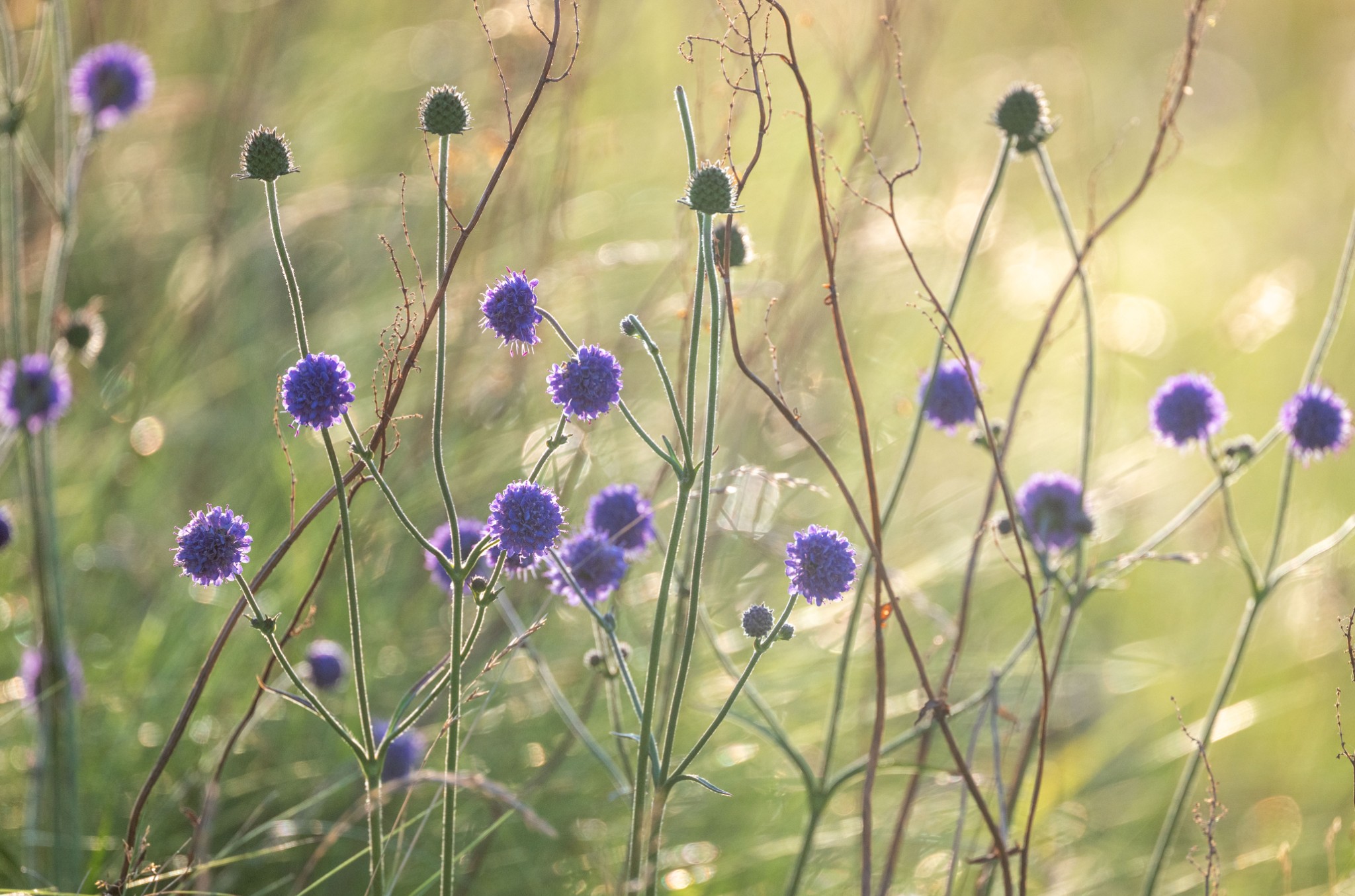
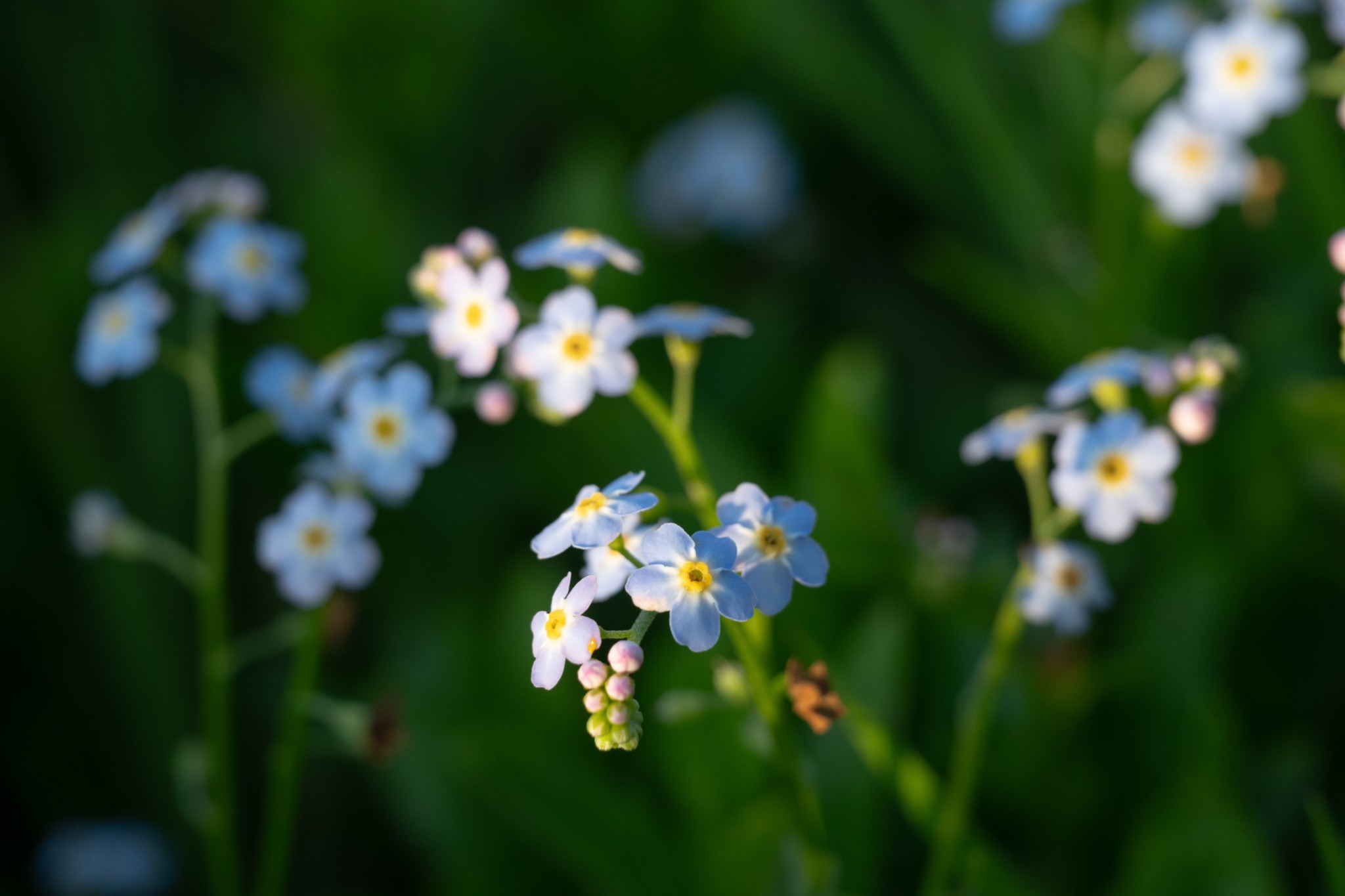
Despite the feeling that summer is at an end there are still flowers in bloom here. Forget-me-nots are visible in abundance as is water mint, its identification conferred by sliding a leaf between my fingers, crushing the wonderful scent of spearmint. Perhaps the most obvious late summer flower in Orkney though is the devils-bit scabious – its bright, purple, round flowers on leggy stems sway in the breeze.
Its name tells a story. It was deemed so good at curing a range of ills that the devil himself became annoyed at its abilities. In an attempt to curb its healing properties, he attempted to bite off its root. It seems he was successful as the plant has a very short root-stock.
Another black creature with wings that I’ve photographed recently is the black darter, one of our most impressive dragonflies. I employed the help of Graeme Walker from Stromness who is the local county recorder for Odonata (the order of insects comprised of dragonflies and damselflies). Near Brinkie’s Brae lies a fantastic pool surrounded by rushes and other vegetation with perfect conditions for a range of species.
Pond dipping was pretty new to both of us but Graeme had a piece of high-tech kit that turned the odds of catching something firmly in our favour; a colander! It quite handily allowed most of the sediment and water to escape and leaving only what I hoped to photograph. Graeme found a black darter nymph and, once transferred to the tank and seen through the magnification of my macro lens, (it’s no longer than 1cm in length) it turned out to be quite the fearsome looking creature.
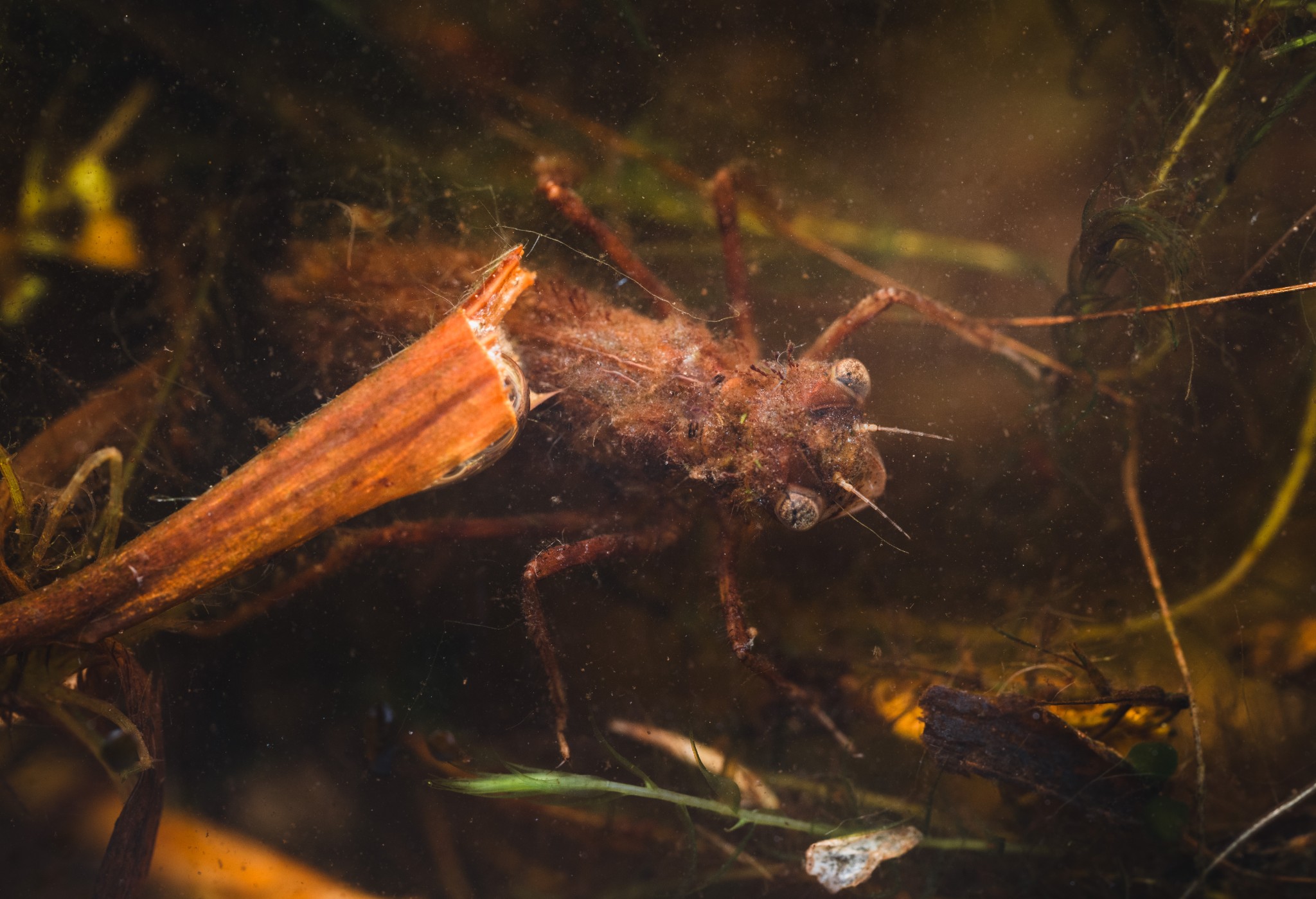
The pond looks calm and benign but under the surface is something of an arms race. We saw diving beetles and froglets, but in this habitat the dragonfly larvae (nymph) is a highly effective ambush predator, using its labium (extendable lower jaw) to quickly seize its prey. It’s likely that in this murky, sediment-rich pond it relies on touch to catch its prey whilst those in clearer habitats may stalk their prey visually.
Once we had finished photographing the nymphs something quite remarkable happened as we returned them to the pond. The appearance of the sun and resulting warmth triggered a mating and egg laying ‘frenzy’ quite like I’ve never seen. Many dozens of black darters clasped together made such a racket with their wings hitting the vegetation it was the sound rather than the sight I noticed first.
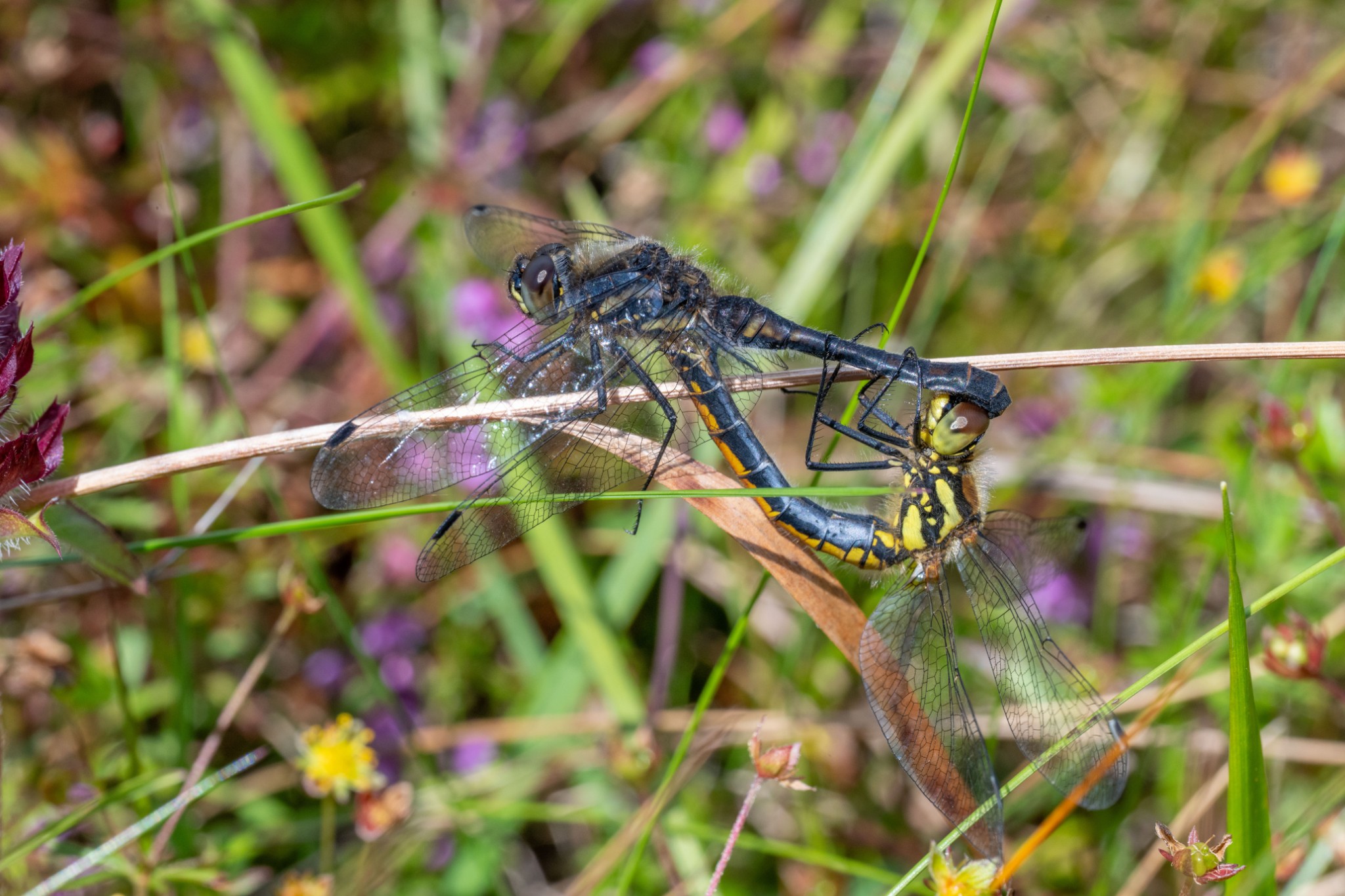
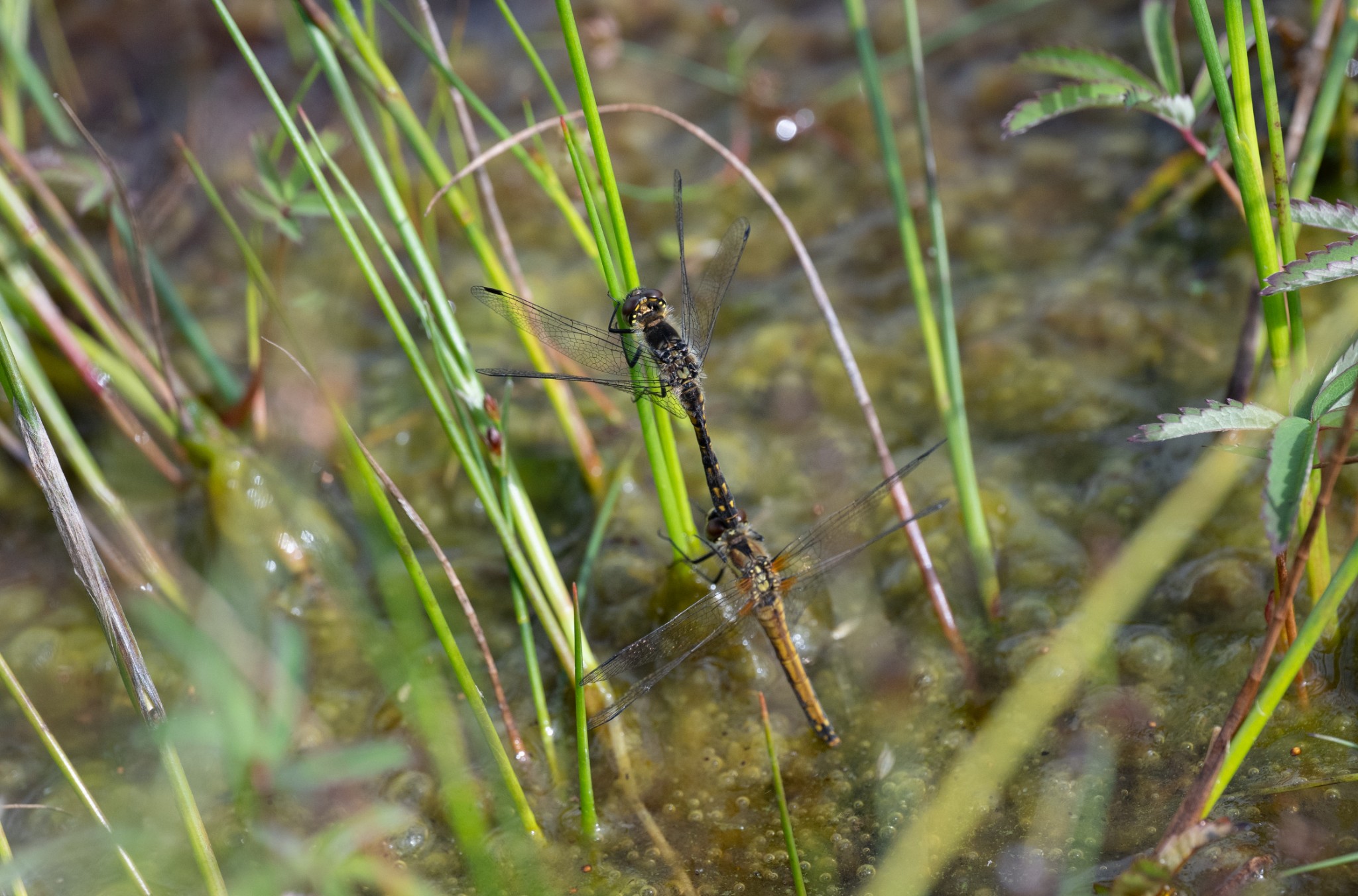
When mating, black darters form what is known as a ‘copulation wheel’ or ‘copulation heart’. If the female is receptive the black coloured male will attach to the female by clasping onto her head. The female will then swing her abdomen under his where mating takes place. What we saw then was fascinating to watch; the female gently dipping her abdomen during flight into the shallow water where her released eggs sink or attach to submerged plants. This kind of egg laying is called oviposition, but why stay clasped together whilst laying?
Well, because egg fertilisation doesn’t take place during copulation but at oviposition, so by staying clasped the male is trying to ensure that it’s his genes that are carried on rather than an interceding male.
Raymond is a wildlife filmmaker who also offers bespoke Orkney wildlife tours and one-to-one wildlife photography tuition. Find out more via his official website. You can also find him on Facebook, Twitter and Instagram.