A small, dark shape darts away in the shallows, no doubt spooked by my unwanted looming presence over the bank of a fast-flowing burn. My polaroid sunglasses allow me to see ‘through’ the pleasing amber-coloured water. I was hoping to spot some sea trout resting up in the deeper pools but they have yet to arrive in any numbers.
I unscrew my flask of tea and settle on the bank to enjoy the warmth from a high sun unhindered by clouds. Above the babble and gurgling of water flowing towards the Bay of Ireland I hear a call designed to pierce through the background buzz of flowing water. Likened to the sound of ball bearings hitting each other, the ‘chipp’ or ‘chee-ipp’ call belongs to a bird that has landed on the edge of the weir, its long tail a slow constant bounce.
The grey wagtail is primarily a bird of fast flowing water and in an Orkney context that mostly means burns found in Evie, Kirkwall, Orphir, and Firth. The bird that landed is a male and as such is a bold looking little bird with a white moustache, a black bib grey, a yellow breast, and a grey head and back. Perhaps the most striking aspect of its plumage however is the very bright yellow underparts. Having snatched a fly, it alights and whizzes downstream with its characteristic bouncing flight.
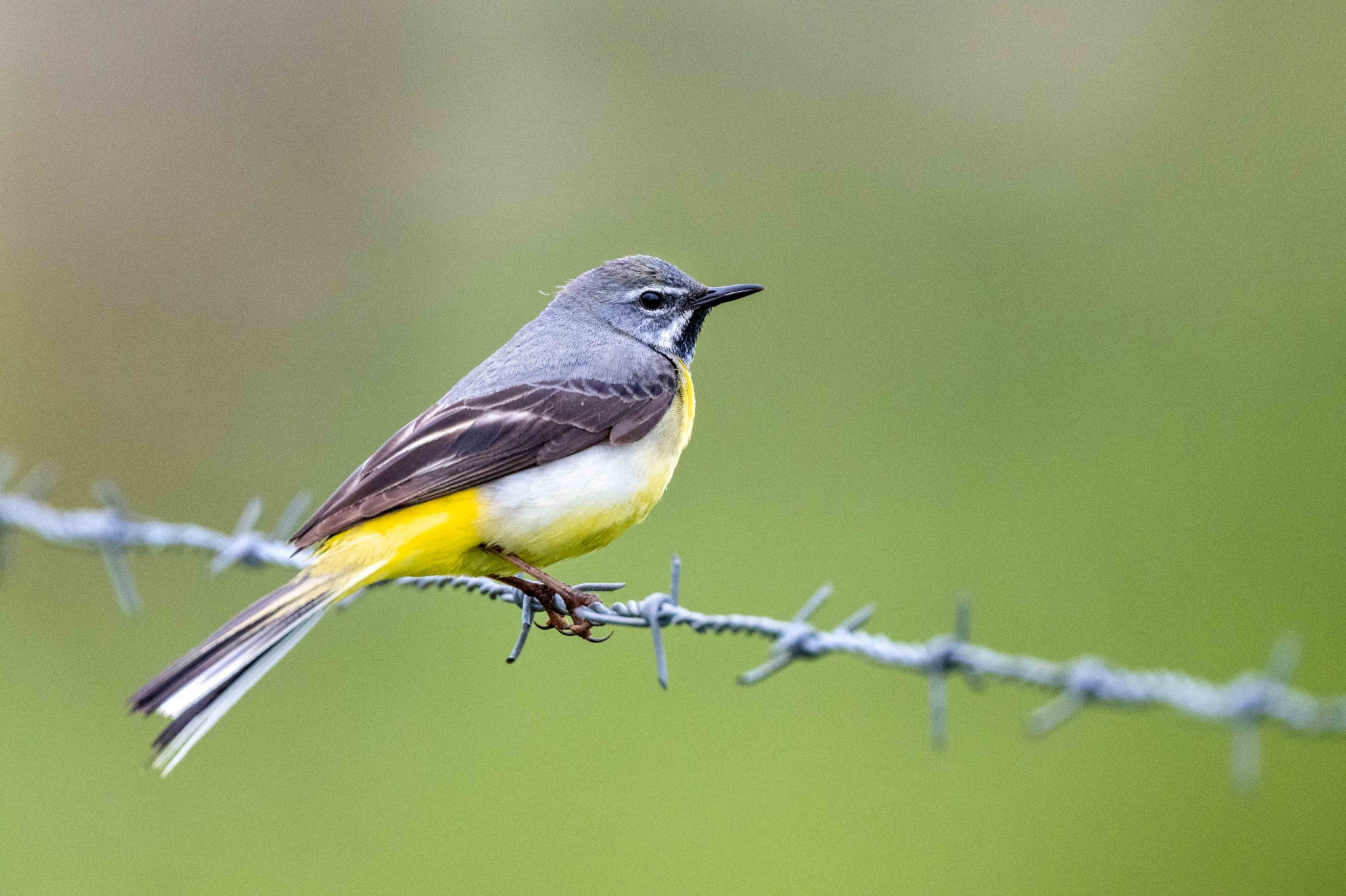
Such is the degree of yellow on a grey wagtail people often assume they’ve seen a yellow wagtail. Whilst this is possible, yellow wagtails are considered a rare passage migrant. The nest will almost always be built above flowing water either in a crevice or hollow amongst tree roots or in the ledge of a wall or bridge alongside the burn. Last year I photographed two young grey wagtails being fed by the adults on ledges of a burn having just emerged from the nest. It was on the 21st of May so working backwards after a fledging period of 14 days and an egg incubation period undertaken by the female of 12 to 13 days, I reckon the female laid her eggs around the 24th or 25th of April.
It’s always such a treat to see this colourful and elegant bird. Most will have moved away from Orkney to the south west of England and Ireland by the autumn but one or two will see their way through an Orkney winter.
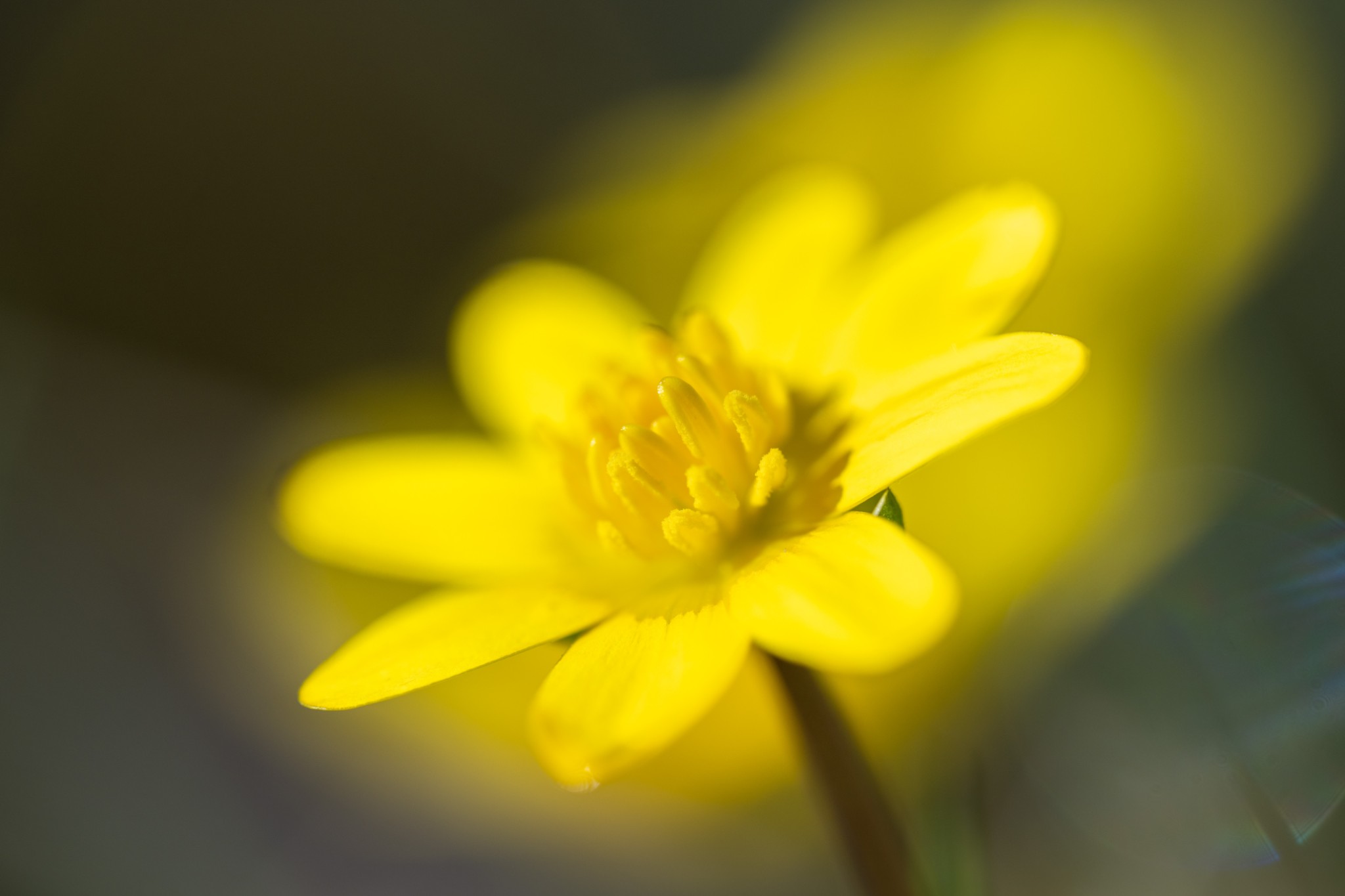
The bright splash of yellow isn’t confined to the undercarriage of the grey wagtail however. Carpets of lesser celandine surround me; this isn’t surprising given its preference for damp ground. I always think of this glossy-looking flower as a real sign of an Orkney spring. The narrow petals which can number between eight and twelve can be found on relatively long stalks. As pretty as they are they cause something of an issue for photography as invariably they have a very bright white highlight reflecting somewhere off the petals. The solution is a simple one on a bright day like this - create a shadow over the flower with your body.
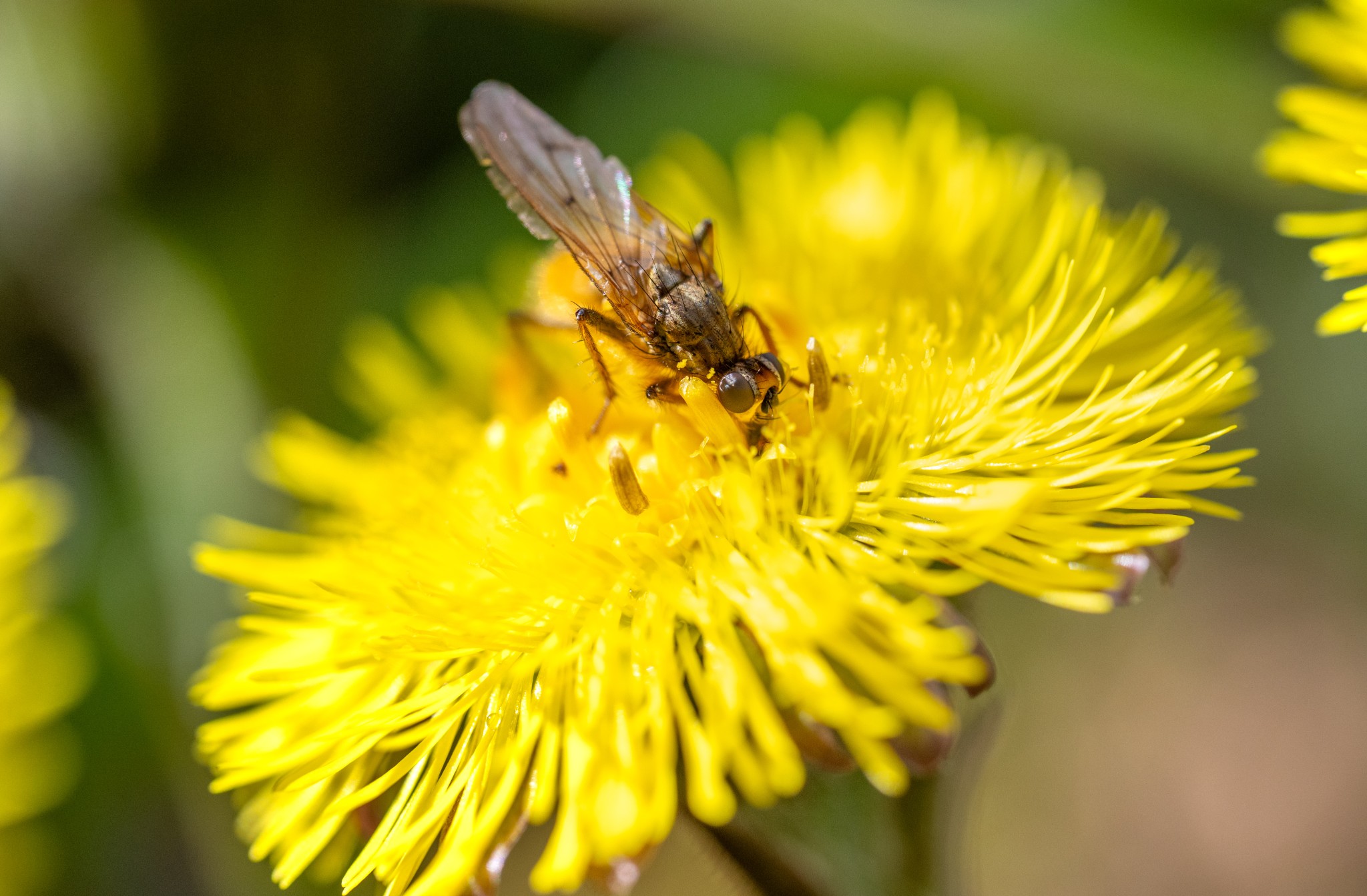
Another bright yellow flower is flourishing nearby on a small islet in the middle of the burn. In Orkney we call it ‘tushalago’, otherwise known as colt’s-foot. It vies with lesser Celandine as the earliest to produce a flower - a lovely wide and round flower found upon a scaly stem. It’s an adaptable plant and is as home here in this wet environment as it is growing through the sand dunes at the Fourth Barrier beach. A fly is rooting around in the flower head and I can see the hairs on its back doing the job the flower hopes it will do, carrying its pollen to other flowers.
Marsh marigolds and primrose make up the rest of the yellow palette here and it’s worth asking why yellow is often the first hue of the spring. It’s no coincidence; yellow flowers are attractive to early emerging insects, helping them to find food when little else is flowering. The flowers are of course trying to attract pollinators for the propagation of their species. It’s not the bright yellow we see that an insect with compound eyes will see, however. They view the world very differently and can see ultra-violet light. Many flowers incorporate U/V into their petals making them highly visible to pollinating insects.
Another bird with a yellow (and olive) hue, albeit much more subdued than a grey wagtail, is singing its heart out above me. Having newly returned from over wintering in Africa, the willow warbler can be found singing atop young trees rather than mature woodland. Several good places to see and hear them are Arcadia Park and Muddisdale in Kirkwall, and Happy Valley in Stenness.
The willow warbler population is experiencing mixed fortunes, declining across Wales and England but increasing in Scotland and Northern Ireland. For now, I get my flask back out of my bag, lean my back against the tree and enjoy the singing from above.
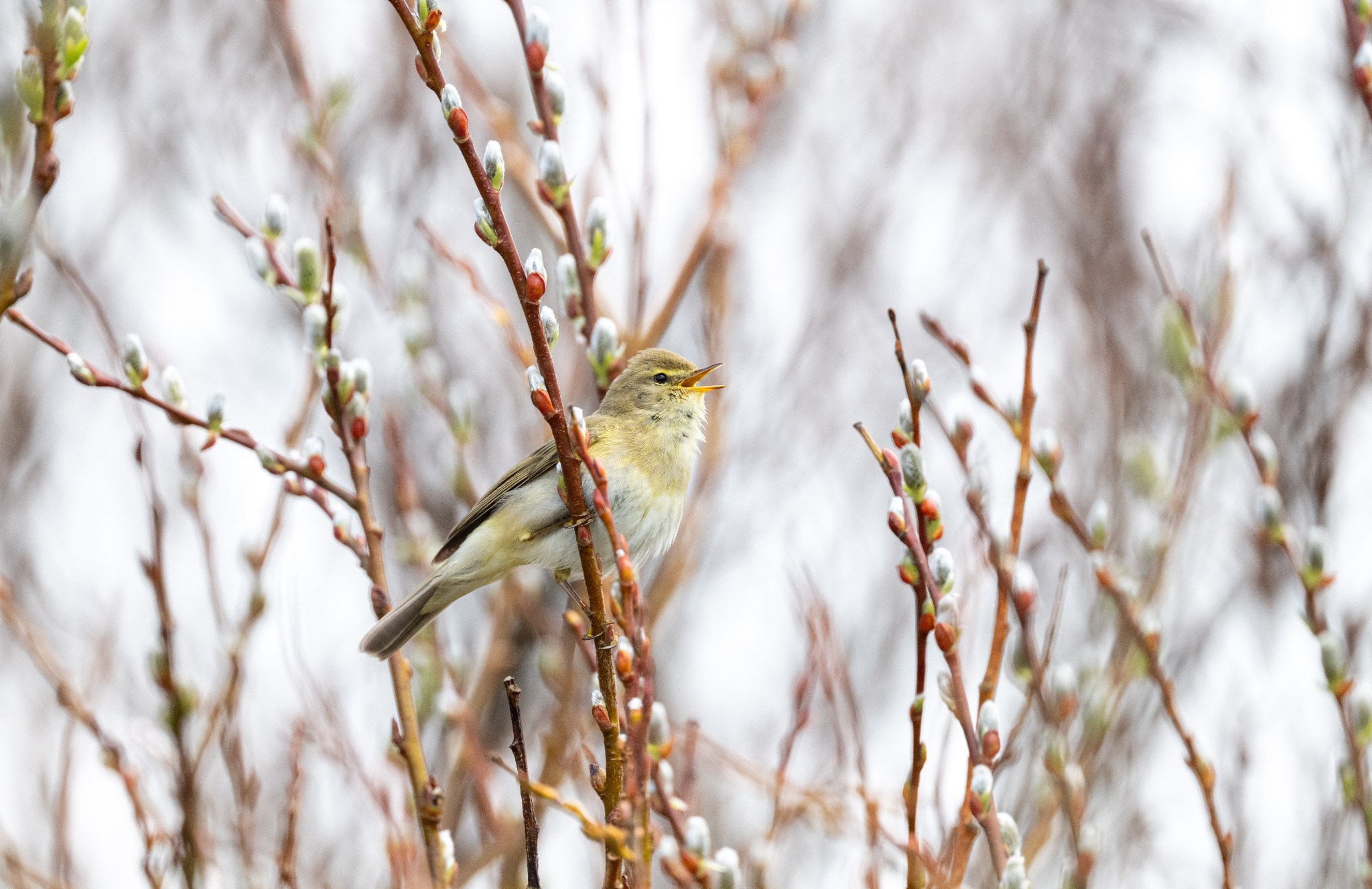
There’s a lot to admire about the willow warbler, not least the tribulations this tiny has bird faces as it travels from the humid zone of central Africa in order to raise a family in Orkney.
Raymond is a wildlife filmmaker who also offers bespoke Orkney wildlife tours and one-to-one wildlife photography tuition. Find out more via his official website. You can also find him on Facebook, Twitter and Instagram.