I’m glad to see the back of February. I wondered if the south easterly winds and the cloud cover it brought would ever change.
Doing any photography in these conditions has been difficult - landscapes rendered flat and without texture. Looking for some inspiration I drove down to South Ronaldsay to one of my favourite places, Windwick Bay.
Grey seals haul out here during the late autumn and early winter to give birth and flocks of wigeon often form large rafts just offshore. The grey seal pups have long since been weaned and started a life out in the ocean. There’s no rafting today either given the tumultuous sea state as huge rolling waves crash on the dark cliffs.
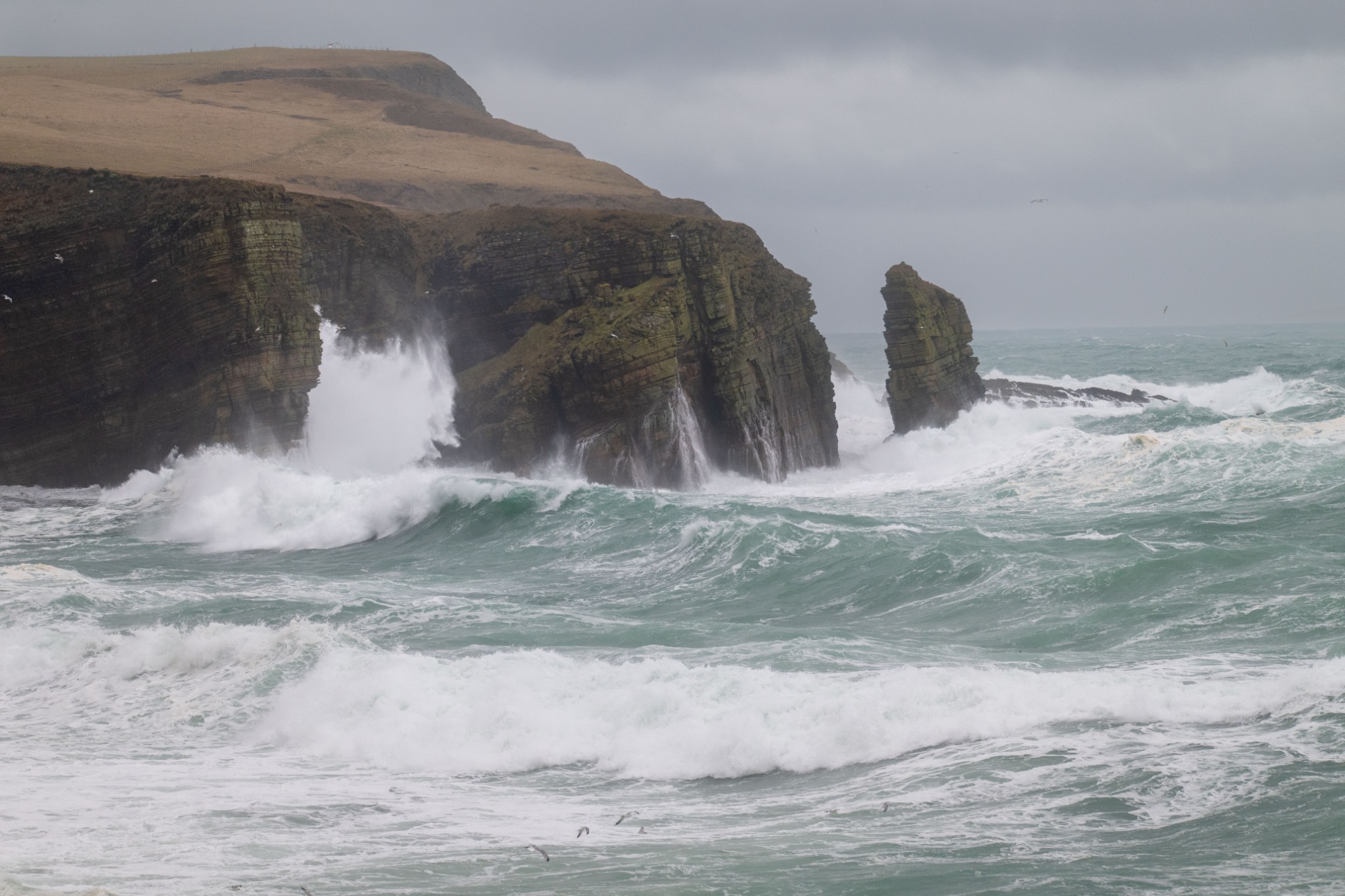
I gain a little shelter by heading down to the shore and it’s noisy down here with the rush of water sucked back over large pebbles and boulders before being thrown back to shore. Gulls play a game of ‘chicken’, picking at morsels before a thundering roller sees them perform acrobatics to get out of the way. To the south the sky is darkening and it’s not long before I feel the physical affects of it as rain stings my cheeks.
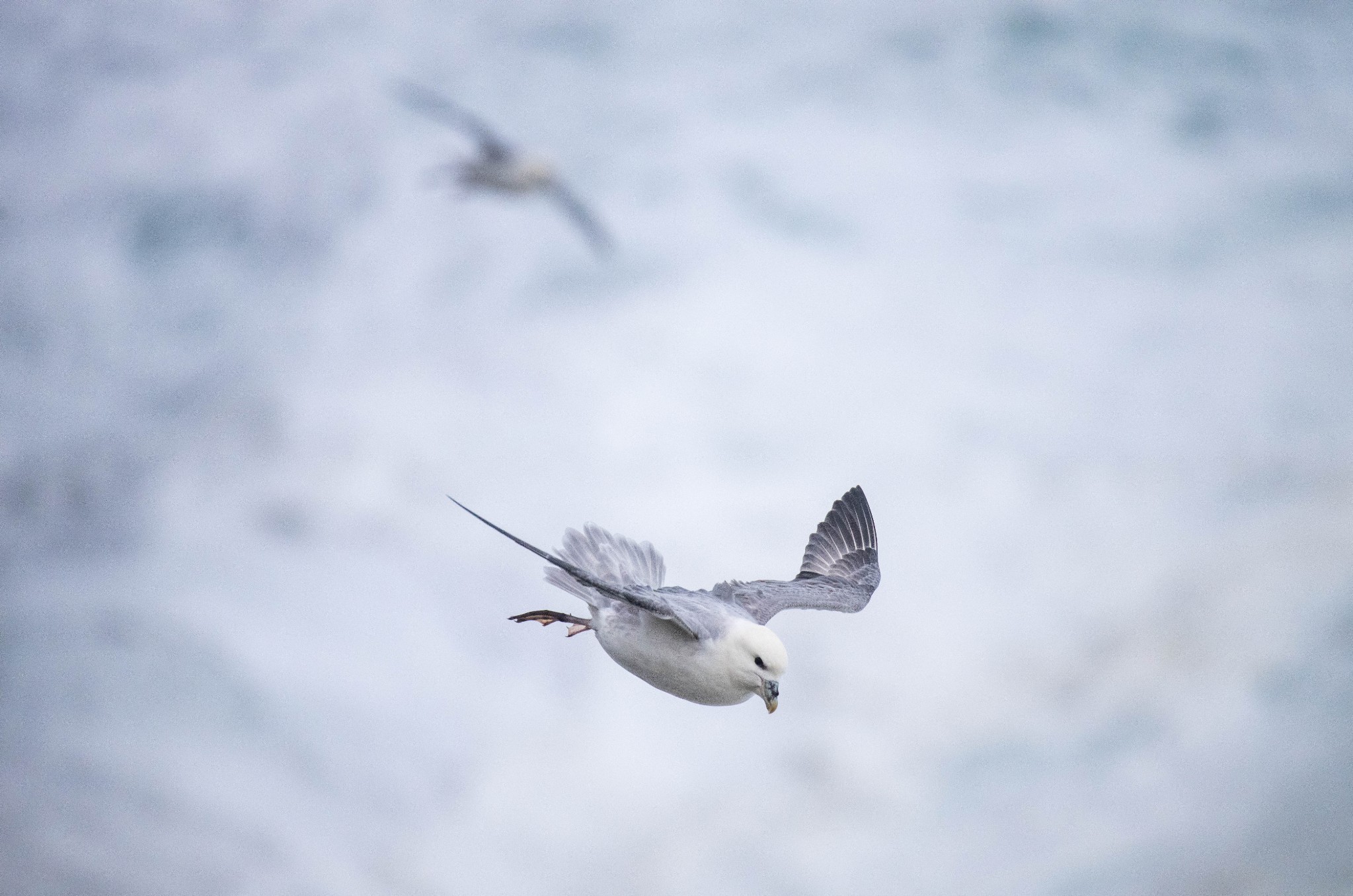
It passes on the brisk wind and I choose a medium length telephoto lens to capture the scene. Simply photographing the big waves doesn’t do it justice and so I go a bit wider. Despite the grey it’s a dramatic scene, with black-looking cliffs and a sea stack pounded by the sea. Of course, there is one creature here that makes all this look effortless; the fulmar.
I’ve walked along the top of the cliff and I’m struggling to keep the hood of my jacket in one place such is the ferocity of the wind. I hunker down onto my knees for some stability and take off my 800mm lens. It’s a long lens and so it’s acting too much like a sail. I can’t even follow a fulmar in the frame let alone try to lock focus on it so I change to a shorter focal length.
I manage a few frames and then just sit admiring them as they float effortlessly then let themselves be taken by the wind. Stiff wings catapult them in a wide arc. I can see another front on the horizon moving quickly my way so I admit defeat, feeling out of place on the exposed clifftop, and I’m glad of the flask of tea back in the car.
‘It can’t rain all the time,’ goes the quote from the 1994 film ‘The Crow’ and so it proves. Finally, the weather changes and allows me to investigate the winter survival strategy of one of our most charismatic mammals, the mountain hare.
The wind has swung to the north, bringing with it a good deal of snow. Mountain hares can be found all over the wide expanses of heather moorland in Hoy, the only island in Orkney it inhabits. They are to be found on the highest peaks of Ward Hill and Cuilags but I’ve seen them occasionally at sea level too. They much prefer short heather to the long deep stuff and there are signs of them everywhere in the snow, their tracks belying their presence.
Why, then, am I struggling so much to find one with footprints and droppings everywhere? Mountain hares are more active at night and it wouldn’t surprise me if the tracks are evidence of night-time foraging. The main reason however is that their camouflage is doing its job, turning white in the winter to blend in with the snow. Peats banks, those long straight scars created by backbreaking toil over the centuries, are favoured haunts, providing shelter from the icy wind.
I check my usual spots, where I know they have ‘forms’, the shadow depression in the earth they use to sit in, yet still nothing. I’m not alone however; the local ravens are ever present overhead and I like their company. Then I see it, the darkness of the peat bank betraying the hare.
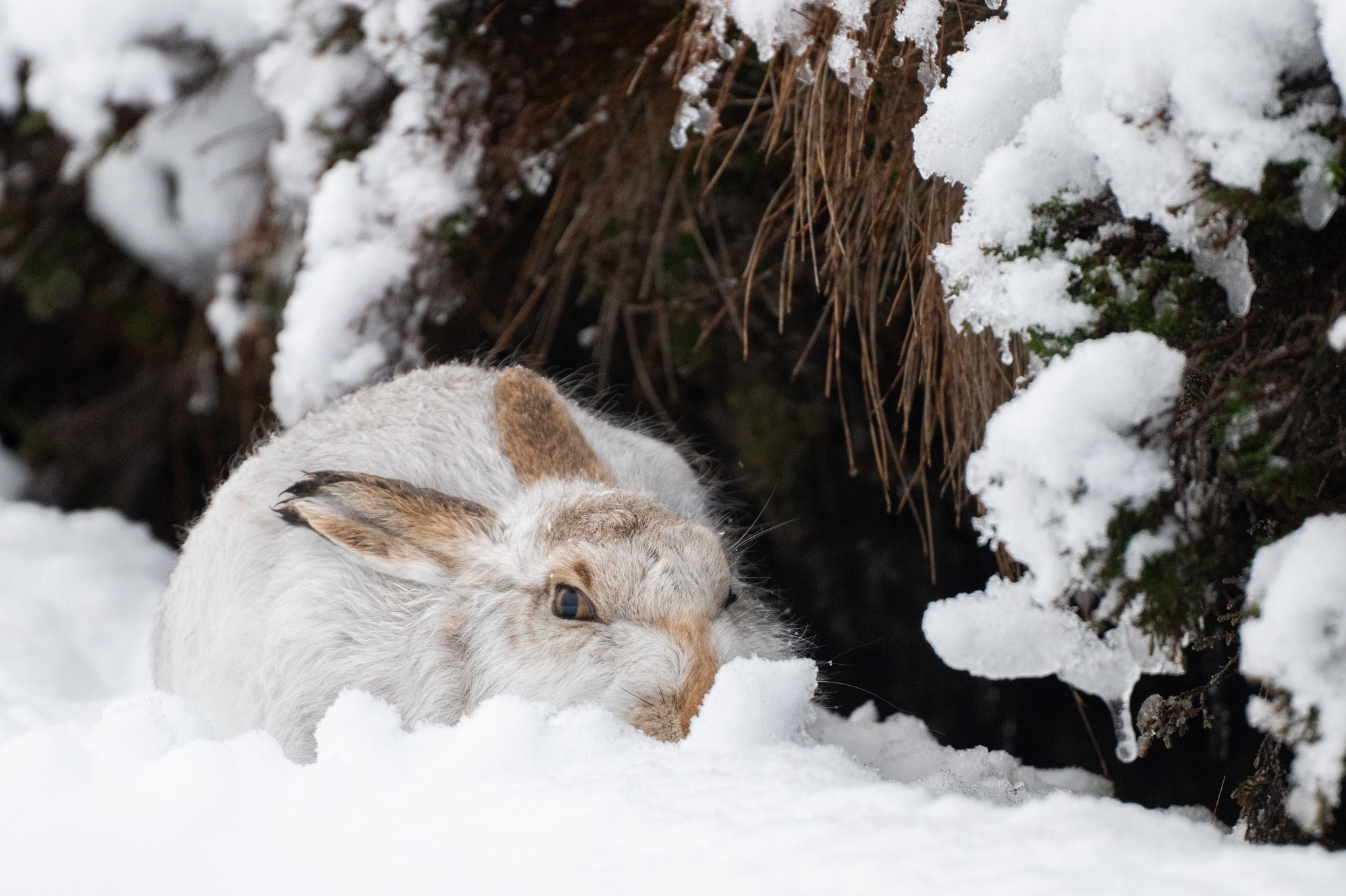
I’ve almost stumbled upon it and to be honest this is often how I end up getting the closest views of them. You can see the instant moment of the ‘fight or flight’ response and once you’re already close to a mountain hare it will often rely on camouflage and staying stock still.
A mountain hare can see you a mile off and so it’s very much in their paws whether you can get close enough for a picture without overly disturbing it. Interestingly, this one relaxed once I lay on my stomach and starting taking pictures. A winter squall blows through, spindrift covering the hare in a dusting of snow.
I leave it be and drive further north into hills as the sun begins to set. The temperature has dropped markedly and I’m glad of the Life-systems rechargeable hand warmers in my pockets. I head to the Dwarfie Stone and watch the sky transform into quite the most beautiful hues of pink and orange, the snow taking on the colour of the sky above.
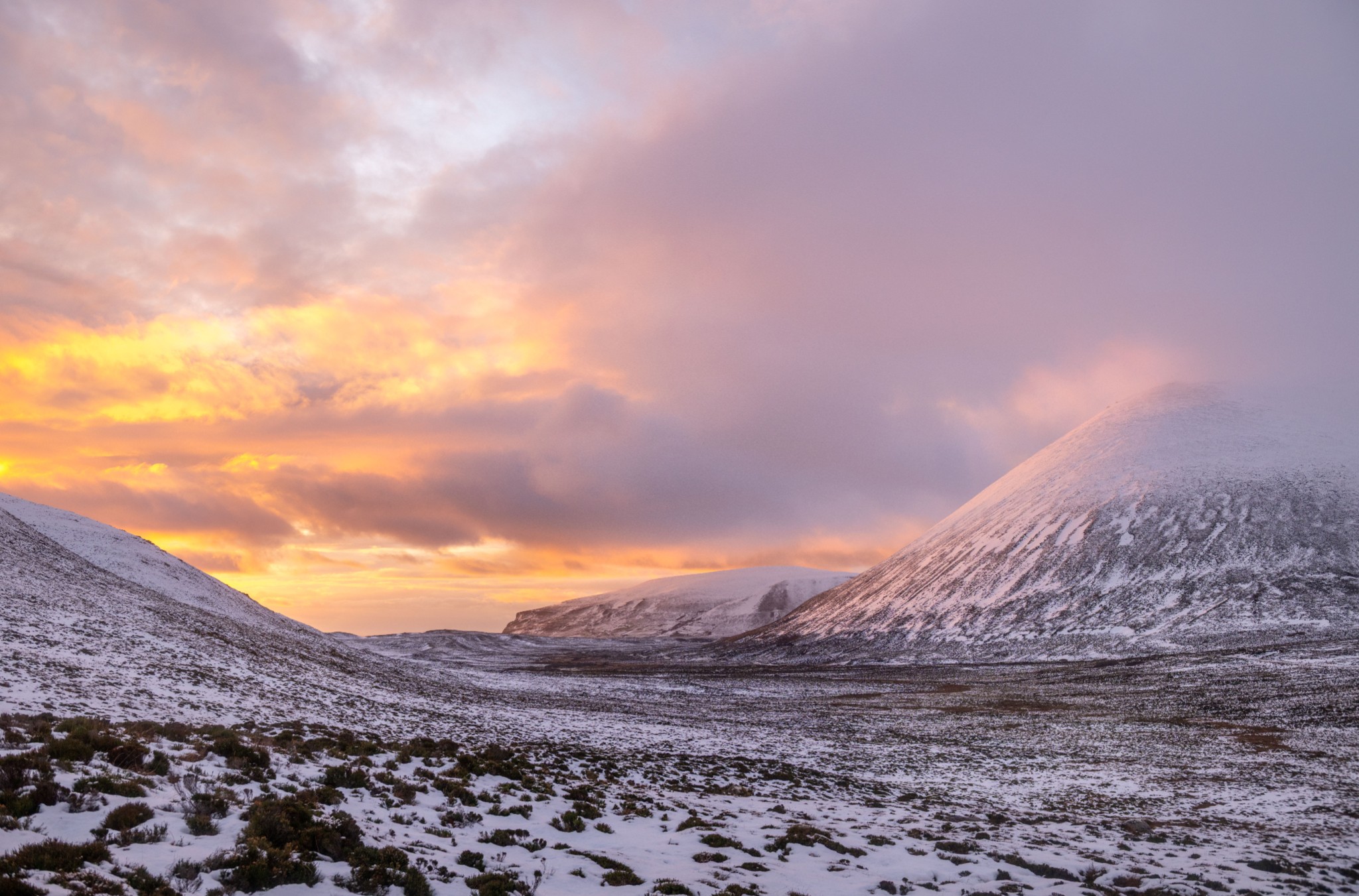
I scan the ridges for signs of eagles before they head to roost and sure enough the unmistakable shape of a white-tailed eagle banks over the hill and out of sight. I head back to the ferry, cold and tired, but warm from the beautiful sights I’ve seen.
Raymond is a wildlife filmmaker who also offers bespoke Orkney wildlife tours and one-to-one wildlife photography tuition. Find out more via his official website. You can also find him on Facebook, Twitter and Instagram.