In nature we are drawn to the shiny and exciting. Orca, white-tailed eagle, otters, and puffins, we have them all in Orkney. But what about the less glamorous?
Many a visitor to the Brough of Birsay will have curled up their nose as they drive along the cliff top on the way to parking up. The cause of their displeasure is the pong emanating from the copious banks of seaweed rotting on the shore.
I don’t have a clothes peg for my nose but I make my way down to the source of the smell to take a look at one of the most important ecological processes in Orkney. Slippy but soft underfoot, it’s difficult initially to make out what species of seaweed are here, all in various stages of decomposition, piled and mashed together having been cast upon the shore during winter storms.
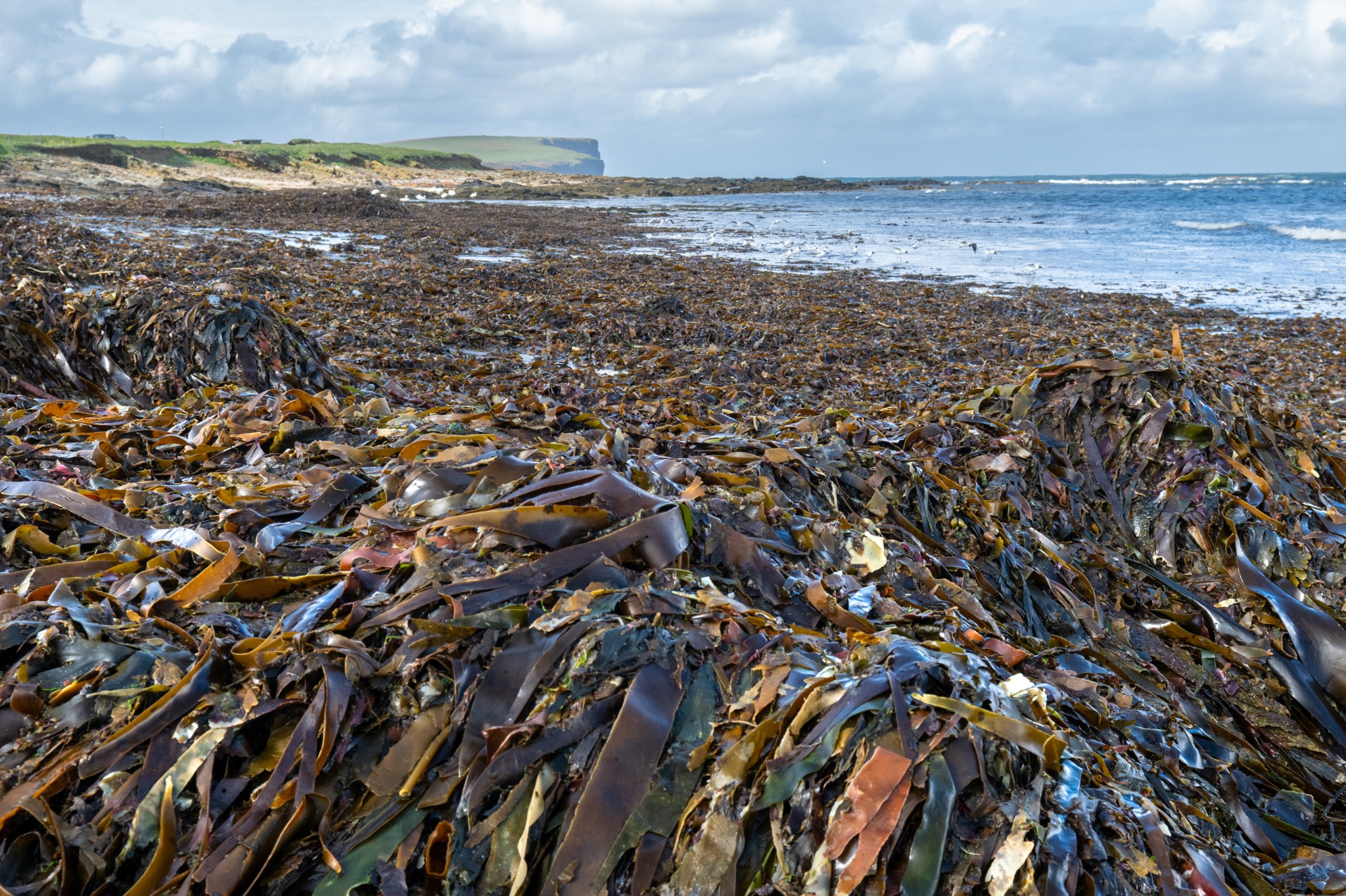
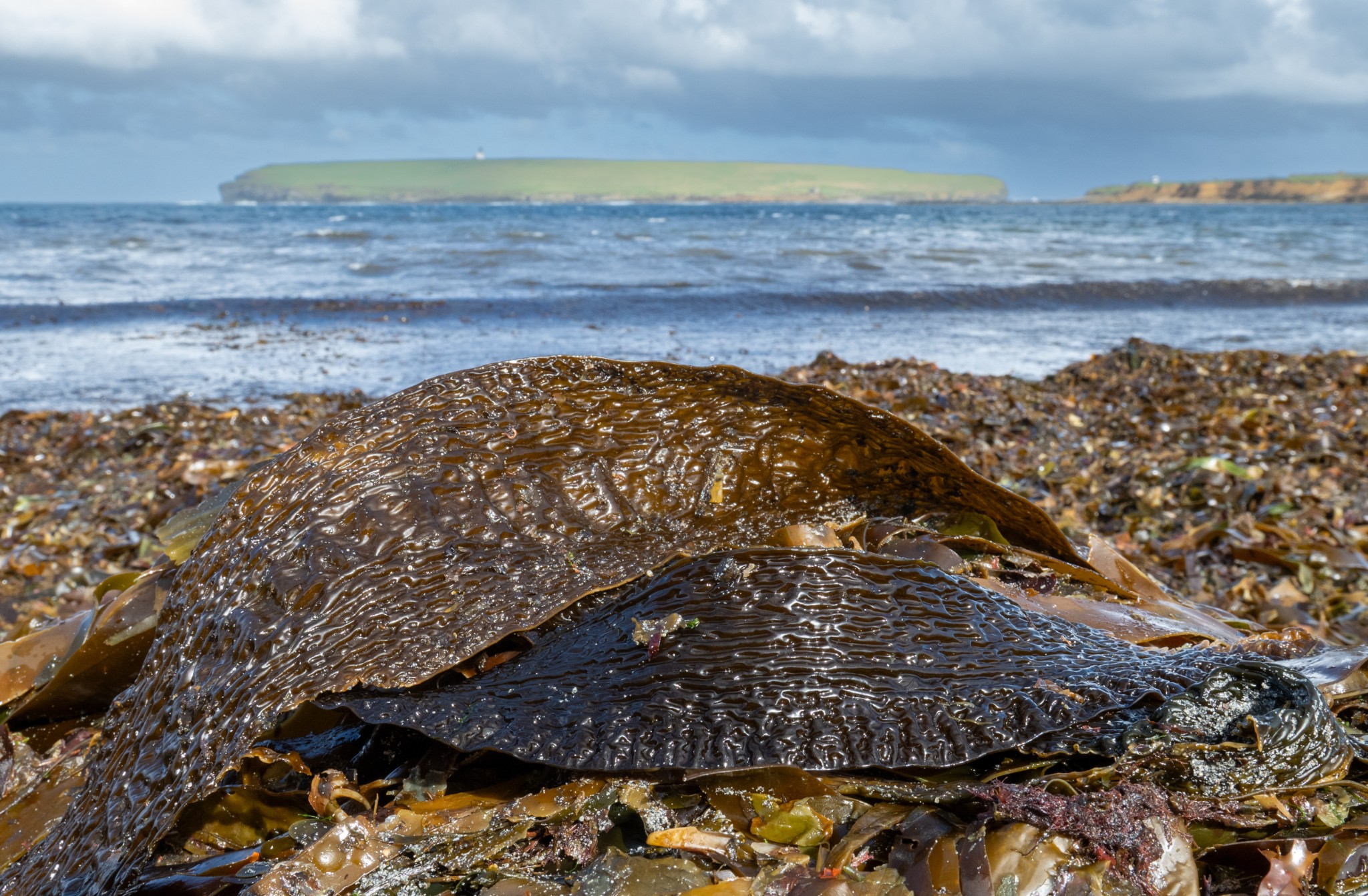
I can see fronds from many of the kelp species including oarweed, Laminaria digitata, with its smooth stipe and leathery fronds. The rough, stiff, stipe of cuvie, Laminaria hyperborea, is here too, adorned with ephiphytes. Dabberlocks, Alaria esculenta, is a very pretty species of kelp which has a midrib that runs the full length of the seaweed with its delicate frilly fronds running either side of the stipe. I’ve found some fresh-looking sugar kelp, Saccharina latissima, which can grow to 1.5 metres long. The stipe is thin compared to the other kelps but the main frond has a wonderfully textured surface. The dark brown colour is crinkled and dimpled and ruffled.
As I walk across the top of the weed a myriad of flies rise in front of me. These are kelp flies and they’re key to unlocking an important food source which fuels thousands of air miles. Kelp flies are small and black and belong to the family Coelopidae. They are a bristly-looking fly covered in stiff hairs and have seen the three UK species described as having ‘Desperate Dan-style jutting chins’. It’s accurate if not a little unkind!
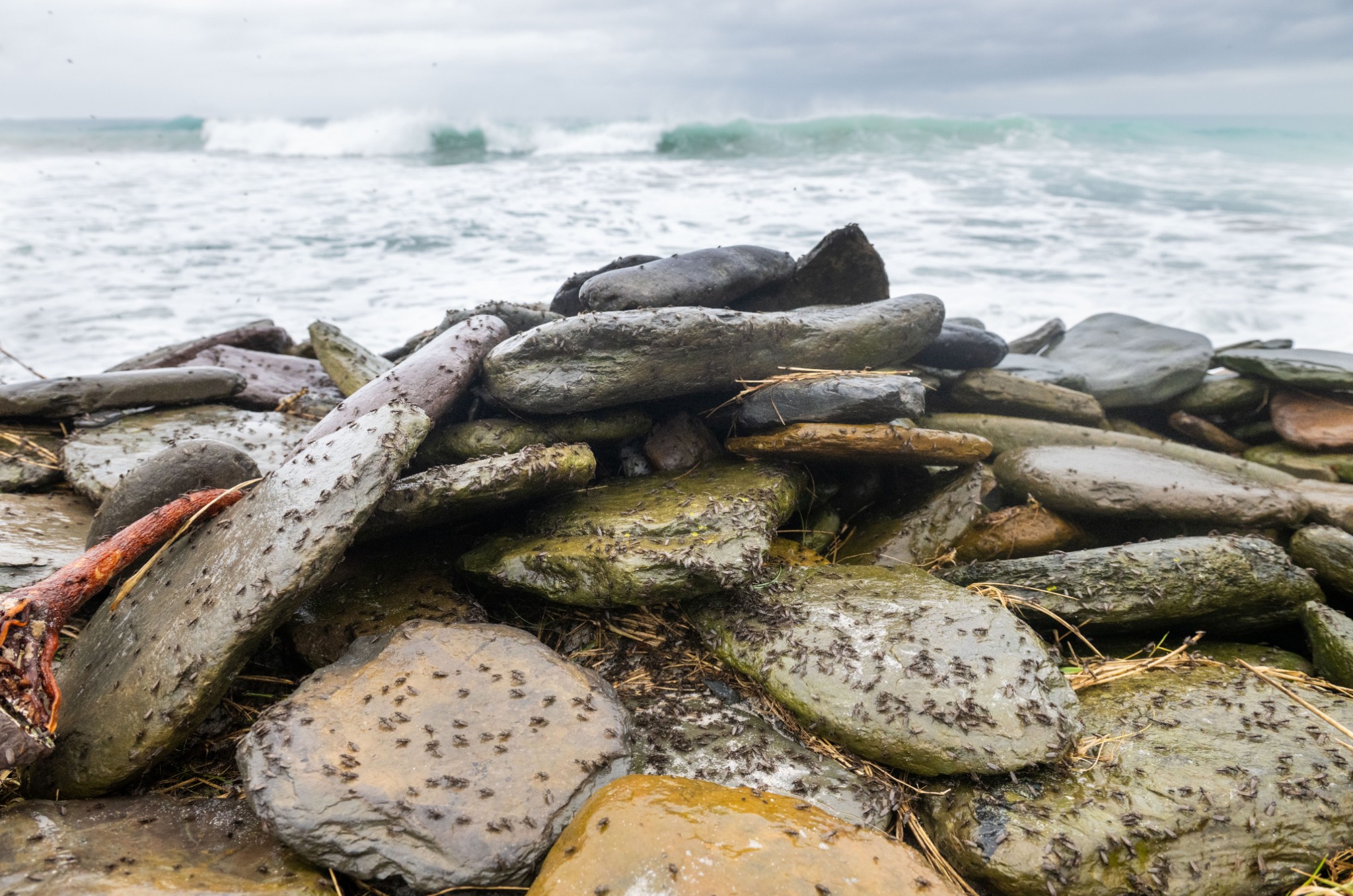
Small birds dart around me at high speed, sand martins and swallows performing sharp turns and aerobatics as they scoop up the numerous flies on offer. A hooded crow lands in front of me and soon has its head buried in the weed. It's not after flies however and emerges with what looks like a large mussel. Sure enough, it flies high and drops the mussel in the hope of breaking the shell. It will need to find an area of rocks to split it apart though; the seaweed beneath it will simply be too soft.
The kelp flies lay their eggs in the rotting weed and once they develop into maggots, they thrive on the decaying mass that enfolds them. As the winter proceeds the masses of weed often become covered in sand, the maggots - or ‘brookworms’ as they are known as in Orkney - becoming covered too. A spring tide is needed to make them available to the multitude of awaiting beaks of all shapes and sizes.
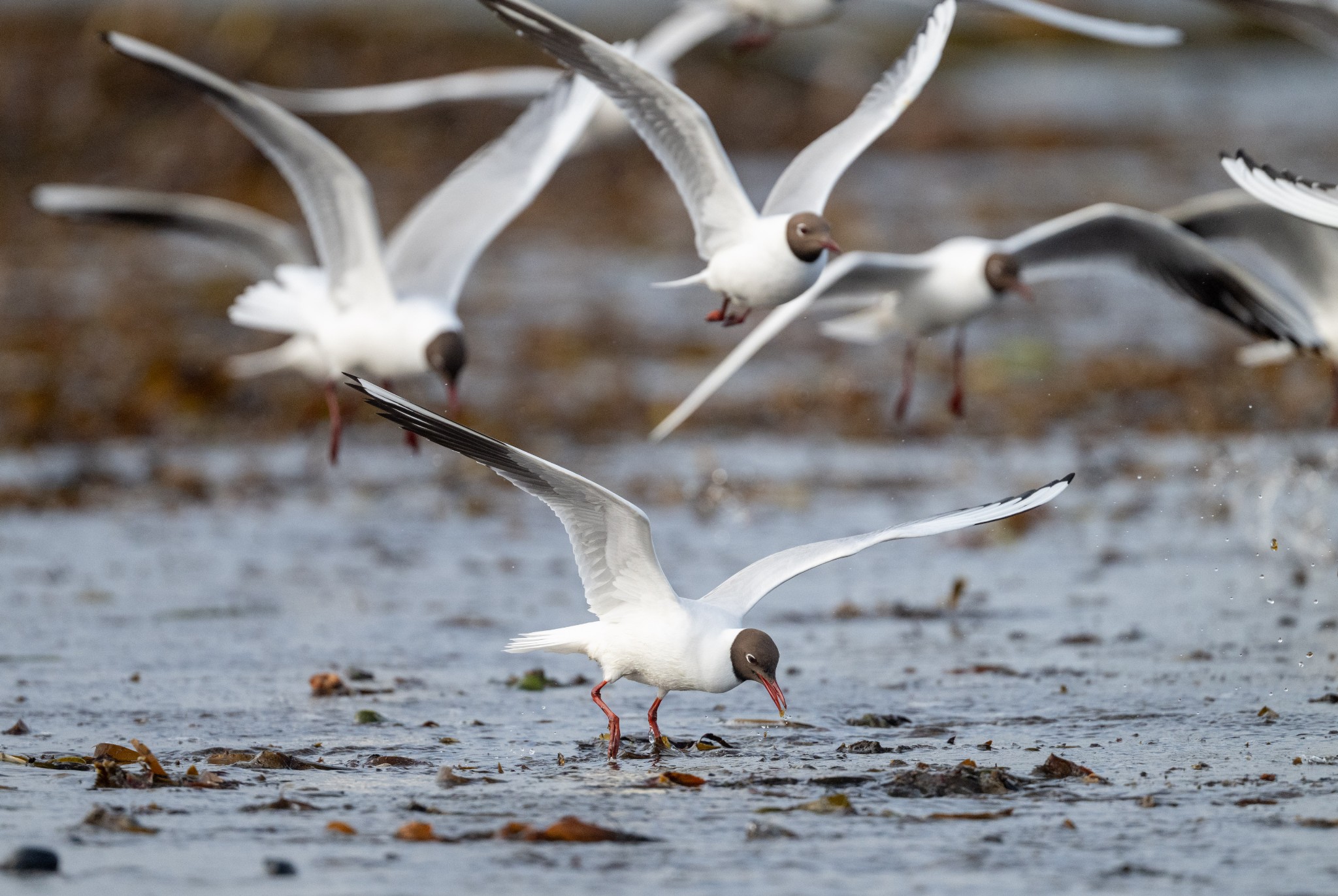
High tide washes them out of the sand and down the shore. A flock of black headed gulls have found them where the beach meets the sea. Thes beautiful little gulls are dainty and agile and rise as one as the waves come in. They look particularly smart in their summer plumage; a close look reveals their heads aren’t black but rather a dark chocolate brown set off by some white eye make-up and the darkest red. the colour of dried blood, adorning their beak and legs.
They look like they are running in the air as they pitter-patter their feet on the surface of the sea, picking off the brookworms one by one. I can see a whimbrel further down the shore but it’s not feeding, it’s restless and soon takes off heading north towards the Brough, it’s distinctive call a delight as it flies overhead.
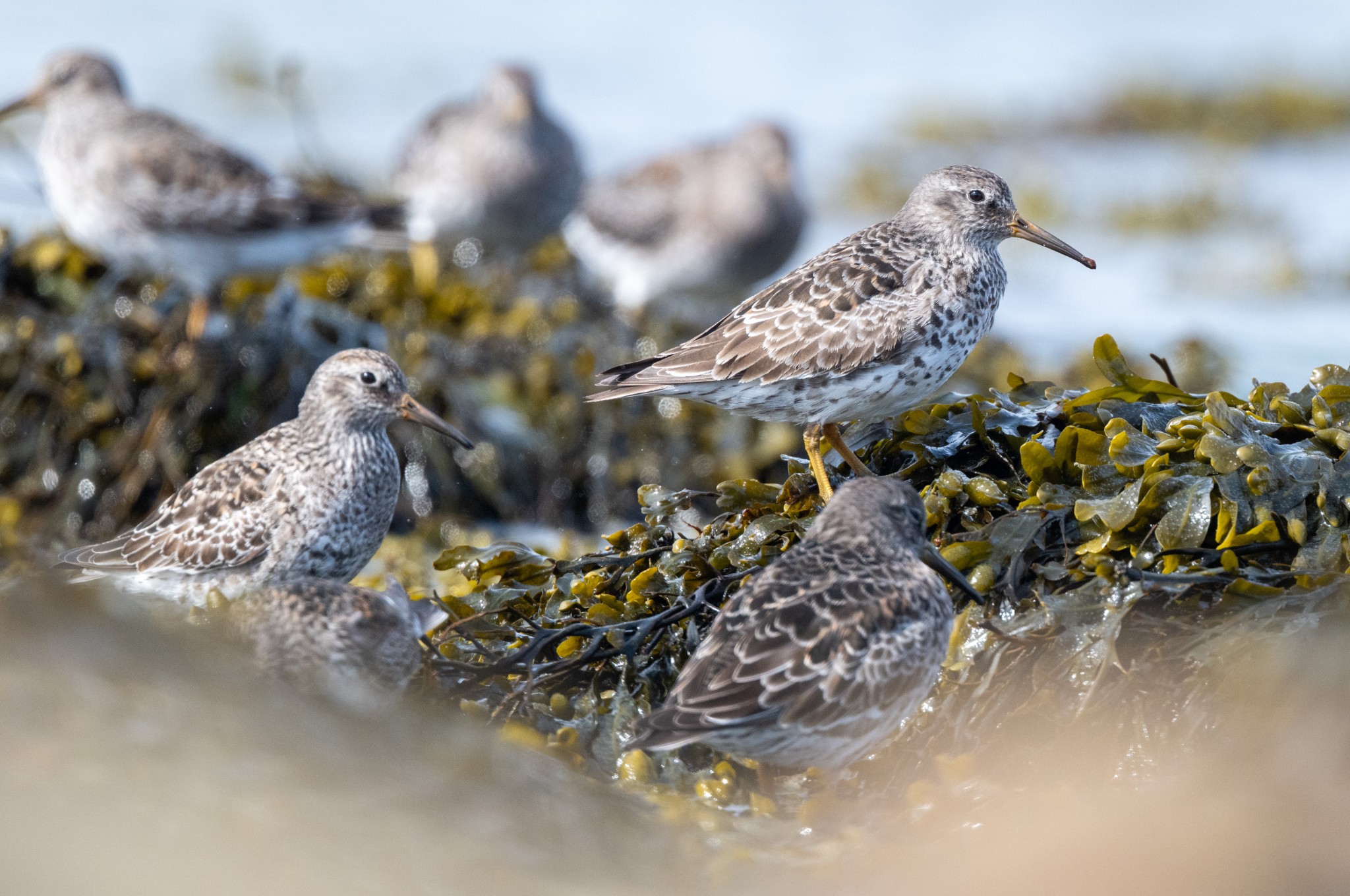
There are wading birds that are taking advantage of the bonanza though. Turnstones, resplendent in their summer orange and black plumage, feed side by side with purple sandpipers. I think purple sandpipers look better in their winter plumage which can’t be said of too many species. Gone are the wonderful orange bill and legs, their plumage now a mixture of mottled silvers and browns.
But their colour isn’t the important thing; they are here for a reason. They have a long journey ahead of them, one that will take them across the north west Atlantic to Iceland, Greenland, and beyond to lay their eggs on the soft tundra. That flight requires energy reserves, reserves built up in the form of kelp fly larvae picked from Orkney’s fast-food shop, the seaweed cast upon the shore. I love the nature of this story, the transfer of energy between the sea, the land, and finally the air.
Brookworm that are missed by the waders and gulls will be picked up by the eider ducks and shelducks floating just offshore. Some will be eaten by fish which will in turn be eaten by the harbour seal that has had a curious interest in me since I got here, dipping under the wave each time I look at it for too long.
Sometimes in the summer a long dark fin can be seen rising and falling offshore as it makes its way around the Orkney mainland. Orca predate seals here; an apex predator at the top of the food chain that all begins with the fly partly responsible for the smell on the beach.
Raymond is a wildlife filmmaker who also offers bespoke Orkney wildlife tours and one-to-one wildlife photography tuition. Find out more via his official website. You can also find him on Facebook, Twitter and Instagram.