I remember vividly the first time I had ever been ‘bonxied’.
During my secondary school years in the mid-1980s each pupil could choose an activity over the course of three days that didn’t involve sitting behind a desk. Rather prosaically these three days were known as ‘activities’, with a first, second, and third pick. After several failed attempts to get my first choice of football I chose ‘environmental studies’, which as it turned out was right up my street.
Looking back now though our trip to the island of Hoy would be met with some rather raised eyebrows from a health and safety perspective. I like to think of a hill climb up the Kame of Hoy in a pair of wellie boots as character building and I can still remember the sense of relief upon reaching the flat plateau.
Hoy is the island where giants and trolls live but during those years the dark hills were very much the domain of a much more fearsome creature. As I began descending down Cuilags I turned around to get my bearings, only to bet met with a large dark object bombing towards my head. I flinched - well, more likely ducked quickly to avoid a collision - and upon standing back up was met with an even closer dark object from the opposite site. I had unwittingly strayed into the territory of a great skua, better known as a ‘bonxie’ in Orkney.
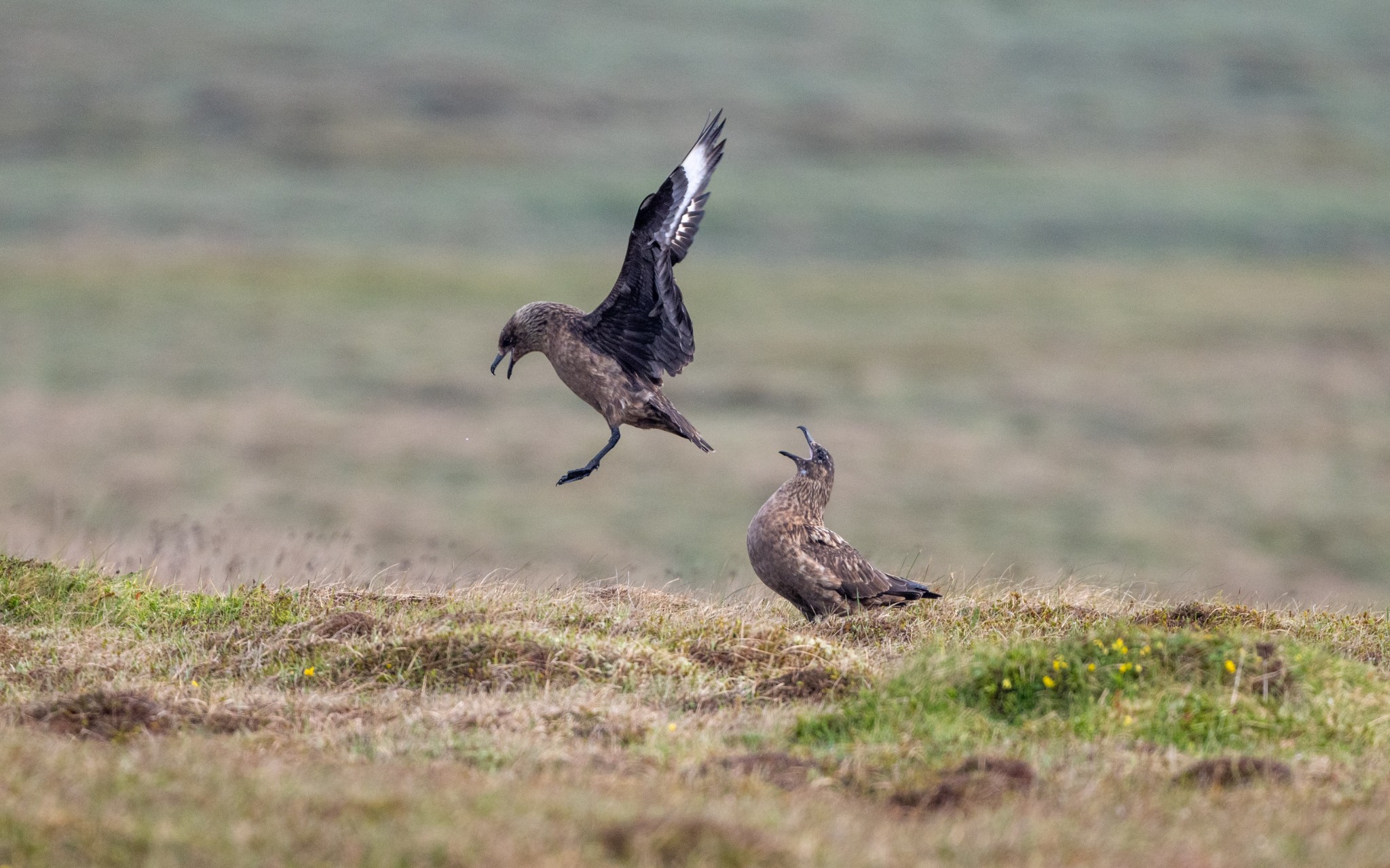
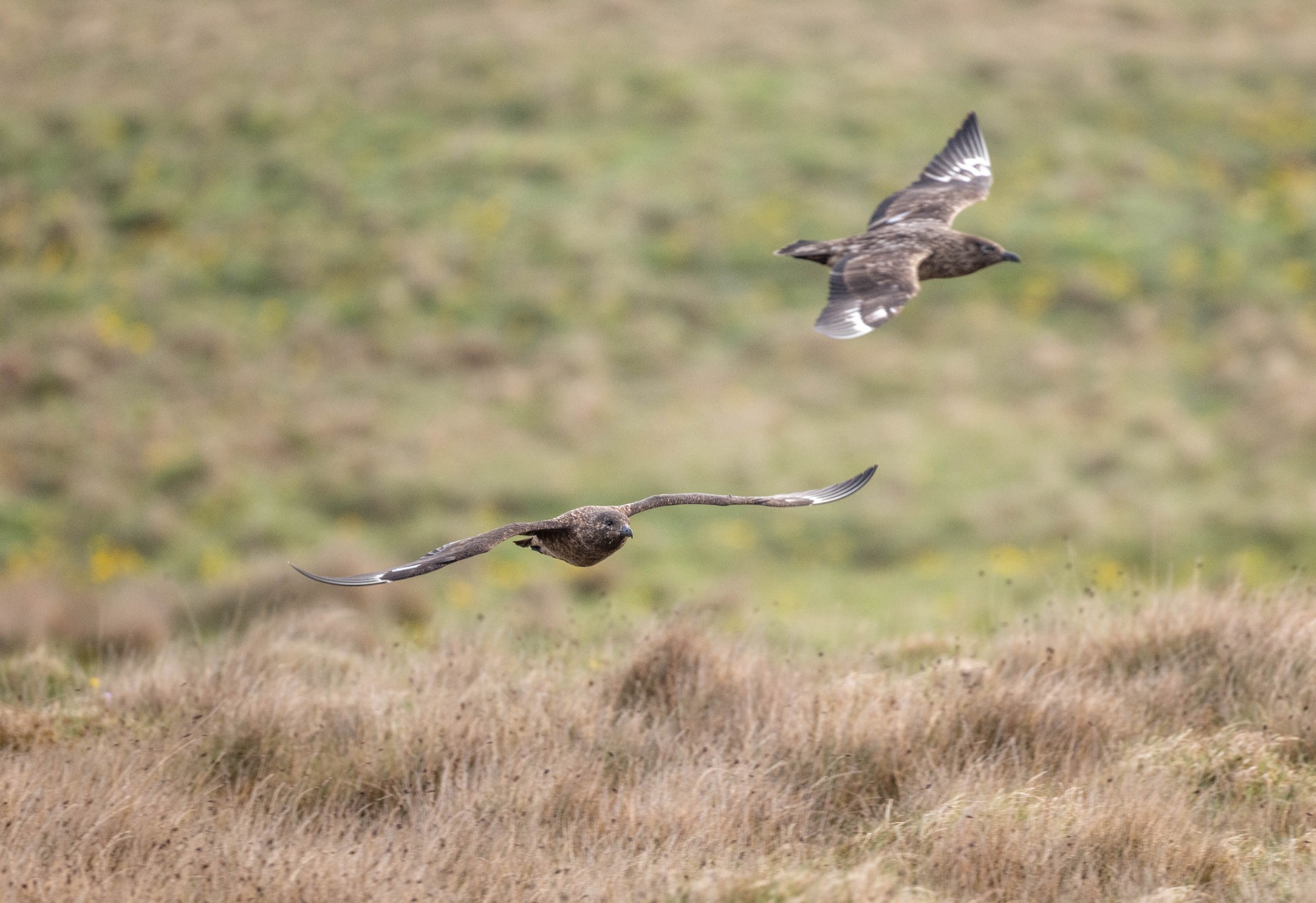
No doubt there was a nest nearby and the intimidating nature of the dive-bombing certainly worked. Bonxie territories are found almost exclusively in moorland and maritime heath habitats and I was lucky to see some on a recent trip to Papa Westray. I say lucky as this bird has had the hardest of times recently.
Never considered a common bird, the main populations of this robust-looking seabird are to be found in Orkney, Shetland, the Faroe Islands, and Iceland. During the 2021 breeding seasons there was little this powerful and fearless bird could do in the face of a new threat, that of avian flu, also known as highly pathogenic avian influenza. So devastating was the impact of the virus that colonies in Orkney and Shetland lost 80 to 85% of their populations. Gannets too were very heavily impacted and it’s thought bonxies scavenging on the carcasses of gannets picked up the virus from there.
The bonxie is very much a part of the Orkney landscape, an impressive sight as it cruises along the tops of our seabird colonies. Its predatory nature however, often killing larger birds than itself such as greylag geese, has meant it has found fans hard to come by.
Perhaps we can find a bit more love for the bonxie, I very much hope it can recover its former status as one of our top predators.
One bird that may benefit in the reduction in great skua numbers is one I have been admiring on the shore recently, the eider duck.
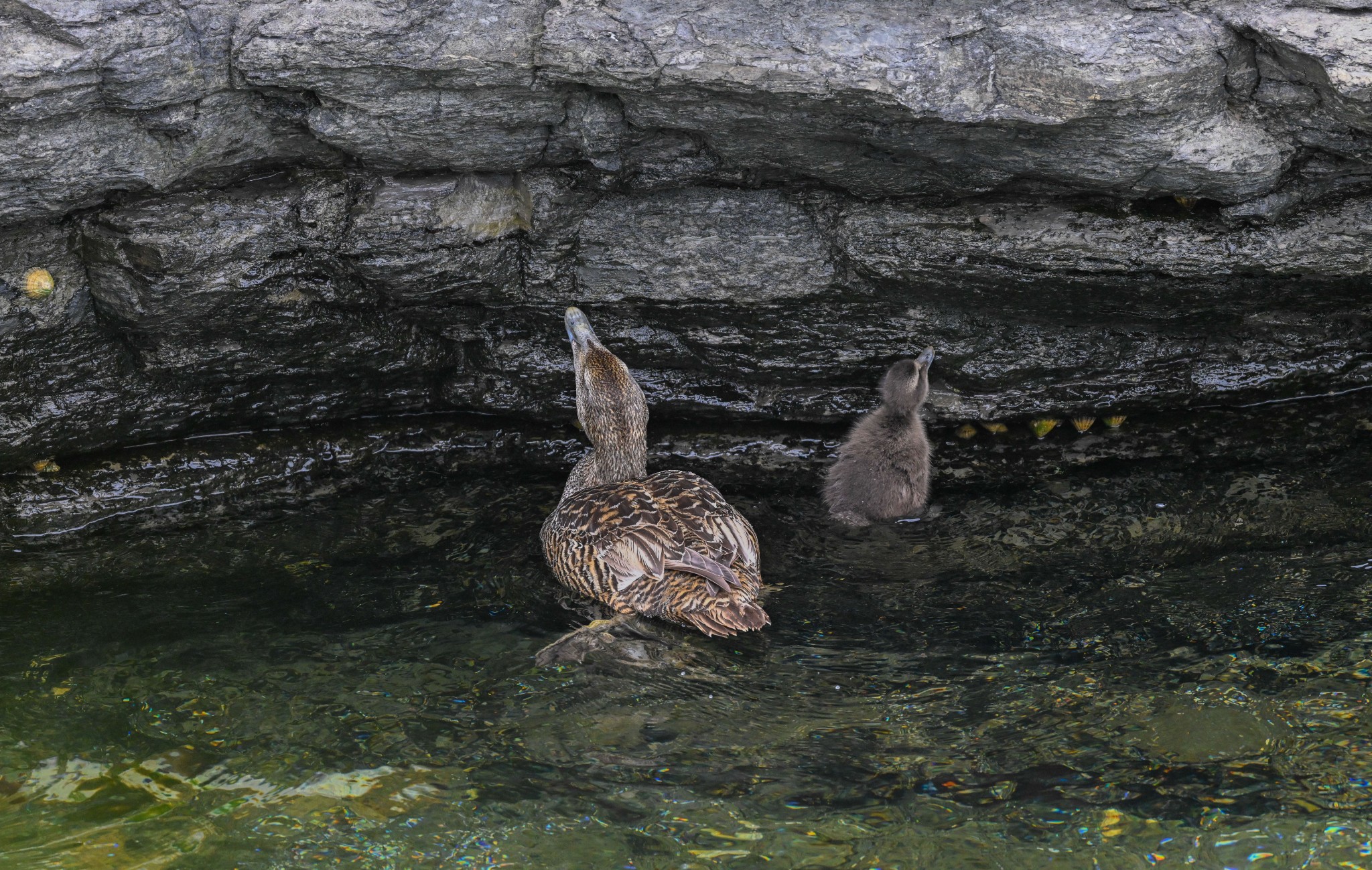
More accurately, I’ve been admiring the very cute ducklings that accompany their mothers as they feed in the shallows. Watching these little balls of fluff bobbing along trying to make their way in the world is always a little bittersweet. An eider typically lays between four and six eggs and for a coastal bird can sometimes make its nest surprisingly far inland.
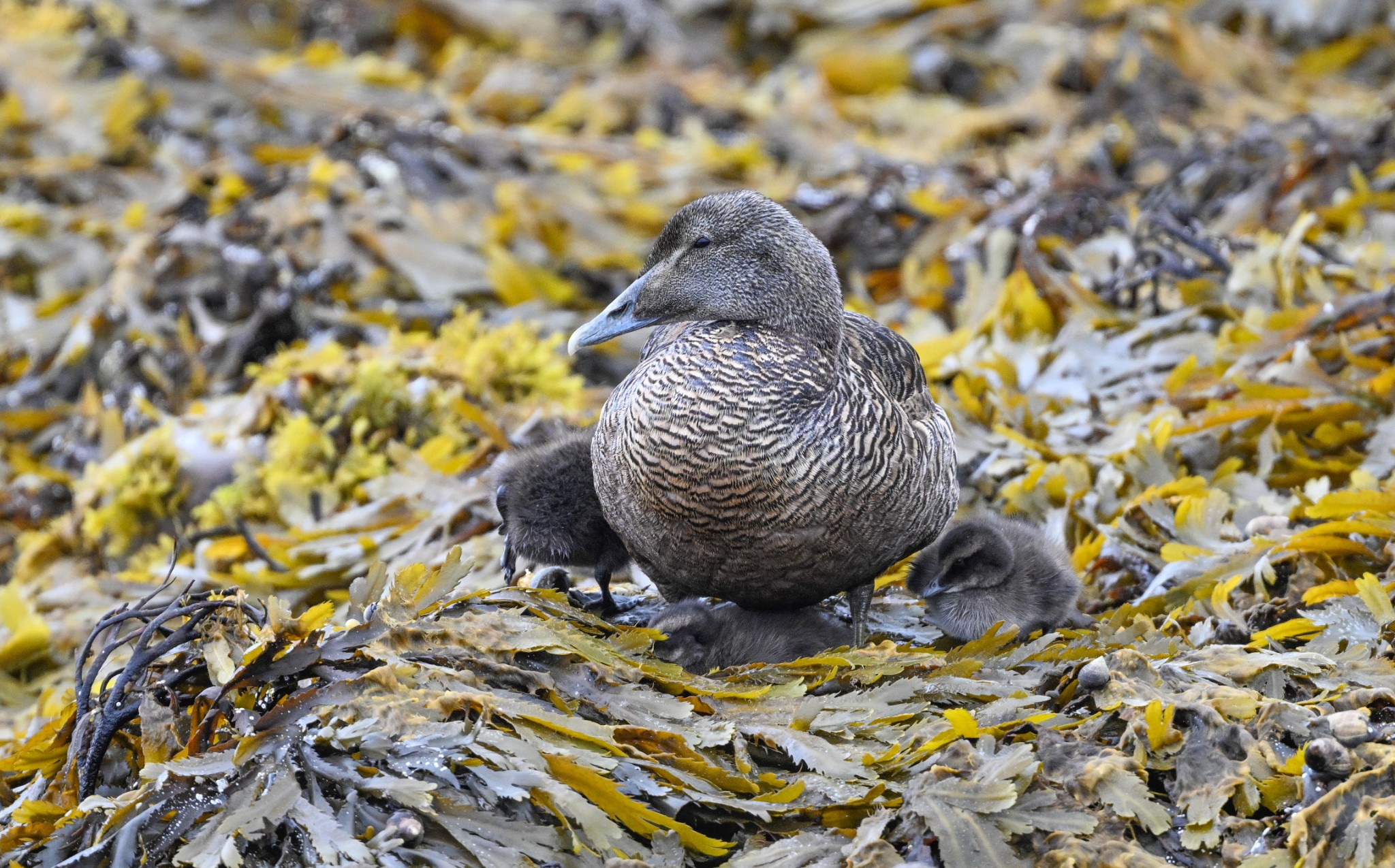
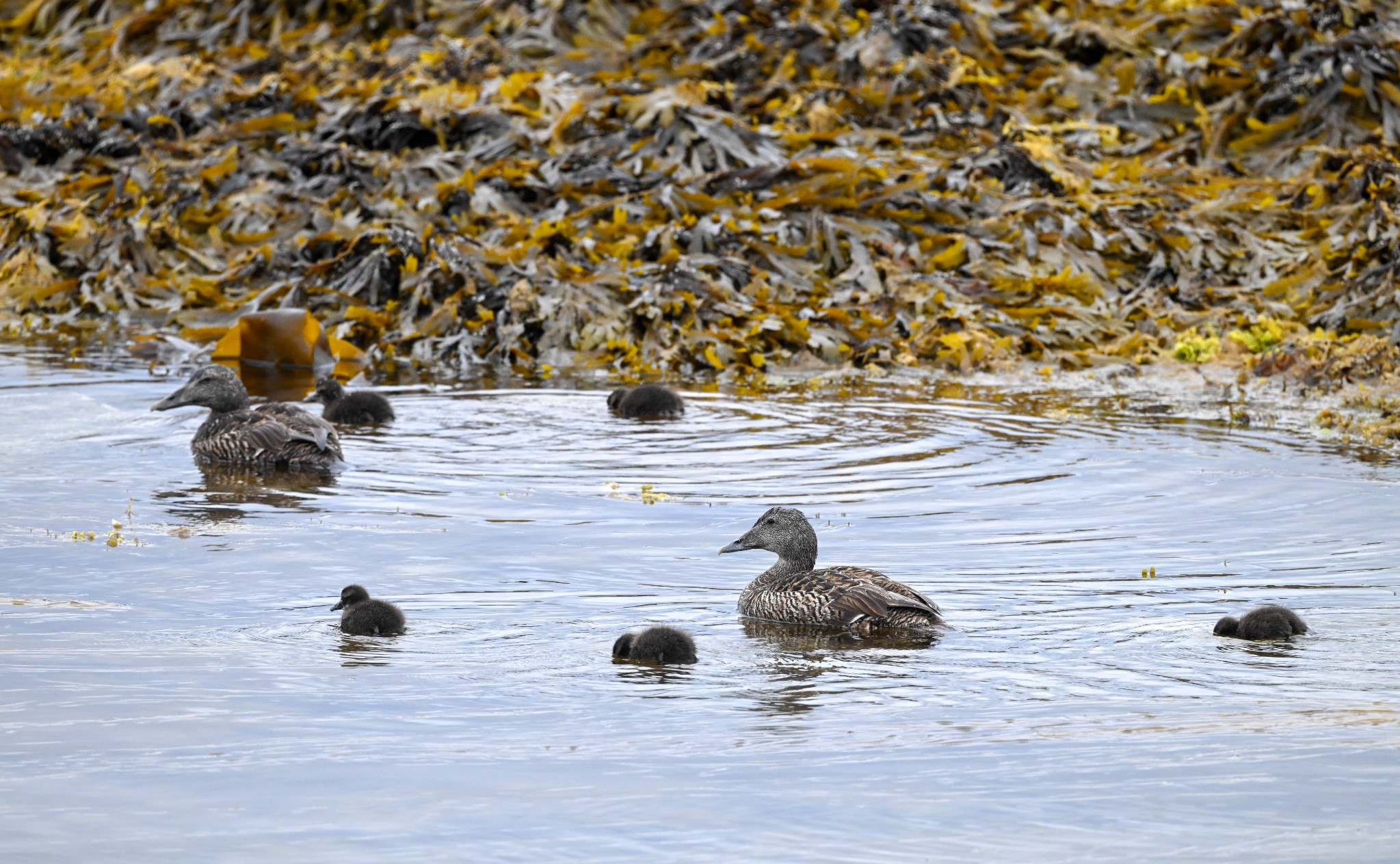
The ducklings are most at risk from aerial predators such as the great skua as well as the large gull species, the herring, lesser black-backed, and great black-backed gull. The eider mothers know this well and form creches where there is safety in numbers. I saw an incredible creche of thirty-four ducklings and twenty female eiders recently all feeding in the shallows of the Bay of Creekland in Hoy - what a joyful sight it was!
I’ve seen similar sights at the slip at Aikerness and rafts of ducklings at Grimness in South Ronaldsay. I’ve watched ducklings seeking safety underneath their mother as she rests on the soft seaweed next to Holm pier. Most intriguingly of all, I observed an eider duck mother take her very young ducklings into the water below the sea stack at Skibi Geo in Birsay where she may well have nested amongst the Arctic terns. Here she gently and with precision picked off what I assume must be small snails from the rocks, her young following suit.
The tops of the shore are alive at the moment and there seems to have been an exquisite display of wildflowers this year. Now really is the time to go and have a look and enjoy the multitude of interesting flowers and accompanying common blue and painted lady butterflies. Sea milkwort, sea sandwort, red campion, tormentil, sea mayweed, and silverweed are all in profusion, as is my favourite shore plant, the rare and beautiful oyster plant.
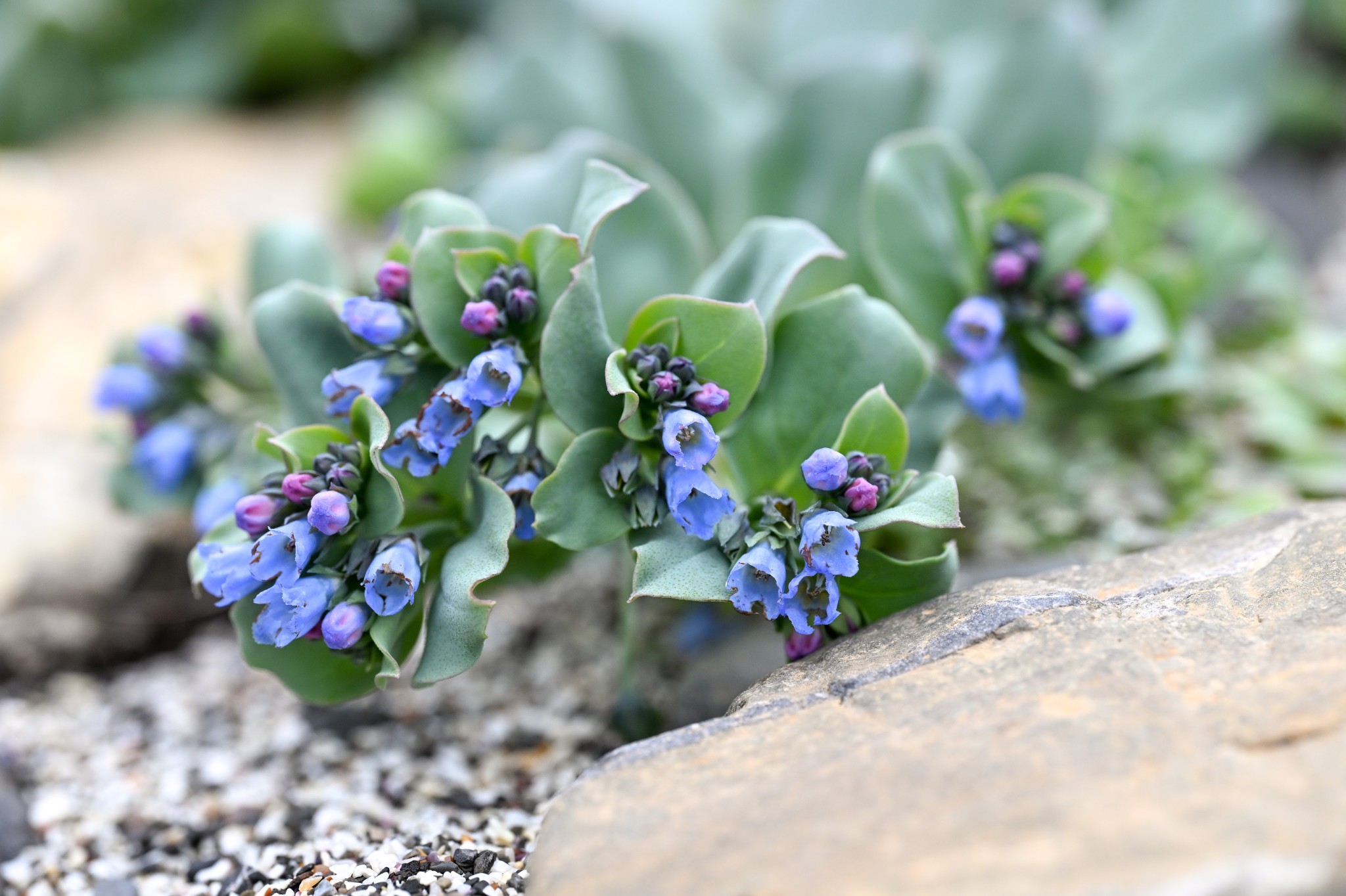
Visually it’s quite an unusual plant but pretty nonetheless. I’ve never been quite able to define what the colour of the fleshy leaves are; a kind of grey, green, blue! The small flowers start life as pink before turning blue and it’s common to see a mix of both colours on the same plant. Its distribution is rather localised in Orkney and I recently found it sprawling not only in a rocky habitat but a sandy one too, a beautiful addition to Orkney’s diverse shorelines.
Raymond is a wildlife filmmaker who also offers bespoke Orkney wildlife tours and one-to-one wildlife photography tuition. Find out more via his official website. You can also find him on Facebook, Twitter and Instagram.