Someone asked me recently on social media how I stayed so motivated. I guess that is one of the falsehoods, isn’t it; that everything is always rosy as we more often than not show the most enthusiastic version of ourselves when posting images or telling stories.
It did, however, make me think a little more about how I work.
This past year I’ve tried to be more focused whilst I work (as well as just being in focus!). This has partly been because my work has shifted more towards guiding and less filming so my opportunities to spend time in the field photographing have been reduced, and I want to make the most of the time available.
I do wonder though if by being too focused I might be missing out on those moments that arise just by being out and enjoying nature. Ideally, I’d like the light to be nice but what does this even mean? You often hear photographers, especially if you follow any of the landscape photographers on their YouTube channels, that this light is suddenly ‘good’ or ‘pleasing’.
Thinking of light in these terms is a little problematic as what is good for one subject isn’t necessarily good for another. Macro photography for instance can at times benefit from very flat light, whilst harsh, bright light can often bring out textures. The way I see it is you just work to the hand you are being dealt and if you hold a poor hand then you might not be able to make your image work and you should just try another day.
For me, I think ‘good’ light is a quality that can bring out a sense of drama or atmosphere in the image, for example soft, warm, early morning light portraying something serene or calm, or a bright sun filtering through dark clouds above a broiling sea giving a sense of foreboding and energy.
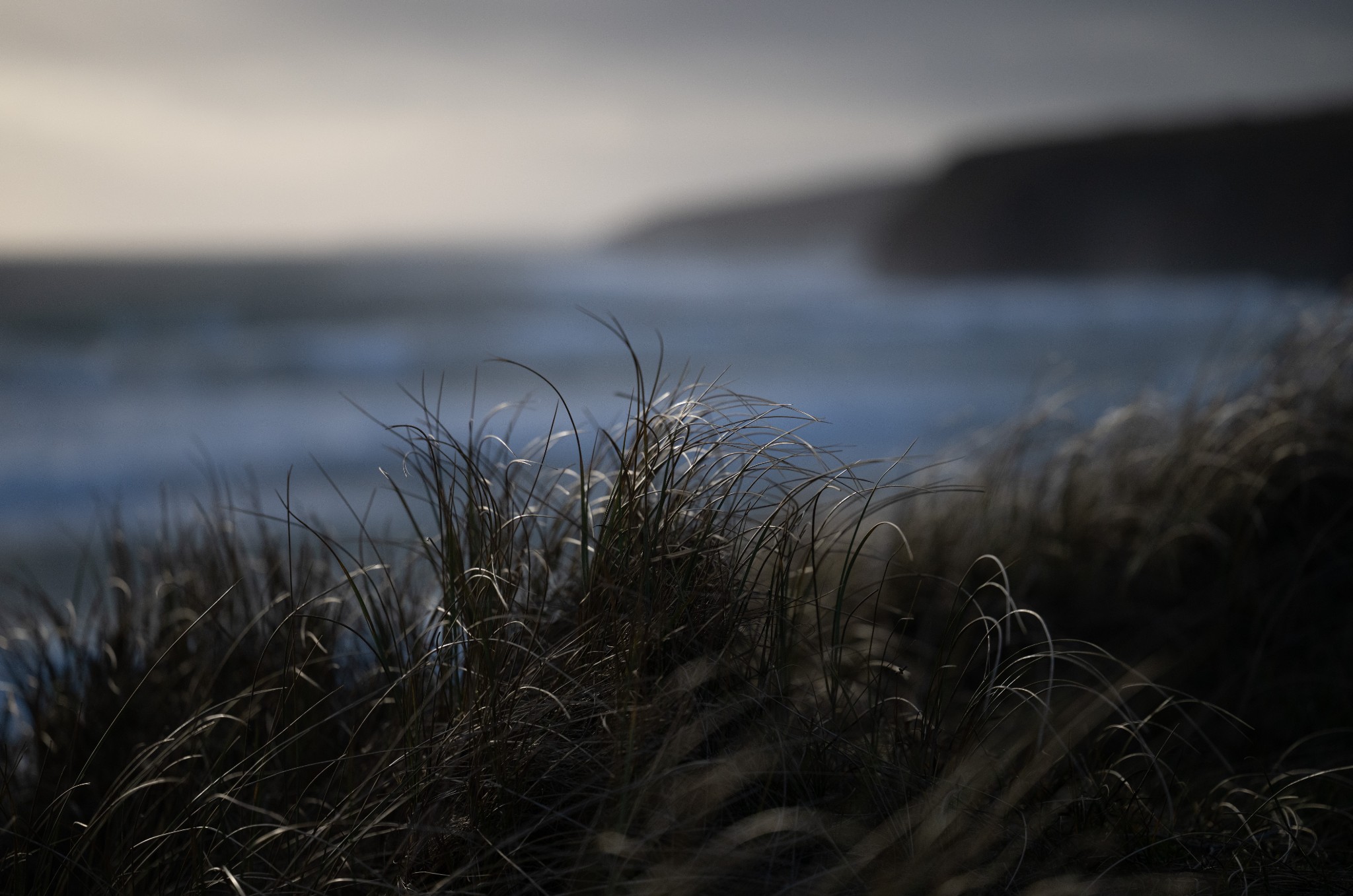
We are trying to use the light conditions to our advantage on any given subject. I recently found myself in several sand dune systems in various locations in Orkney; Dingieshowe in the east mainland, the Fourth Barrier beach between South Ronaldsay and Burray, and St Catherine's Bay in Stronsay. I love sand dunes, they tend to be heavily used in Orkney both for recreation and extraction, but they still have a sense of wildness about them, perhaps because they are always in motion, forever dancing in the wind.
How sand dunes are formed would need an entire article dedicated to it but in very simplistic terms it requires the movement of sand from a beach to become trapped by debris or plants. Most of this movement is the result of grains of sand bouncing along the beach carried and deposited by the wind. These ‘embryo’ dunes develop into larger dunes as the sand accumulates and is stabilised by the roots of tough plants such as the fast-growing marram grass.
At Dingieshowe the sky is dark, it’s windy and the cold is biting my fingers. The wind moves the clouds quickly however with sporadic appearances of the sun. It’s midday so this is as bright as it’s going to get and when the sun breaks through it creates bright highlights on the shiny leaves of the marram grass. I crouch down into the dunes and choose a large aperture at f3 on a 105mm macro lens to create a shallow depth of field. I just want the illuminated tips of the grass to be in focus.
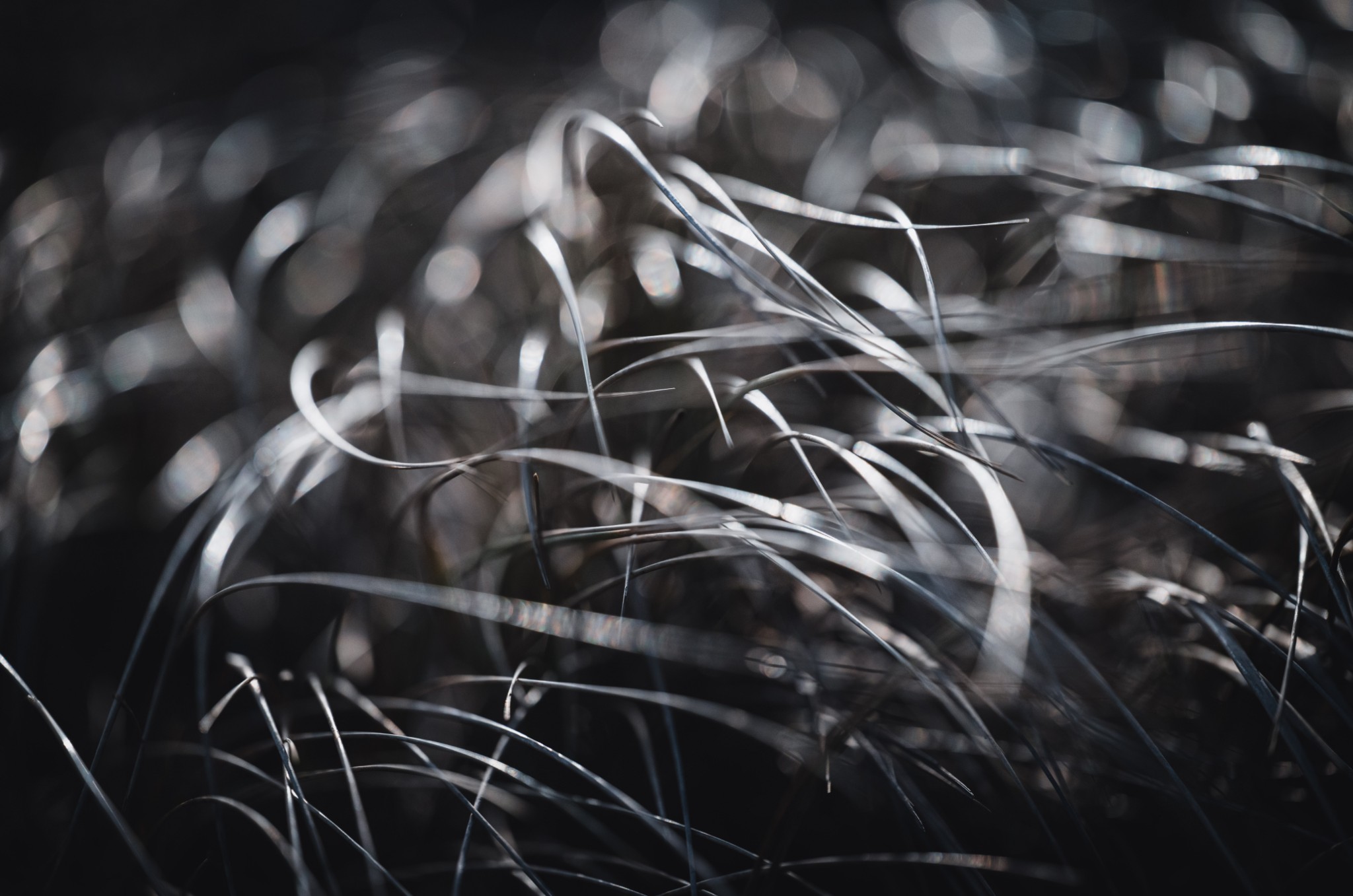
I check my LCD screen and keep firing and adjusting my focus until I’m happy with the images. Here I chose manual focus as the camera was constantly fooled by the fast movement of the grasses. I was asking it to know where to focus when really, I didn’t really know where I wanted to focus! The result is an almost monochromatic, contrasty, silver-looking image, mirroring the mood of the weather.
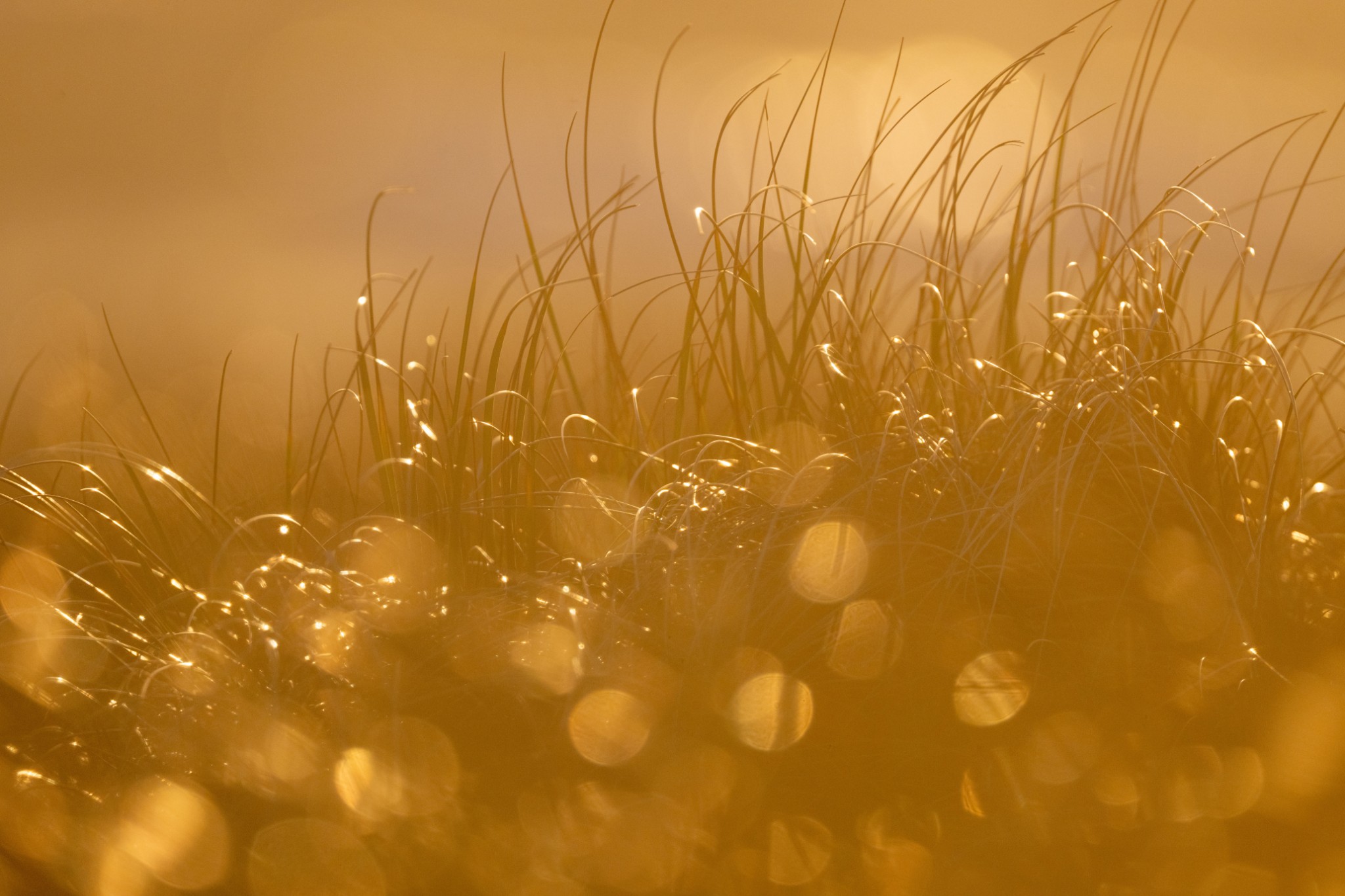
In Stronsay I take a similar approach, getting low down into the dunes, this time using a 70-200mm zoom lens but this time at the end of the day just before dusk. The light falling on the sea behind helps create large circular highlights and I shoot through the grasses helping to soften the image even further. The resulting image is very different one to that at Dingieshowe, abstract and dreamlike, almost an impression of what a sand dune is.
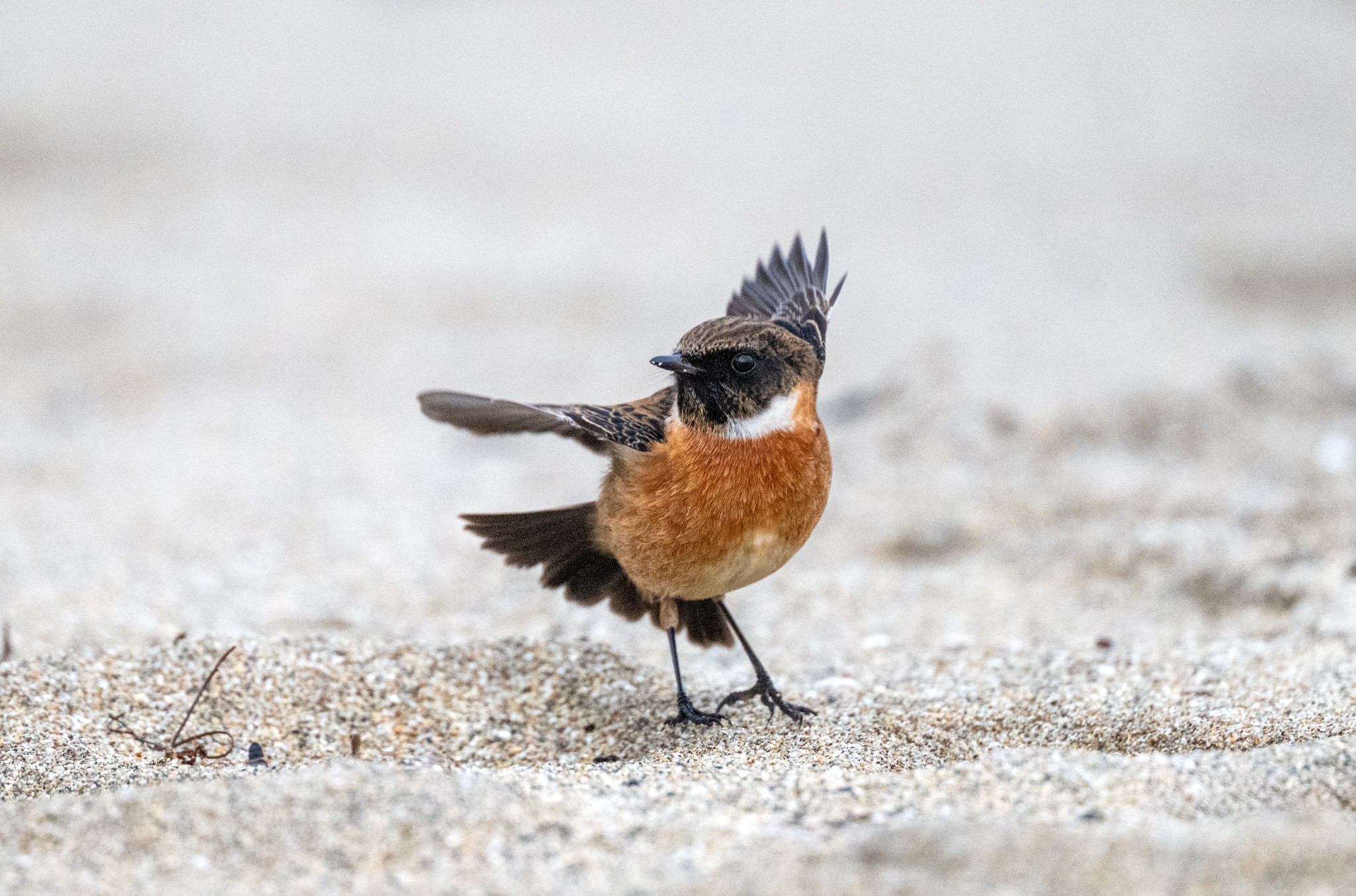
Beyond the dunes I can hear a small flock of snow buntings but it’s at my next destination in South Ronaldsay that I get close to another bird taking advantage of the dunes.
Where the beach meets the face of the sand dune is also where material gets trapped and it can be an excellent feeding ground for small birds like reed buntings where they find wind-blown seeds. The stonechat however, a small, dark bird with a rusty breast flitting away in front of me, is an insectivore and will be feeding on small invertebrates hiding amongst cast seaweed.
It’s always a joy to see stonechats and the Fourth Barrier beach is an excellent place to spot them at this time of year. Often, sitting in one spot and letting them come to you can result in close views.
As we move into 2026, I’d like to thank everyone who has taken an interest in these articles celebrating Orkney’s wildlife and wild places and leave you with an image of the quintessential Christmas bird, the robin.
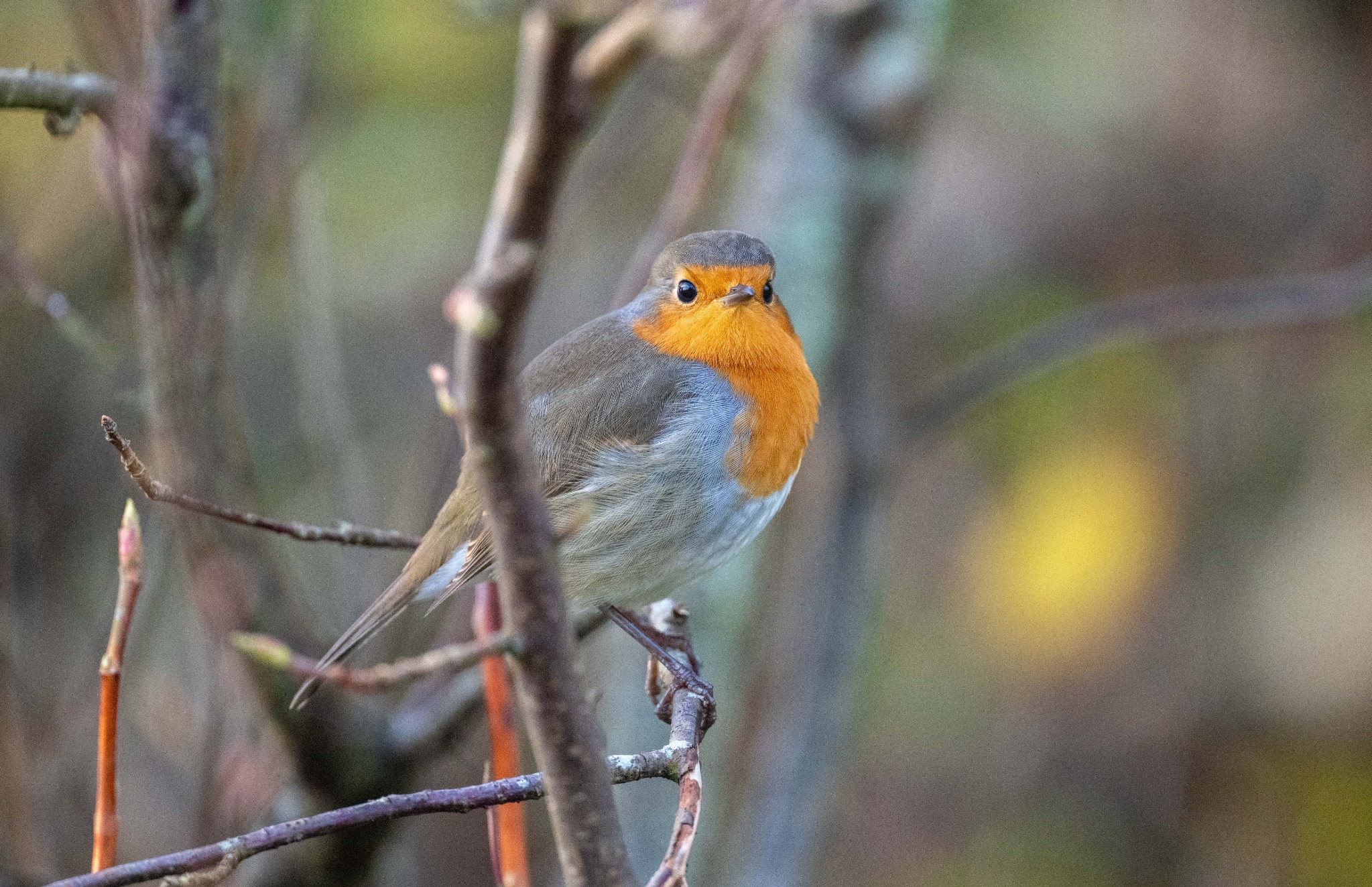
This one has taken up residence in the holly tree at the back of my garden where I’ve enjoyed listening to it singing its heart out, one of the few birds to do so in winter.
Raymond is a wildlife filmmaker who also offers bespoke Orkney wildlife tours and one-to-one wildlife photography tuition. Find out more via his official website. You can also find him on Facebook, Twitter and Instagram.