The snow has long but melted, the islands now dominated by a persistent cool south easterly wind.
Between the change I saw a one-day gap, one with no wind or cloud. I took the opportunity to have a little adventure and booked myself on the short flight to Orkney’s northernmost island, North Ronaldsay.
Despite knowing the weather was going to be fine I didn’t expect to come out to the car and find a thick crust of frost and ice covering it. I didn’t quite hit panic stations in order to get to the airport on time but the scraping might be described as ‘furious’!
Eighteen minutes after take off and we’ve landed on this low-lying island that is only 2.7 square miles in size. I’ve paired down my camera equipment to keep below the 15kg weight restriction but I’m glad I’ve taken extra layers; the still air has a bite.
I could have hired a bike to get around but my camera bag is a bit unwieldy, even without its full complement of lenses. Instead, I set off on foot, taking a left at the airport road to head for Westness on the north west corner. I feel distracted though and need to investigate the constant ‘hush’ sound I can hear off to my left. I head to the coast and the closer I get the hush becomes a roar. The lack of wind belies the sea state; a long, deep swell thunders upon the offshore skerries.
A fulmar gives me a fright as I lift my camera, gliding past with no effort, so I say hello and wish I could fly with him, just for a moment. The small pools here have a veneer of thin ice and, as if to confirm how cold it is, I can see the breath of two starlings as they chatter. The sun has not yet risen but their conversation glows as they share parcels of news. A group of lapwing rest hunched on the frozen Ancum Loch, not quite ready for the day.
I carry on up the road but I am not alone, far from it in fact. I’ve never seen so many rabbits in my life. Some of the sandy fields look to have been heavily engineered by them. I love days like these, where you can turn your phone off and forget about the seemingly endless list of things to ‘get done’. A female hen harrier floats past, the only thing on her mind is where to find her next meal.
I take another left down towards Westness and warm my throat from my flask of tea. I hear more chatter, not people but wading birds, busy scurrying along the shore. I’m delighted to see they are purple sandpipers, one of my favourite birds.
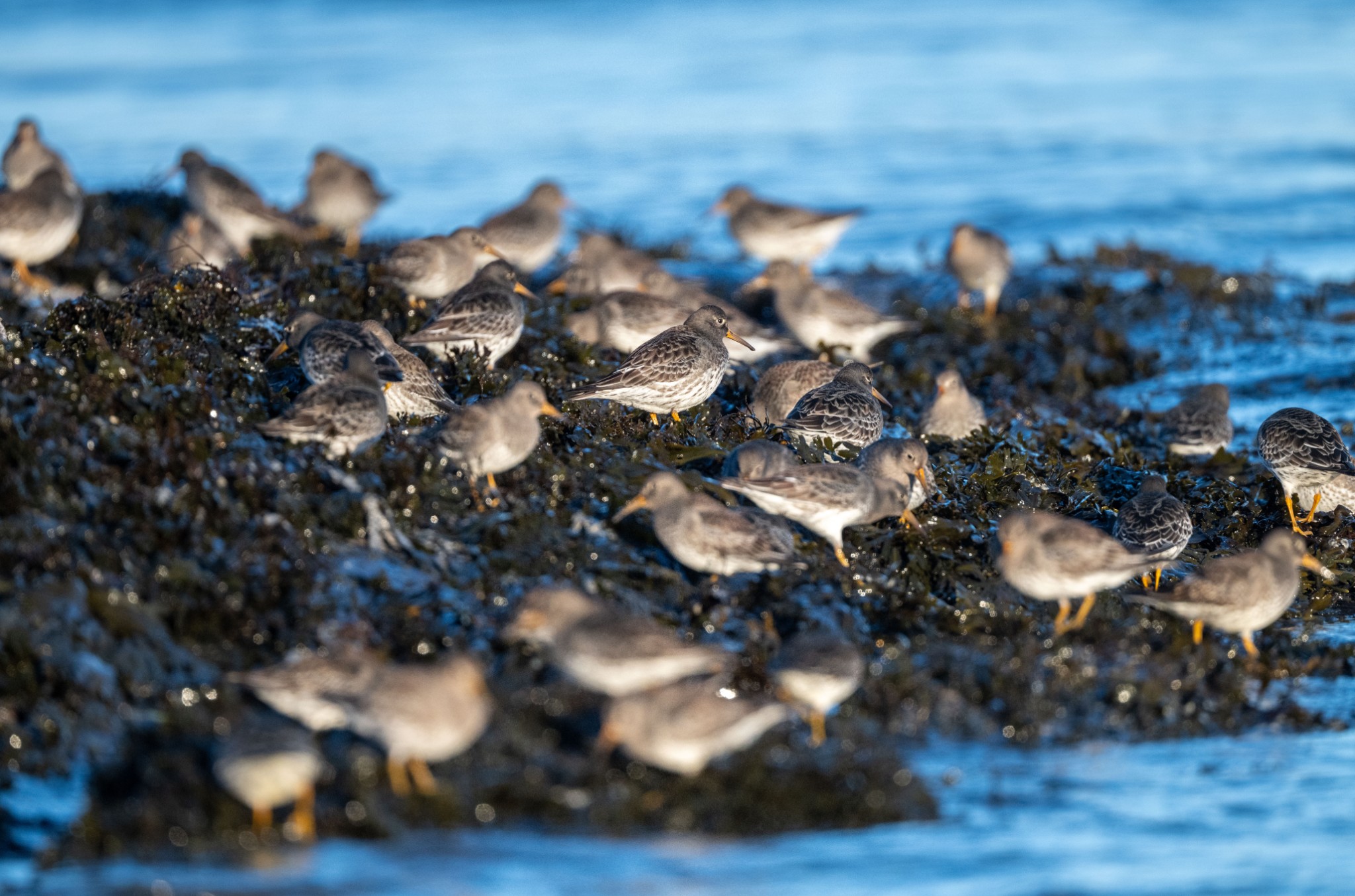
I count them as best I can, not easy as they whirligig amongst the feeding opportunities. I settle on one hundred and fifty-three, a handful of turnstones, ringed plovers, and bar tailed godwits complete the party.
These plump little sandpipers hail from the Arctic, with the UK playing host to Canadian, Scandinavian, and Svalbard breeding populations. I know from experience that they are incredibly confiding and as I settle on my rock they feed all around me, a mere six feet away. Viewed in dull light not even their yellowish orange legs and bill can brighten an otherwise dull looking plumage. This isn’t the case today. It’s subtle but I can see tiny shimmers of purple on their backs as they feed in glorious light. This habitat is perfect for them; they love exposed rocky areas but will happily feed amongst seaweed cast on the shore as well. Something I love to watch is how adept they are at winkling out invertebrates from the holdfasts of kelp stipes - they really get in there!
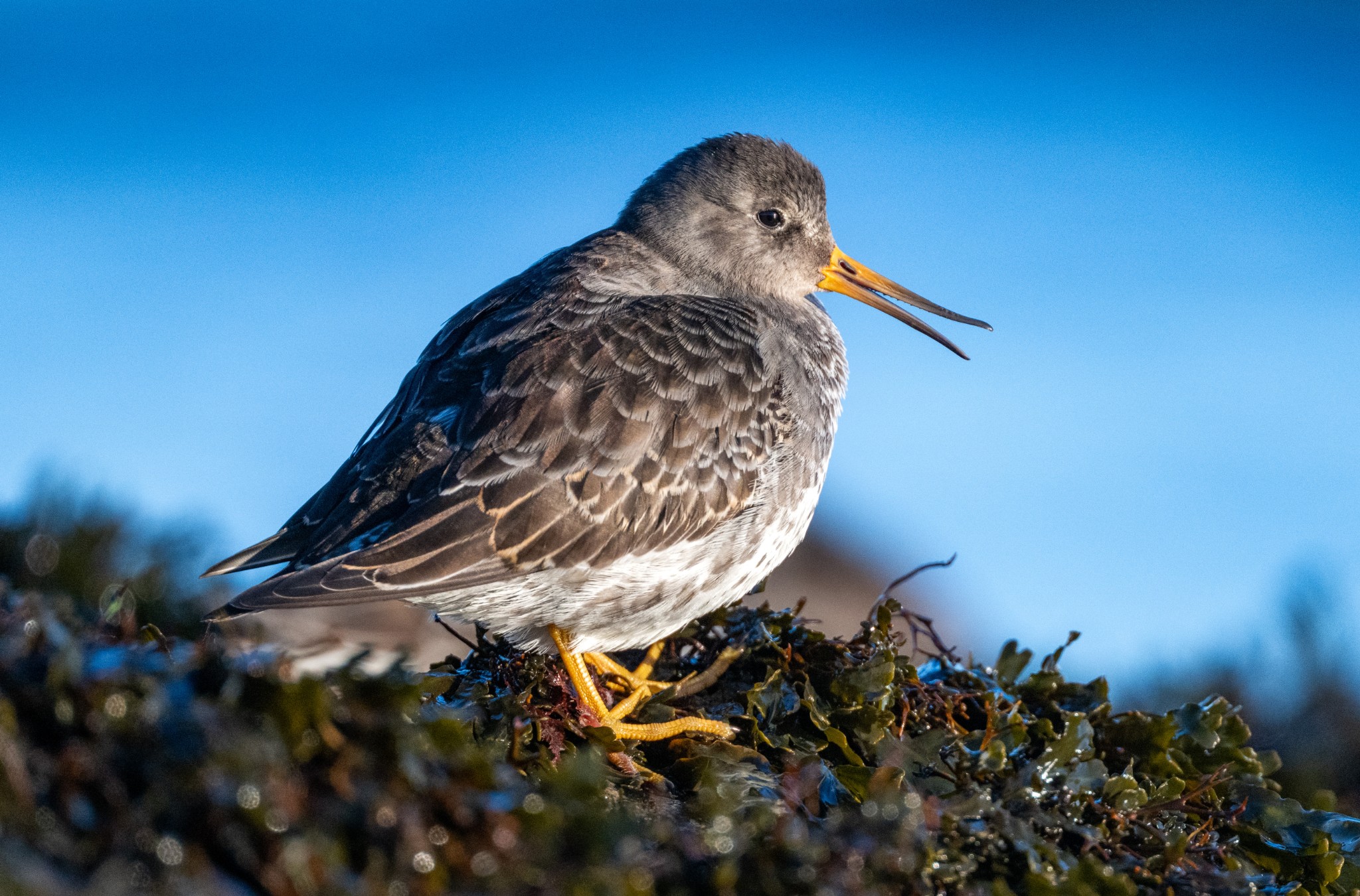
A group of birds are preening themselves close by and I’m thrilled to see one display a specialism that I’ve only ever witnessed in bar tailed godwit. This purple sandpiper looks like it’s exercising its bill. What this bird is displaying is a specialized, flexible bill movement known as rhynchokinesis. This ability allows them to move the tip of their upper mandible independently of the rest of the bill, which helps them grasp prey such as worms and crustaceans in mud or crevices while the rest of the beak remains closed.
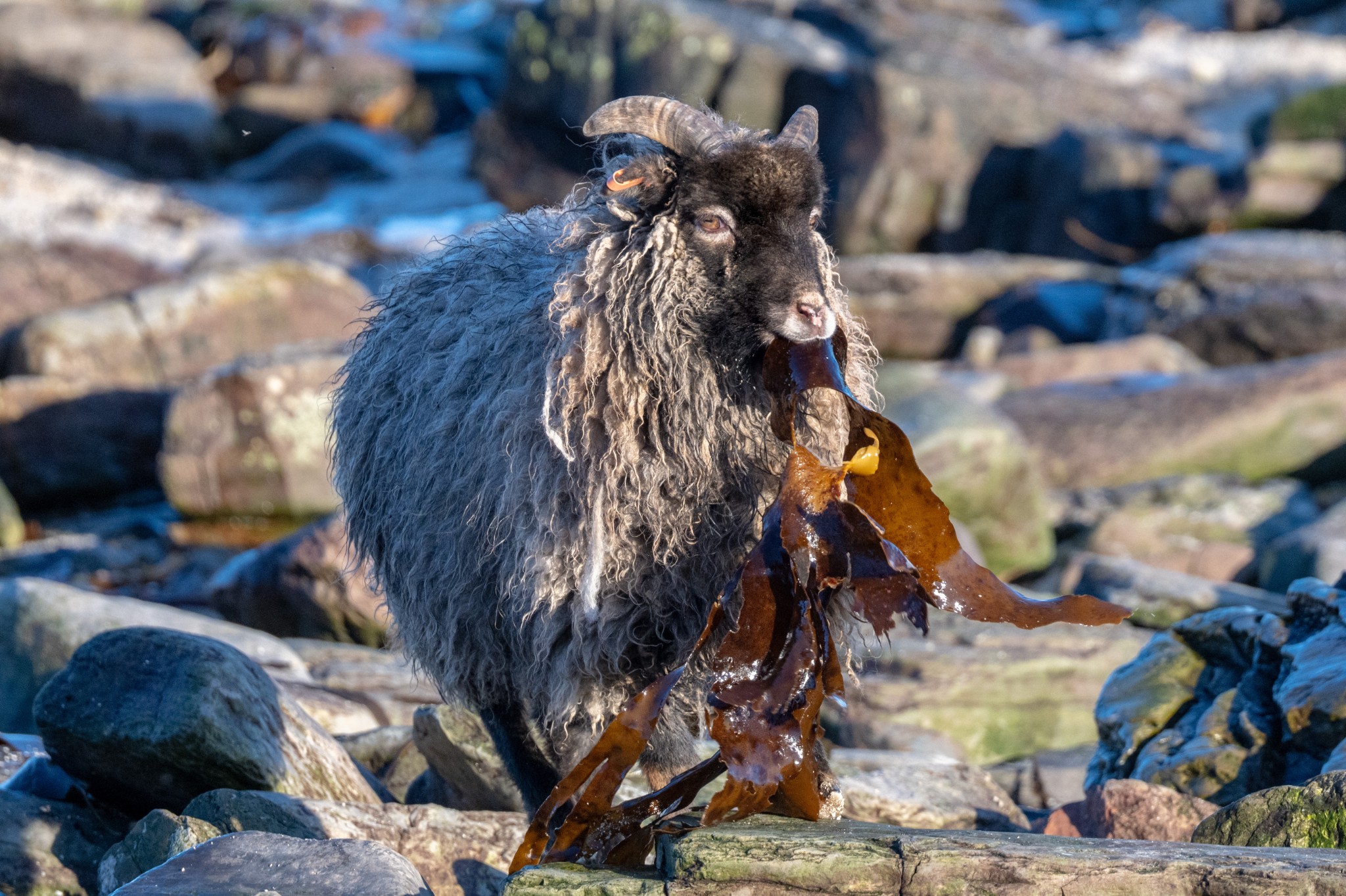
I’ve been so engrossed by the purple sandpipers that I haven’t notice another creature taking advantage of the leathery fronds of kelp cast upon the shore; the famous North Ronaldsay sheep, descendants of the Northern European short-tailed sheep.
Confined to the shore by a 12-mile-long drystone dyke known as the ‘sheep dyke’ that encircles the island, they have adapted to efficiently extract nutrients from the kelp. The amazing stone dyke is thought to have been completed around 1832, primarily to retain grazing land for more profitable cattle and so the sheep were confined to the shore. They are however allowed a little grass in the summer when ewes and lambs are brought inland.
What I had forgotten though is that they’re very intelligent and always alert despite being engrossed in chewing kelp. The dyke is two metres high and so I can’t simply take photographs over it. Instead, I hide but it’s no use, I look to my right and I’ve already been clocked. They simply about turn and disappear around the headland in a single file procession.
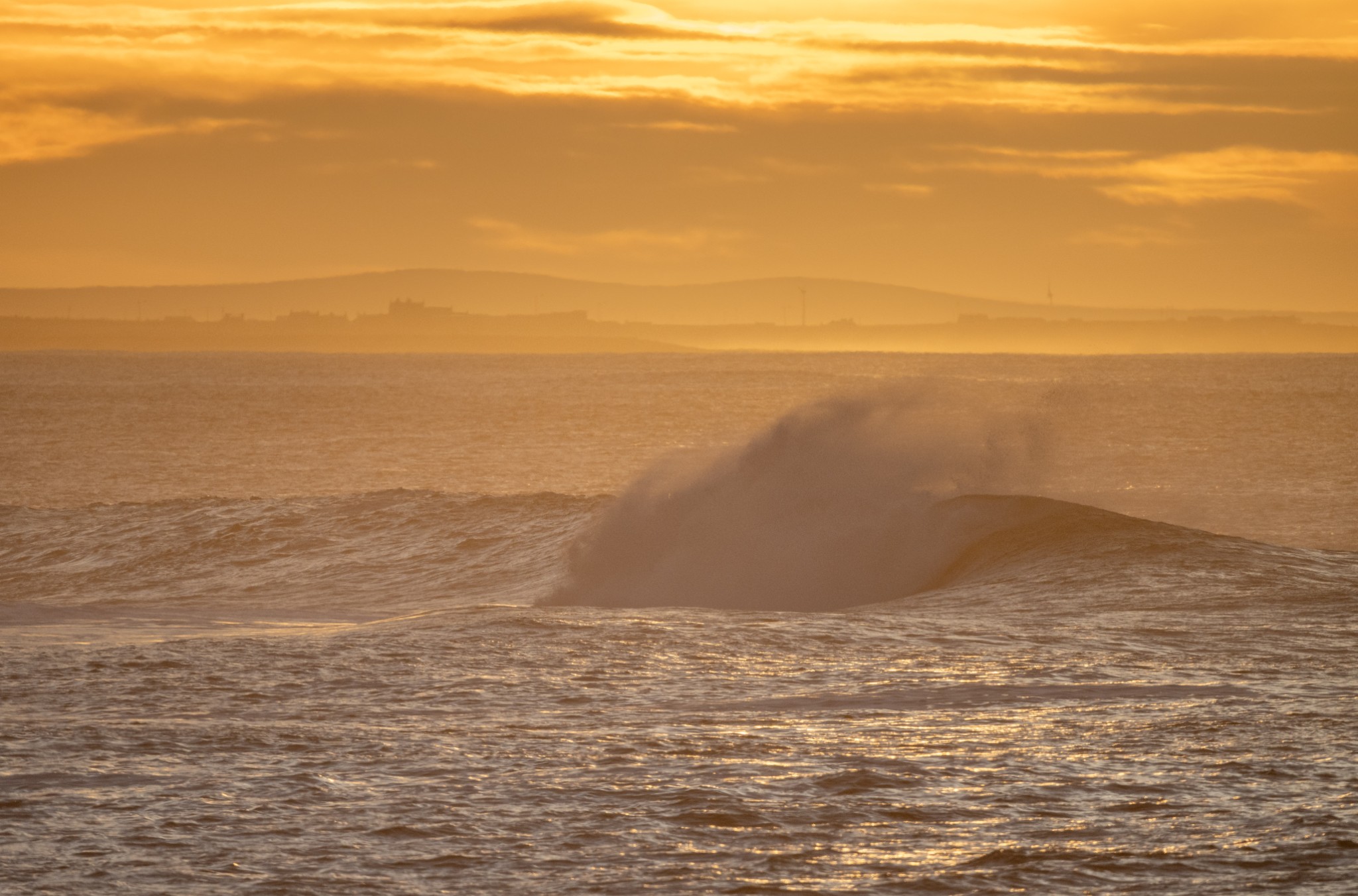
I take one last look at the waves before I have to catch the plane back to Kirkwall. The scene is a curious colour; the sea has a mauve hue and the sky a peachy yellow. The colours are reminiscent of those fruit salad sweets, a happy reminder of the as yet untouched packet I still have in my camera bag.
Raymond is a wildlife filmmaker who also offers bespoke Orkney wildlife tours and one-to-one wildlife photography tuition. Find out more via his official website. You can also find him on Facebook, Twitter and Instagram.