With the plethora of challenges and threats that the natural world faces it can feel a little overwhelming at times scrolling through my social media feeds, reading one negative environmental story after another.
They are serious of course and merit more of our attention, though tipping the balance back into positivity doesn’t always feel easy.
Here then is a species to be positive about, one which thrives in Orkney, so much so that not only is the population here of national importance but also of international significance - the grey seal.
That’s not to say it hasn’t had its own chequered history in its relationship with humans, some of which continue to this day as we increasingly encroach into its world. The grey seal has though been something of a conservation trailblazer in being the first mammal to be protected by modern legislation, the Grey Seals Protection Act of 1914.
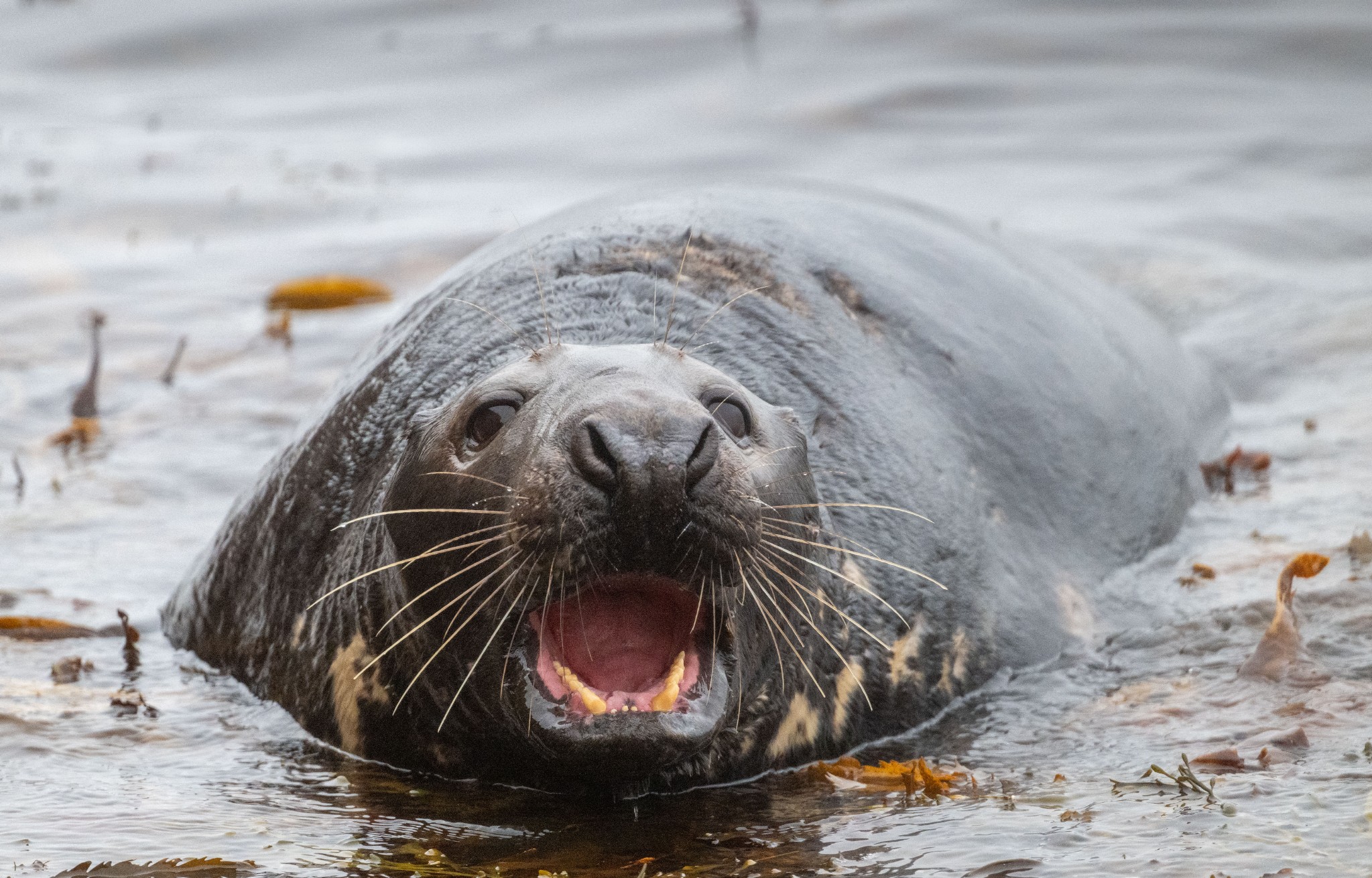
Completely accurate figures are hard to come by but in general terms the statistics are impressive. The Scottish grey seal population is estimated to be somewhere around the 106,000 mark, which means Scotland hosts roughly one third of the world population. At a national level this means Scotland supports about 90% of the UK’s grey seal population with overall numbers considered stable. The east coast of the UK in particular has seen a marked increase in pup production.
So, what about Orkney? Again, it’s hard to be accurate but as a snapshot it’s worth highlighting the uninhabited islands of Faray and the Holm of Faray which are designated as Special Areas of Conservation, lying between Eday and Westray. Although there has been a marked decrease in pup production there since the late 1990s, it is still the second largest breeding colony in the UK, contributing almost 10% of the UK annual pup production. The grey seal population overall in Orkney is stable so it’s thought seals may just be moving to different areas within the isles.
As I walked along a beach the other day, stealthily tracked by a grey seal just offshore, I was reminded of the moments when I’ve been fortunate enough to share their space, spending time with them underwater, marvelling at their gracefulness and lamenting my own shortcomings whilst stuffed into a wetsuit. As humans are busy launching ourselves into orbit in the name of space tourism, I thought we already get to travel between worlds, that salty interface that grey seals also cross.
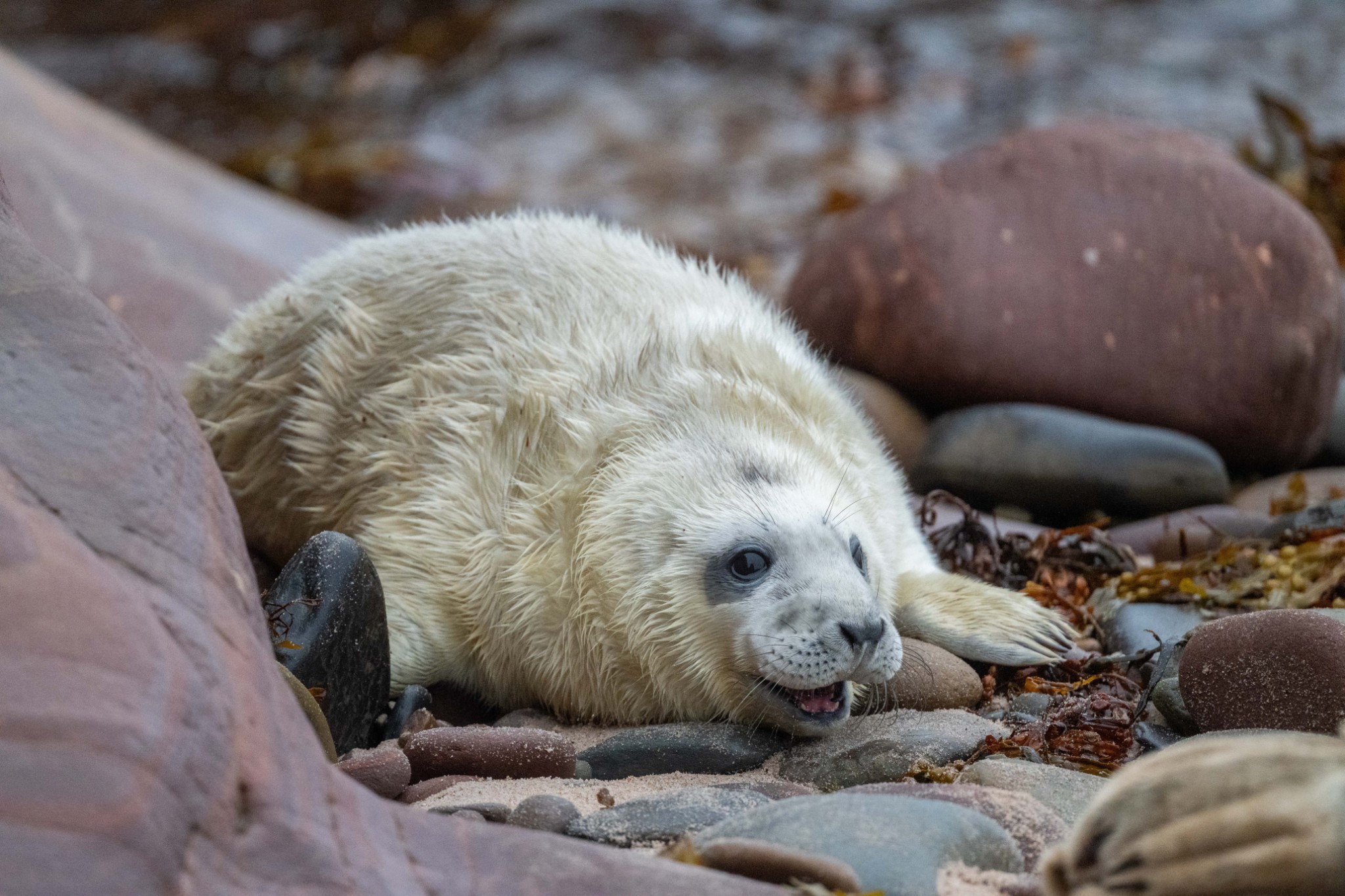
Each autumn and early winter grey seals come into our world to give birth, sometimes in large pupping colonies known as ‘rookeries’, and this gives us a unique chance to observe them. Mid-October to mid-December is a time of drama and it’s all aimed at raising the next generation. Giving birth, weaning, and mating all take place within a remarkably short space of time but it’s a strategy that serves the seals well.
Why give birth in what can be a stormy time of year? The short weaning period is the answer. Grey seal pups weigh around 14kg at birth and will gain up to a remarkable 2kg a day courtesy of their mother’s special baby formula, milk that contains up to 60% fat. Producing this rich milk takes a lot of effort and requires her to feed right through the summer in order to be able to provide it. Weighing up to 200kg she will lose a quarter of her bodyweight through the weaning period.
Recently I spent a few days observing seal behaviour and in particular the relationship between mother (cow) and pup. The shore in front of me has around eight females in a relatively small space and are all fast asleep, as are their pups.
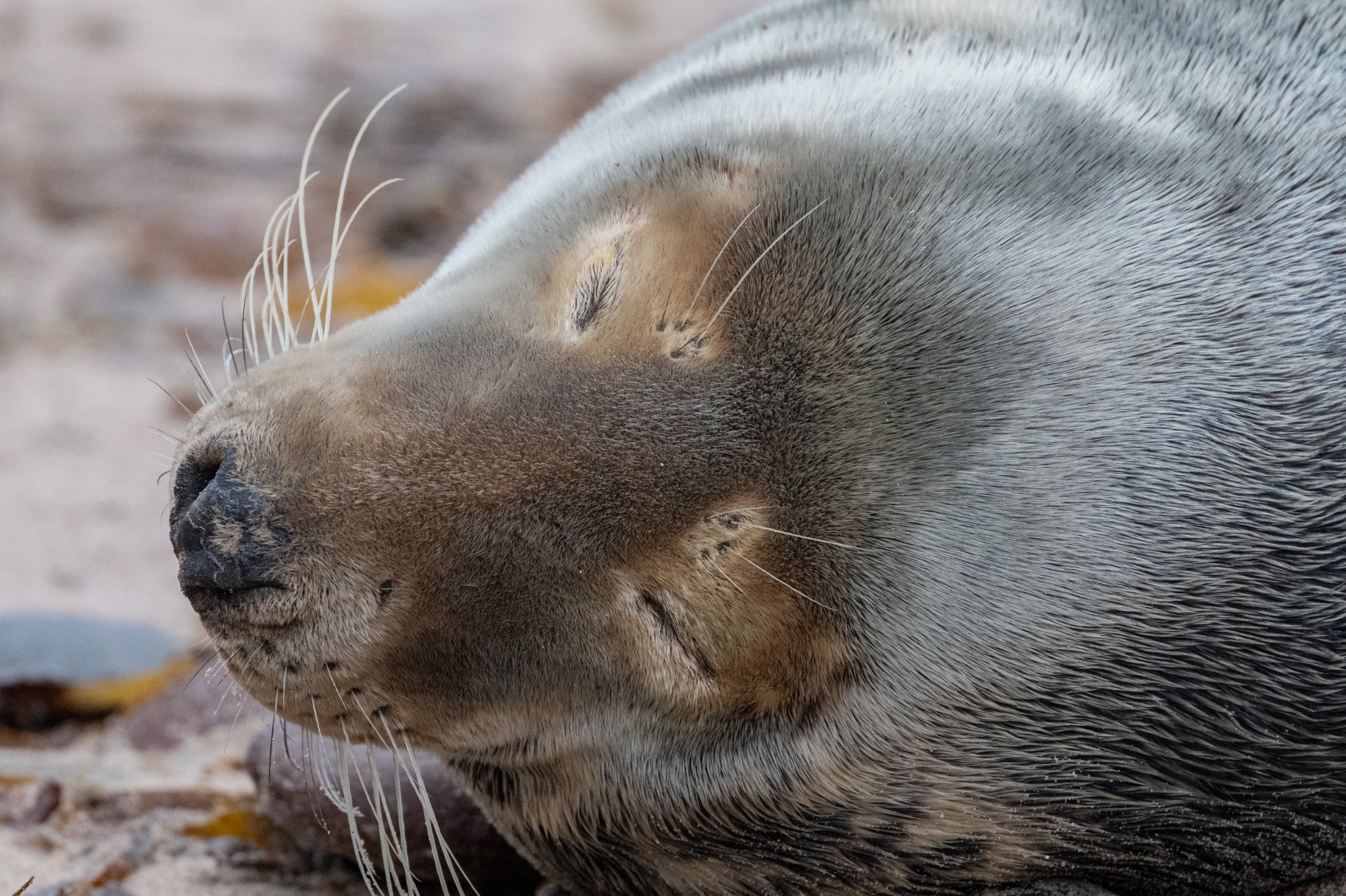
The high spring tide is incrementally bringing them closer together and I know what will eventually happen, a fight will break out. These mothers are not happy neighbours; the protection of their pup is all they care about. They have invested a lot into them but the pup doesn’t know this. Its curious nature sees it flop around the shore, sometimes getting a bite on the flipper from a disapproving mother not of its own.
I’m also seeing behaviour I’ve seen before and it may come down to inexperience. The majority of pups here are halfway through weaning which takes between three and four weeks, meaning they are fat, round and already shedding their white fur for something altogether darker. When not sleeping, these pups are constantly ‘crying’ in their want for milk. Their mothers encourage them with a gentle tap to the head with her fore-flipper and the pup latches on.
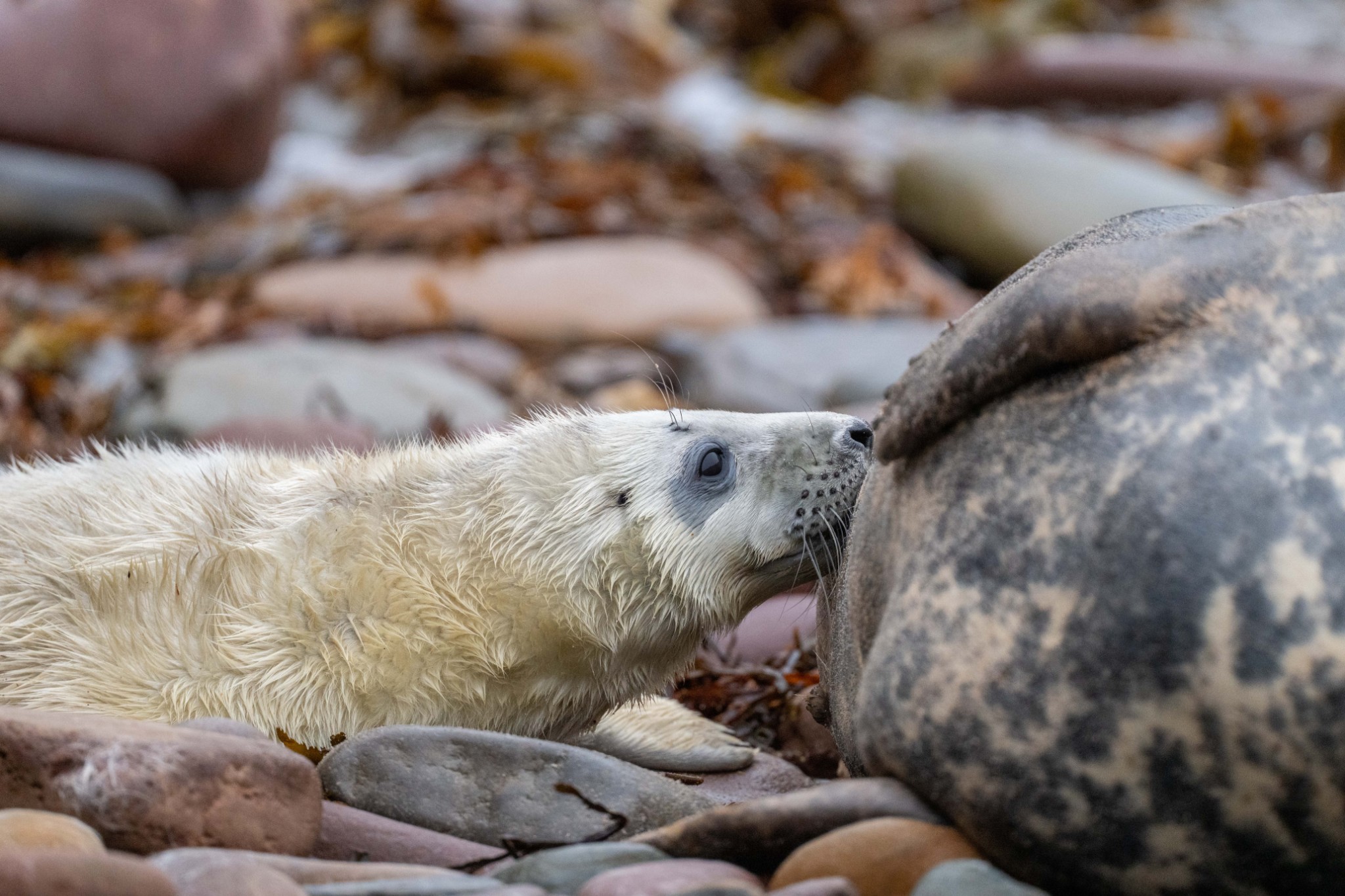
One still has its umbilical cord and looks weaker, it’s crying too but it isn’t fed as regularly. This mother caused a lot of discord with the other cows, seemingly over-protective of her pup yet less attentive to its needs too. She has plenty of time to get things right over her 35-year lifespan. I get a great view of the long, super-sensitive whiskers on one of the pups as it suckles. These are known as mystacial vibrissae and once in the sea it will use them to detect moving fish whilst hunting in poor visibility.
My observations were made under a laden grey sky but a morning recently reminded me of the transformational power of light. The high Hoy hills had their first dusting of snow and a family of whooper swans, already ice white with a sunflower bill, roosted on the Peedie Sea in Kirkwall.
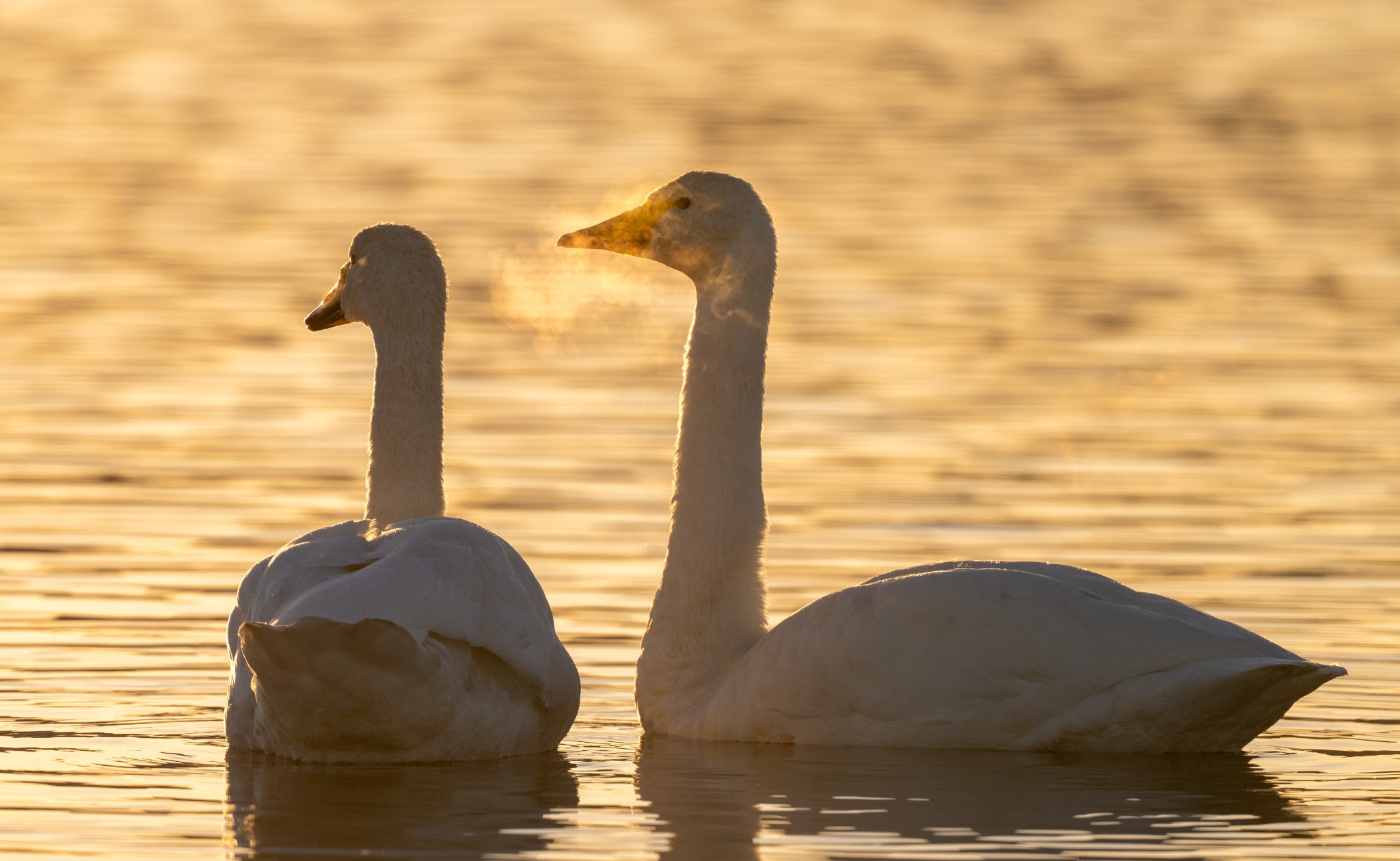
Such was the temperature I could see their whooping contact calls brought to life, their breath illuminated by a golden morning.
Raymond is a wildlife filmmaker who also offers bespoke Orkney wildlife tours and one-to-one wildlife photography tuition. Find out more via his official website. You can also find him on Facebook, Twitter and Instagram.