Underwater photography is a faff, though I suspect if I did more often it would become less so.
Getting all the dive kit on is also a faff so combining the two is, well, you get the picture. I recently joined marine biologist Karen Boswarva for a dive at the second Churchill Barrier on its east side in the hope of finding some tiny but fascinating critters.
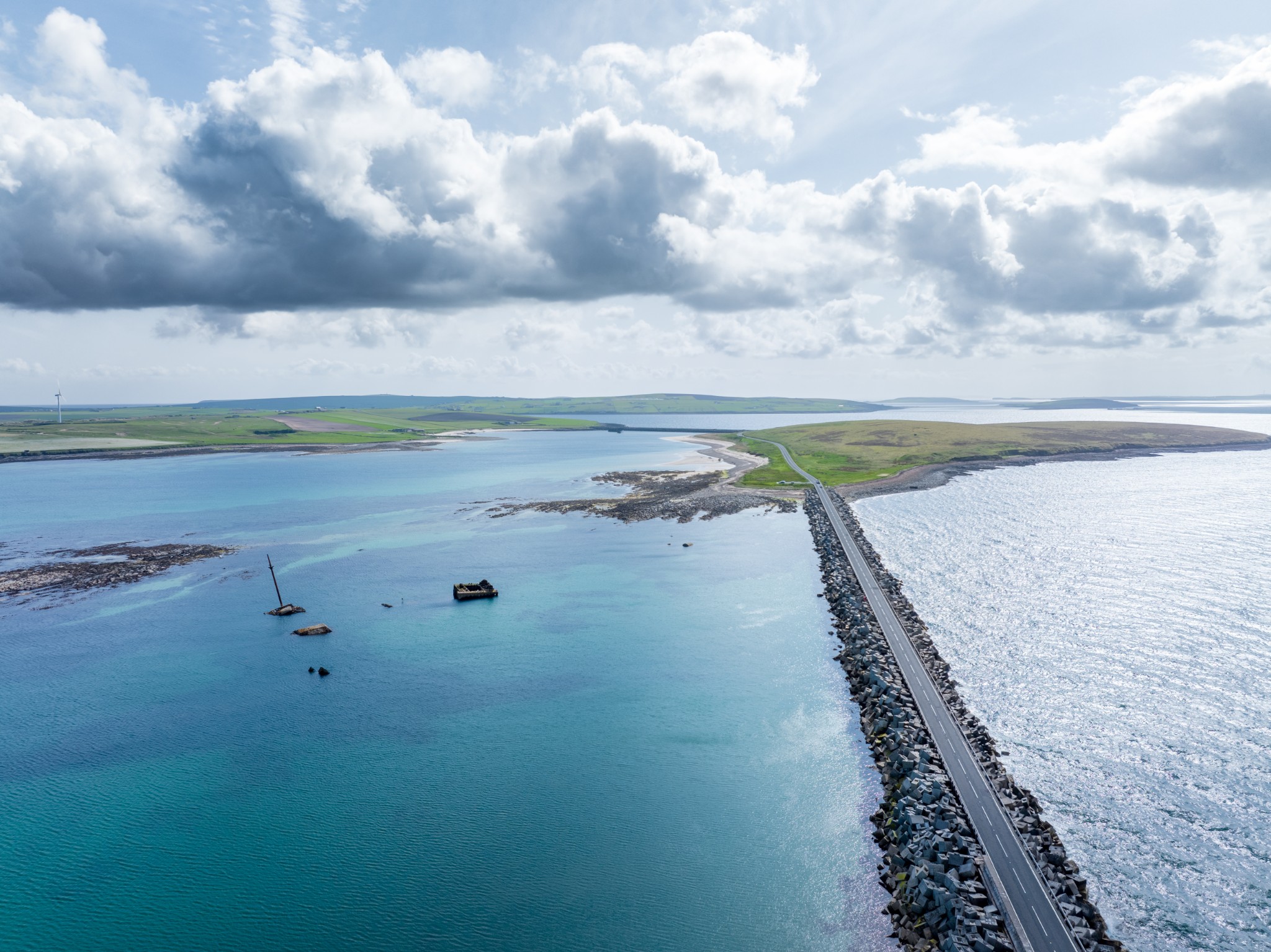
These days I’m quite happy pootling around in shallow water rather than descending into the depths. Finding a dive buddy that’s prepared to hang around for an hour underwater, barely moving from one patch of seaweed to the next whilst I indulge in macro photography, isn’t that easy. Fortunately, Karen likes pootling too and finds pretty much everything that moves underwater fascinating.
I once invited Karen for a dive at Houton but on arriving the tide was so far, we could have waded across the water to the small island opposite the ferry terminal, the holm of Houton. Determined not to provide any more ammunition for future tide related jokes I made sure the tide was high when we arrived. I put the photography gear together at home and make sure the flashes fire when I press the shutter button, there’s nothing worse than realising things don’t work when you are already in the water.
Once kitted up and weighed down with slabs of lead it’s a relief to get in the sea. The water takes on the heavy lifting on your behalf; the cumbersome camera too can also be manoeuvred with a deft hand now that it’s neutrally buoyant.
We signal to descend and reach the dizzying depths of 2.5 metres. I hope to see a cool little creature, affectionately know as a solar powered sea slug. Its Latin name is Elysia Virdis and is sometimes just referred to as Elysia. I know that at this site they like to feed on codium seaweed, sometimes known as green sponge fingers. We swim north a little and it’s not long before we find a thick ‘patch’ of codium. The seaweed is dark green and spongy in nature and it takes me a second to get my eye in. When I do I realise there are no shortage of the solar powered sea slugs munching away on the fleshy fingers.
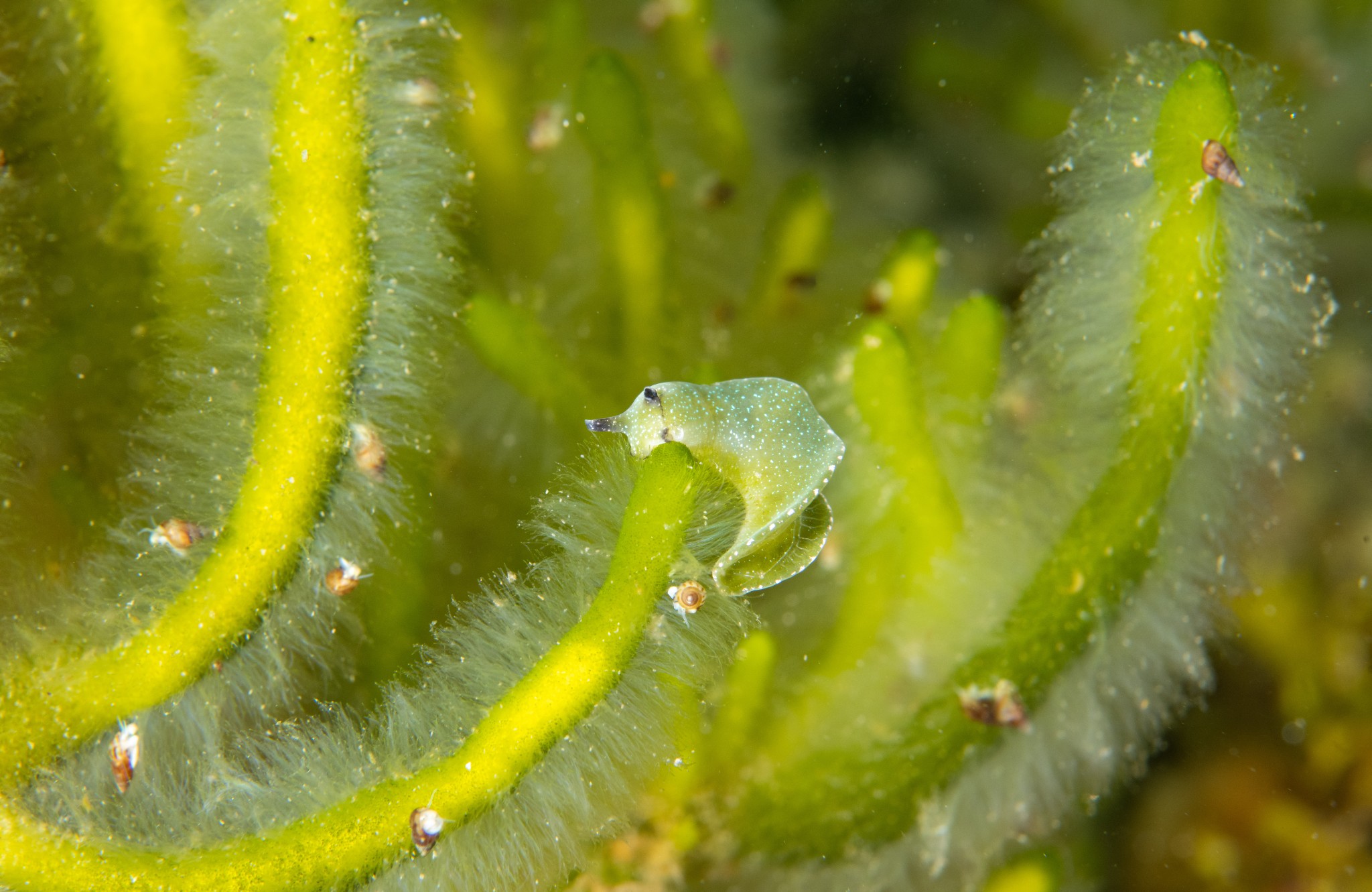
Sea slugs are basically molluscs without a shell and whilst it’s tempting to think of Elysia Virdis as a nudibranch it actually belongs to the sacoglossans which are vegetarian. The solar powered sea slug can grow up to 5cm long and is usually a vivid green but can be brown or a red colour. It looks similar to the sea hare, with ‘rhinophores’ which look a bit like ears. I can see that it has what appears to look like ‘wings’ but they’re curled up. The underside of these ‘wings’ look like tiny turquoise twinkling stars and that’s where the story Elysia Virdis of gets really interesting.
This remarkable little sea slug is a wonderful example of nature’s fantastic complexity and isn’t just grazing on the seaweed as a direct food source but is rather involved in an incredible ‘endosymbiotic’ relationship with the codium. As it grazes it punctures or slices the cells and then ingests the algae’s chloroplasts unharmed into its own body where the chloroplasts carry out photosynthesis, hence the name ‘solar powered sea slug!’
Before I drift away, I see one unfurl itself, and what a beauty it is. I can’t help thinking it looks like a smaller version of the alien that appears in the underwater spacecraft in the science fiction movie ‘The Abyss’.
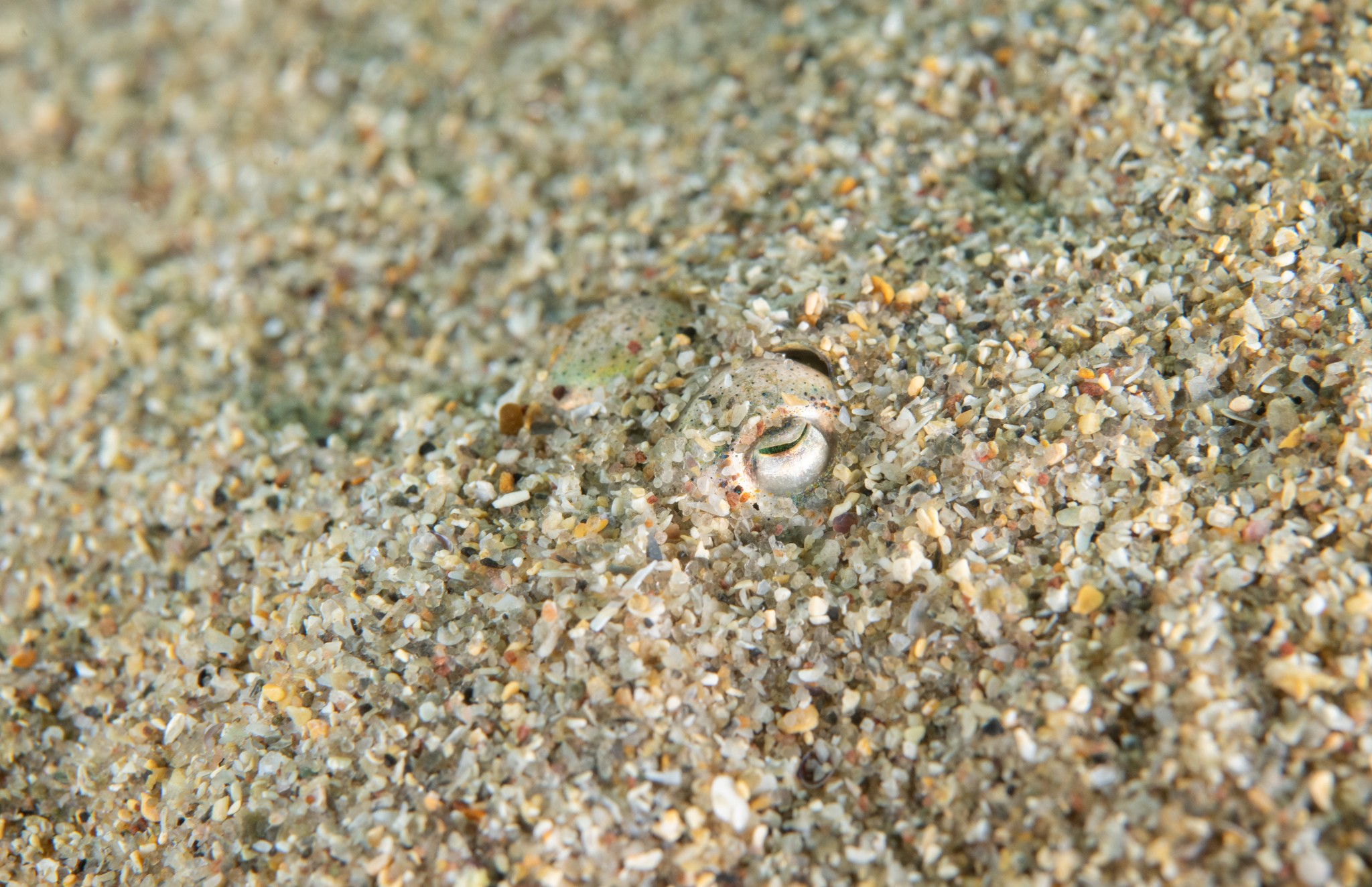
As I move off I see the tell-tale sign of a creature that I’ve unintentionally disturbed. A small black puff of ink swirls away in the water, it was produced by a fleeing little cuttle which is now nowhere to be seen. At 5cm long it’s no surprise its difficult to find but I have a secret weapon - Karen! As she hovers effortlessly over the sand I can see her pointing a finger directly below her. I approach but can’t see anything, Karen leaves me to it and it seems to take an age but the little cuttle finally gives itself away. I see one of its eight arms expertly and gently covering its head with sand. All I can see is a pair of eyes brilliantly camouflaged in the sand.
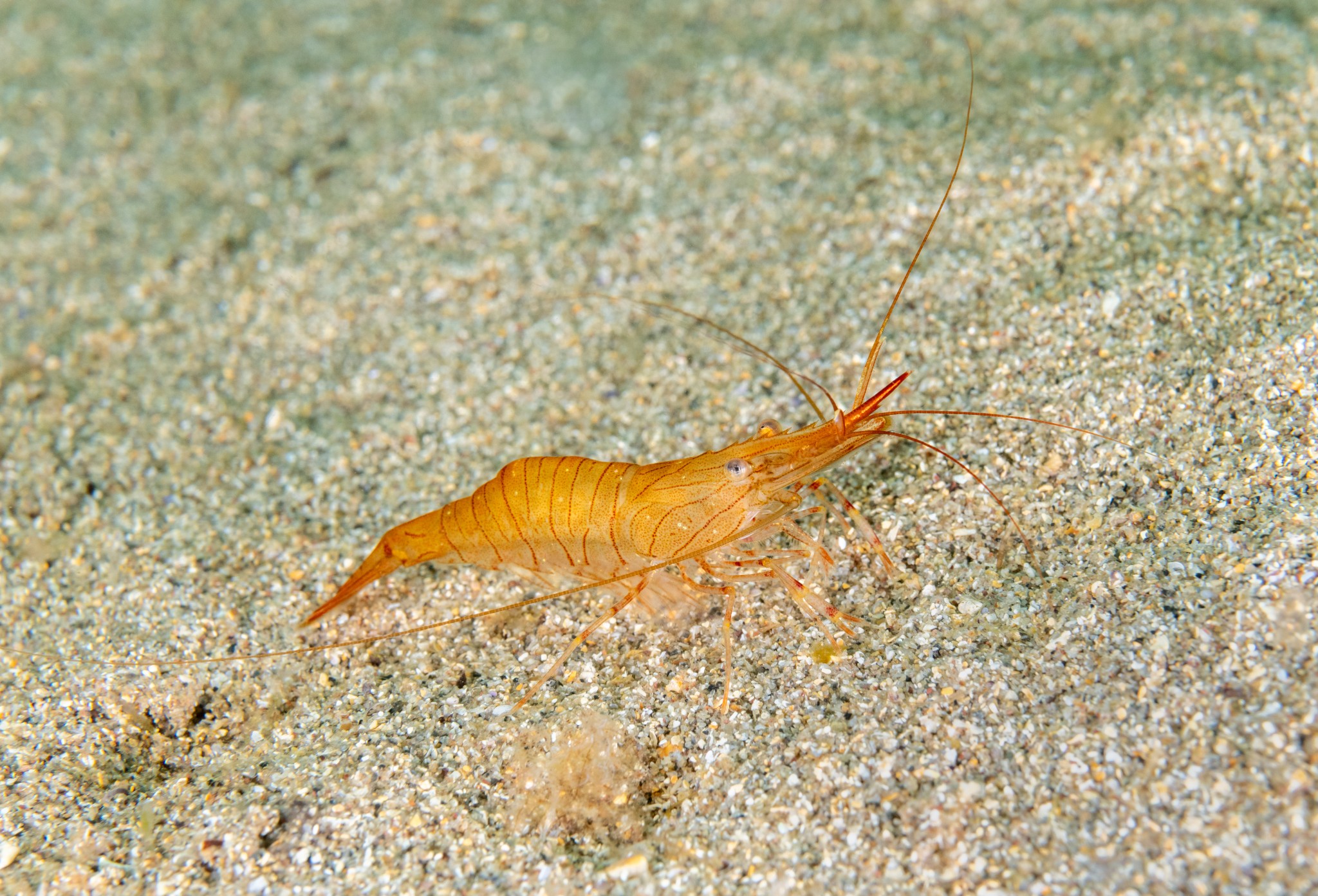
Nearby I’m surprised to see a creature that isn’t camouflaged at all, a bright orange prawn that seems very conspicuous out in the open.
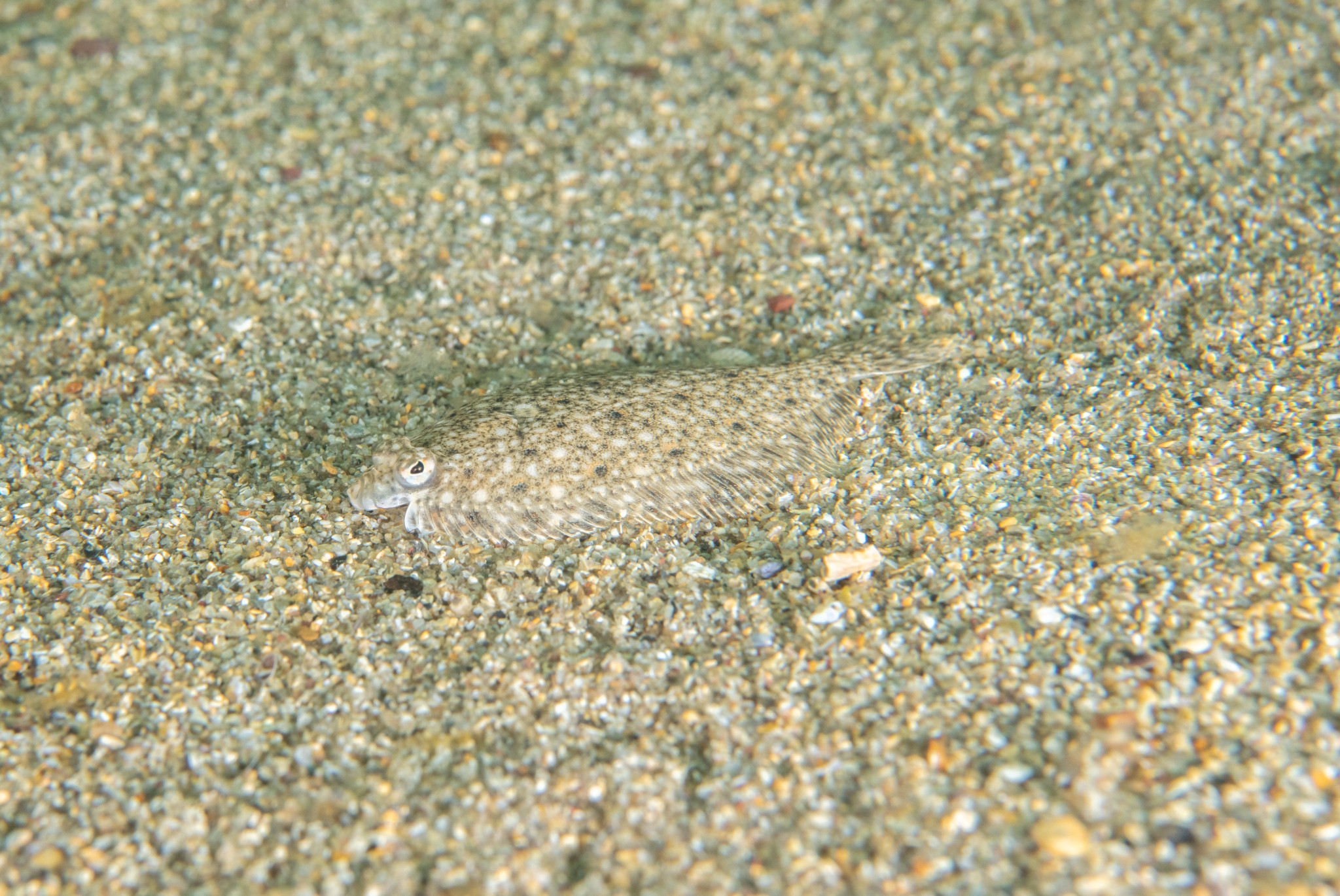
A small plaice moves quickly over the surface, almost bumping into the prawn. It occurs to me how different their strategies are, the tiny flatfish melting into the background as soon as it stays still.
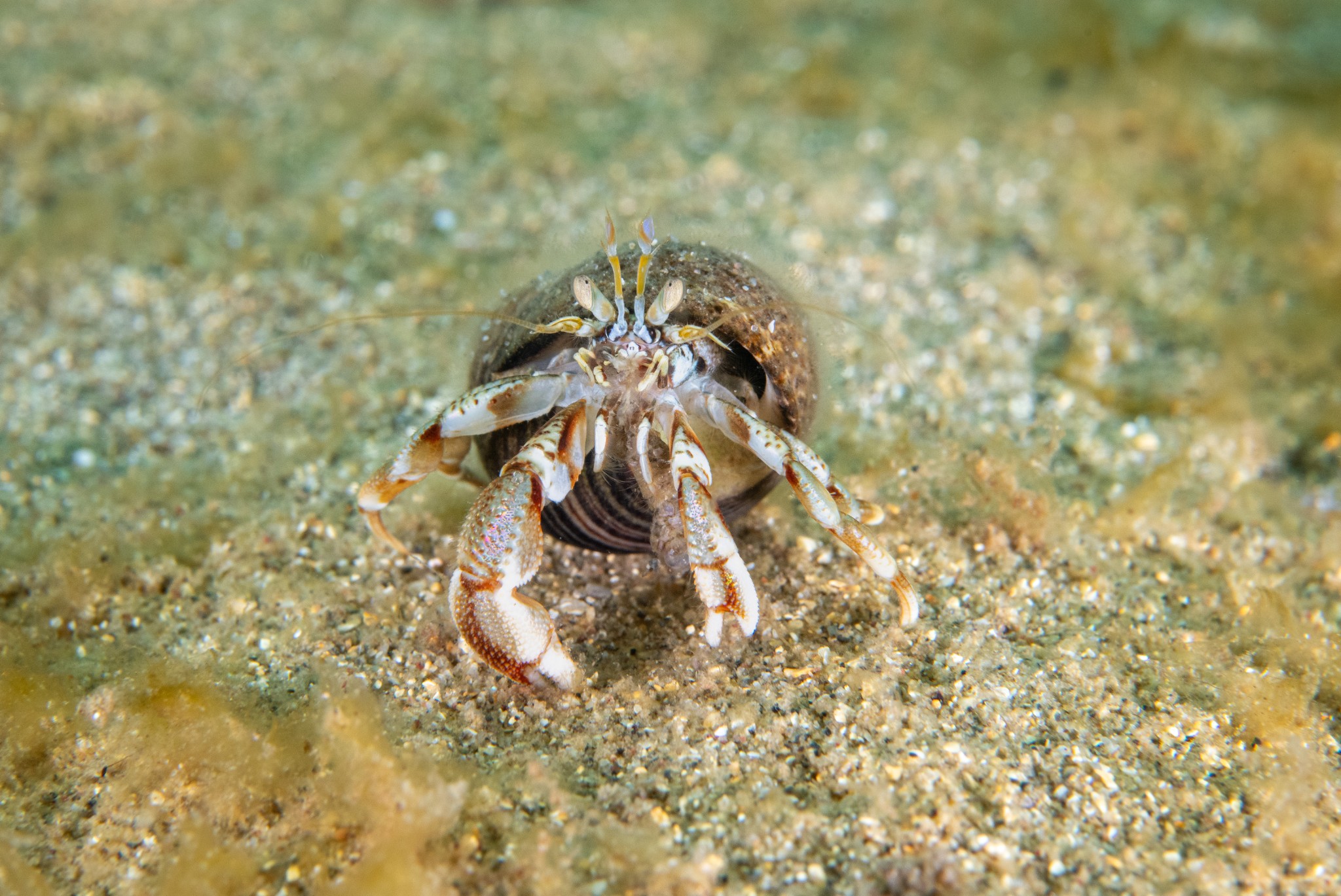
I take a moment to admire the busy hermit crabs and their different shells before reluctantly admitting we have to leave this serene scene. Having never ventured below three metres in depth we probably have enough air left to last another hour but I’ve become a little cold. Time to embrace the faff once more.
Raymond is a wildlife filmmaker who also offers bespoke Orkney wildlife tours and one-to-one wildlife photography tuition. Find out more via his official website. You can also find him on Facebook, Twitter and Instagram.