I’ve been busy working on images for my new book, Volume 3 of ‘Naturally Orkney’. This time I’m focusing on wildlife found on farmland and freshwater and at times I’ve found it a more challenging project to work on than the other books. I could be in danger of populating it with images of birds on fence posts, geese loitering in fields, or distant ducks loafing on lochs.
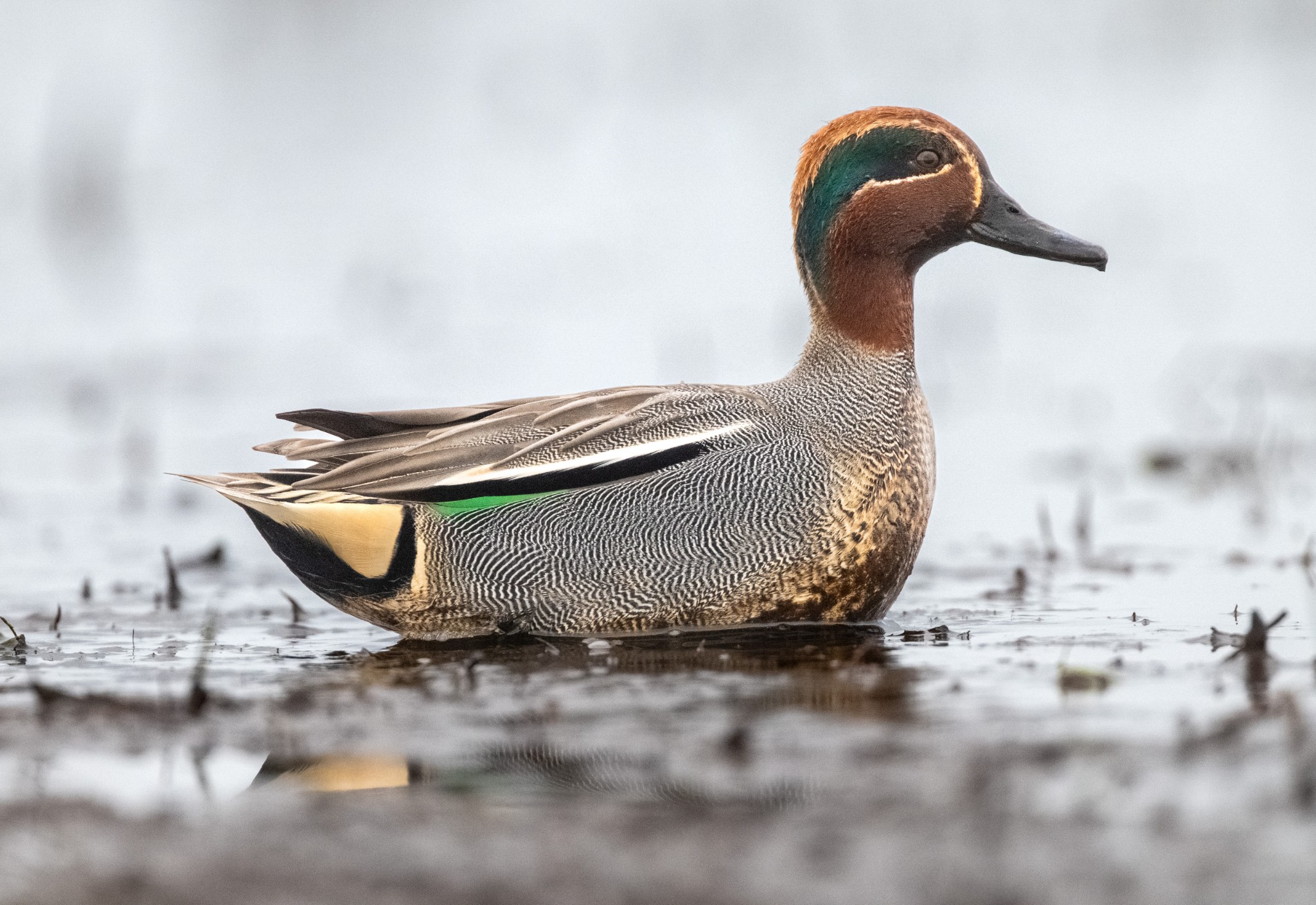
Two of the major groups of birds I’m interested in highlighting are also some of the wariest and require a lot of work to get close to. With this in mind I recently set off for Sanday in the hope of photographing teal at close quarters.
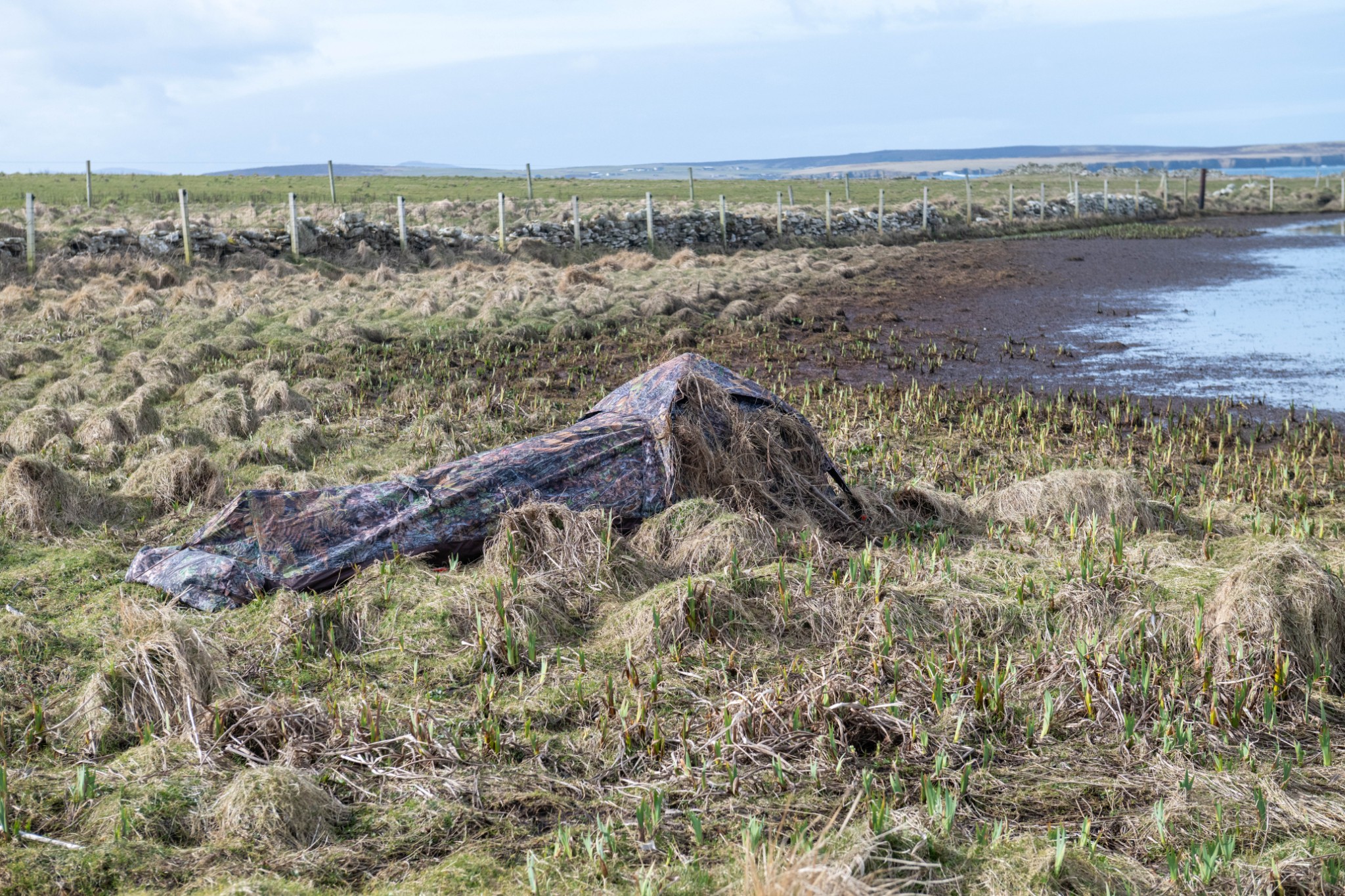
I have a secret weapon - my bivvi hide - which is essentially a low-lying camouflaged tent but without the space inside!
I’m also taking advantage of a scheme rolled out all across Orkney’s north isles that has since been completed. It was called the North Isles Landscape Partnership Scheme (NILPS) and in its own words had been ‘specifically created to support life in Orkney’s north isles, while conserving and raising awareness of their distinctive identities, heritage and culture’.
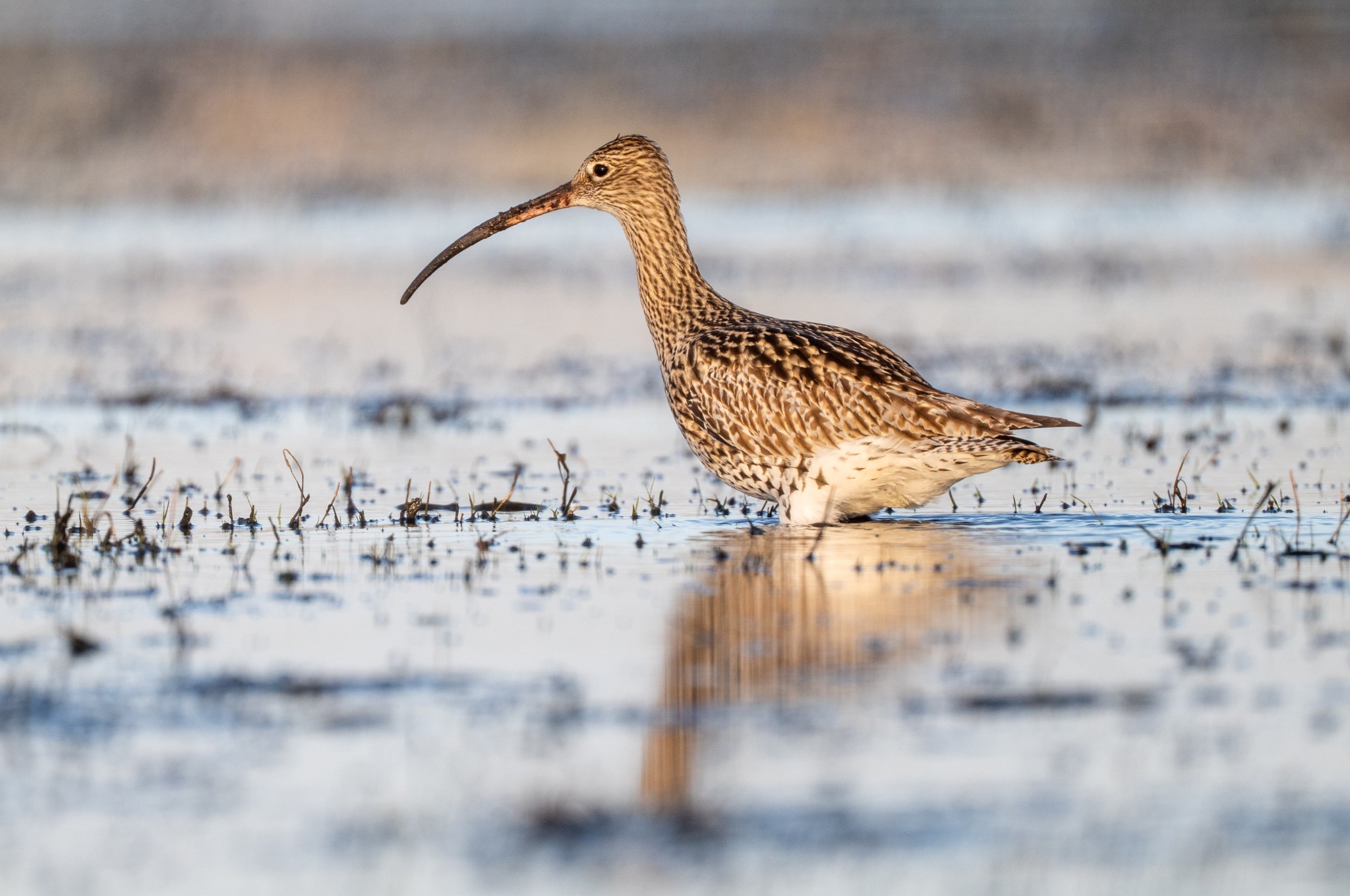
Many of our wading birds that are familiar in the Orcadian psyche, particularly the curlew and lapwing, have seen large declines in their populations over the last 20 or 30 years. There are many factors involved, not least the agricultural intensification of the landscape, but I remain positive about their future. We have good numbers compared to much of the UK and we know what the problems are, hence we can look for solutions to reverse these declines. The help of farmers and landowners will be crucial in making this work.
Part of the project aimed to enhance and restore habitats for the benefit of wildlife, with wading birds a priority. Although Orkney has seen the considerable historical drainage of wetlands, many farms still have what might be referred to as a ‘weet bit’ that has been too difficult to drain or is simply unproductive.
These are likely to already have an existing population of waders and wildfowl and so the expansion of these existing sites are good places to start, often with the creation of wader scrapes. These scrapes are essentially pools designed to have shallow muddy edges where birds and their chicks can feed close to where they have been breeding.
One such site is at Boloquoy Farm on the west side of Sanday which historically had a working mill, and of course any mill needs a mill pond. The mill is still standing but I always remember this area as mostly just being a giant iris bed. Major works funded by NILPS and managed by the RSPB now show the area at Boloquoy to be thriving with bird life.
Jackie Sinclair from Orkney Retreats, who owns Boloquoy explains the work carried out here: “A year ago we completely rebuilt the dyke around the mill pond as it was holding no water. The reinforced dyke means the pond level is now where it should be. Wader scrapes were added and fencing installed to allow us to put livestock in to lower the vegetation.”
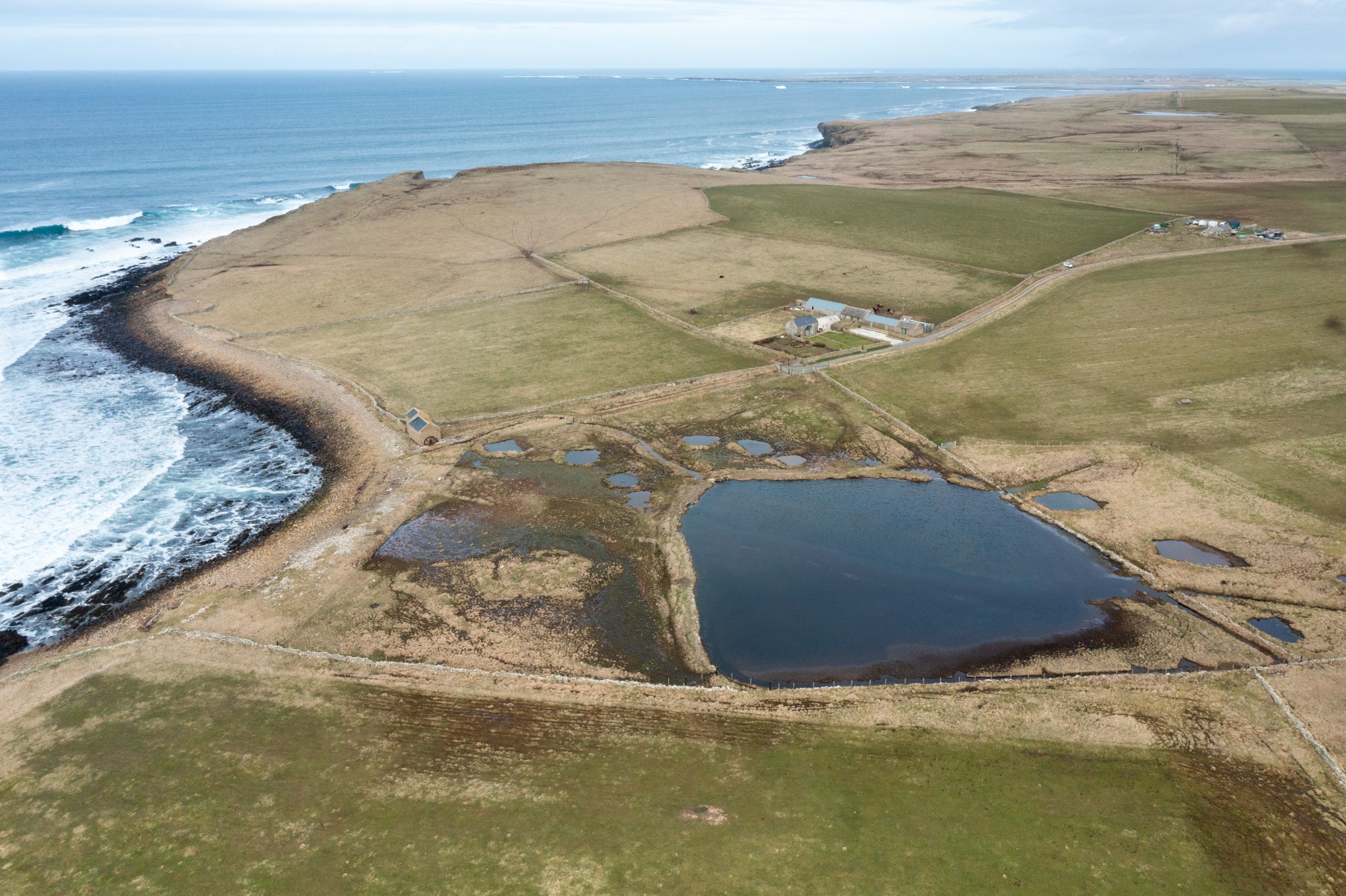
Jackie is sitting in the garden of Boloquoy Farm which has been lovingly restored as a Victorian farmhouse when I arrive. A quick scan of the mill pond reveals 20 teal, 30 wigeon, six shoveler, six mallard, a pair of gadwall, a pair of tufted duck, and a solitary little grebe. I feel I’m off to a good start but realistically there’s only one pace I can put the hide, a far corner in an iris bed that is still dry.
I take all my provisions, enough tea and food, headtorch, and sleeping bag as I’m going to spend the night in the hide. This might seem excessive but with the wary nature of the birds there really is no other way I can approach them. It’s somewhat lumpy underneath my sleeping mat but I settle in and wait for darkness to descend.
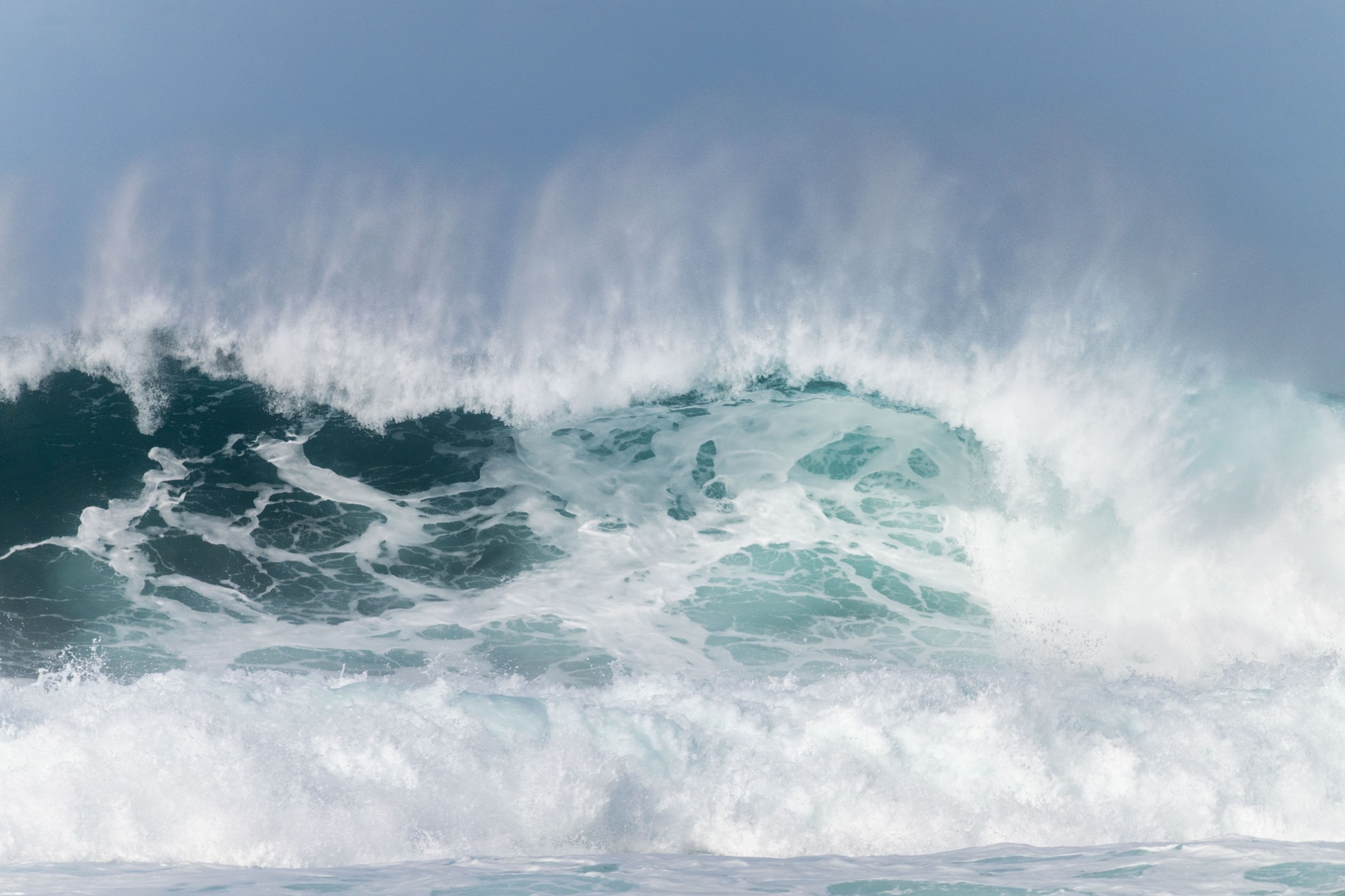
As dusk approaches I hear the drumming noise of a displaying snipe above the hide, a sound that fills the soul. I fall asleep surprisingly quickly but I’m awakened by the thundering noise of the sea, huge waves are characteristic of the Boloquoy shore.
I hear wigeon and teal arrive in the night; their soft whistles betray their presence. The sky is clear and so I’m a little cold but a flask of tea helps and, as the sun rises, I can see numerous birds already on the pond. I tell myself out loud to be patient and not to move my lens until the birds are close enough. Snipe, redshank, lapwing, and oystercatchers are here too and just as I think the teal are getting close enough, a curlew flies low over them alarm-calling loudly and they retreat to the back of the pond. ‘Be patient’, I tell myself once again.
They return after a while and this diminutive duck, our smallest at only 35-38cm long, starts feeding along the muddy edge, making its way towards me. The discomfort has been worth it; the male is a stunner of a bird! He is a jewel, a chestnut head set off with an emerald green area, a creamy yellow rear and cryptically patterned feathers with a bright flash of ‘teal’ on the wing.
It’s possible this teal may stay to breed here but it will be super secretive about it, nesting somewhere in deep cover.
I’m so delighted, it feels like this is what an Orkney wetland should look and feel like and it’s only just getting started. A skylark sings high above, a moorhen skulks in the iris bed and I count ten lapwings in the throes of their delightful courtship displays in the field adjacent to the pond. The field is damp and has a short sward from grazing and so is ideal for nesting lapwings who will benefit from the expansion of the landscaped wetter areas.
Even at this early stage these groundworks seem to be benefiting the birds and will provide ideal conditions for breeding waders and wildfowl going forward, helping to reverse recent declines.
I can’t wait to see what makes its home here over the coming years.
Visit the Boloquoy Victorian Farm and Watermill website to find out more about the renovation of the property and how you can stay at this special location. Take a look at the Orkney Retreats website to view other self-catering properties in Sanday.
Raymond is a wildlife filmmaker who also offers bespoke Orkney wildlife tours and one-to-one wildlife photography tuition. Find out more via his official website. You can also find him on Facebook, Twitter and Instagram.